Baby Monitor Price Guide and Budget Tiers in India
If you're trying to figure out how much to actually spend on a baby monitor, the honest answer depends on which features you'll use every night versus which ones sound good in a listing. This guide breaks down what ₹1,800 to ₹16,000 buys across the market in India, what changes at each budget tier, and how to tell whether a price you're looking at right now is reasonable or inflated.
What Baby Monitors Cost in India: ₹1,800 to ₹16,000
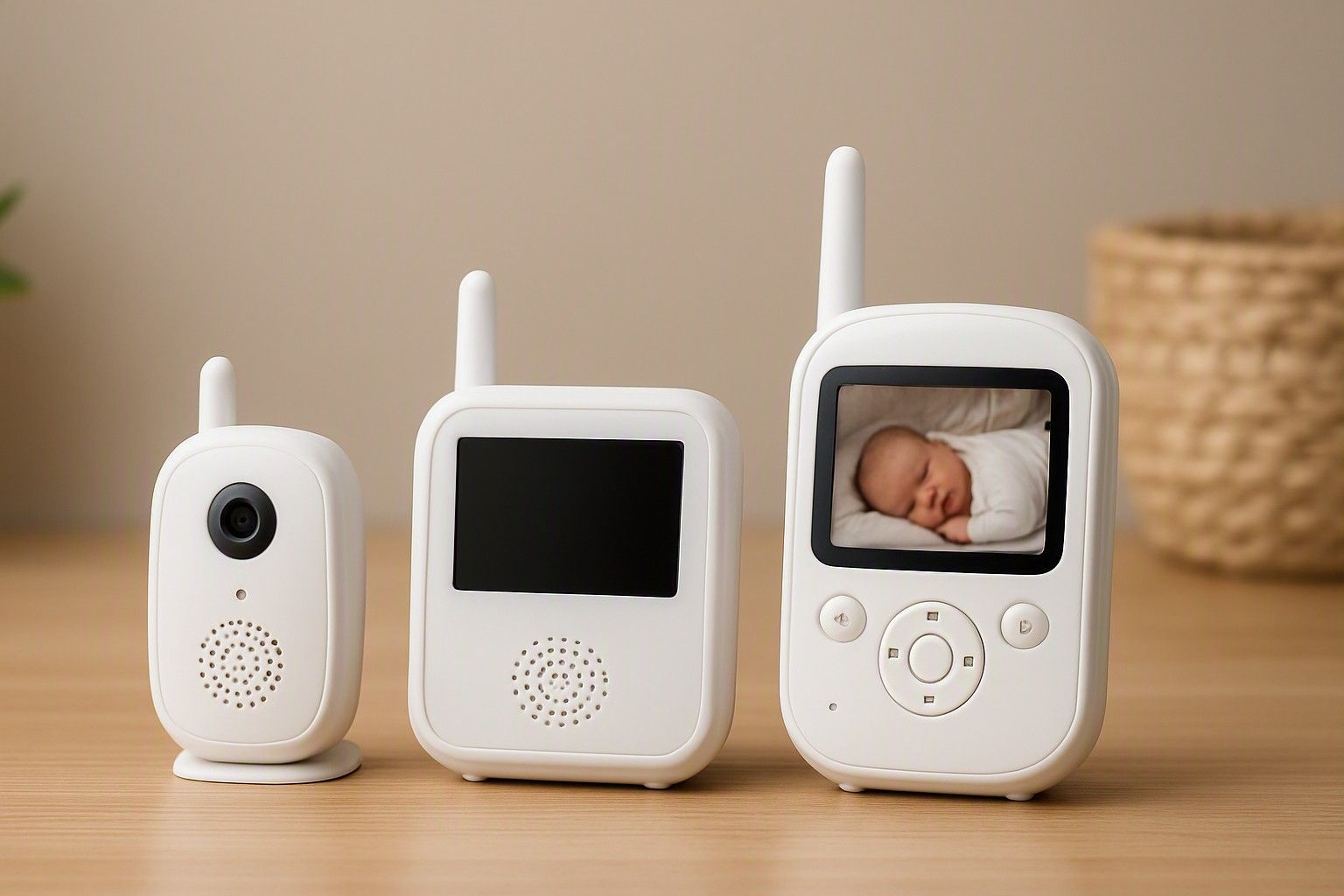
Baby monitors sold in India span a wide range, from ₹1,800 at the very bottom to ₹16,000 for the most fully loaded smart models. That's a big spread for what looks, on the surface, like a single category of product, and the reason is that "baby monitor" covers several genuinely different devices wearing the same name. At the low end you're often buying a simple audio-only unit or a basic camera with a small screen. At the high end you're buying a camera system with pan-tilt-zoom motors, two-way talk, night vision that actually resolves detail rather than a grainy silhouette, app connectivity, and sometimes extras like temperature sensing or lullaby playback.
The average price across the market sits at ₹7,500, which tells you where most buyers end up landing once they've weighed cost against the features they actually want. That average isn't a midpoint of the range so much as a signal of where the bulk of reasonable, non-compromise purchases cluster. Knowing this before you shop matters because it lets you spot when a listing is priced unusually high for what it offers, or unusually low in a way that suggests corners were cut on the camera sensor, battery life, or build quality. The rest of this guide walks through what changes at each price tier so you can match your spend to what you'll actually use.
Under ₹3,000: What You Get
Below ₹3,000, you're mostly choosing between audio-only monitors and entry-level video units with small, often low-resolution screens. These do the core job: they let you hear or see your baby from another room without needing your phone or a home Wi-Fi network, since many at this level run on their own short-range radio signal rather than the internet. That's actually a feature some parents prefer, since it avoids the security concerns that come with any camera connected to home Wi-Fi.
What you give up at this tier is consistency in low light. Night vision, if present at all, tends to be basic infrared with limited range, so you may see a shape moving rather than a clear picture of your baby's face. Battery life on the parent unit is often shorter, and range between the two units can drop noticeably through walls or floors, which matters in larger homes or apartments with concrete construction. Two-way talk, temperature alerts, and any kind of app support are rare or absent below ₹3,000. This tier suits a straightforward need: knowing when your baby wakes up or cries, without extra monitoring features. If you want more situational awareness than that, you'll likely find yourself frustrated by the limitations here within the first few weeks of use.
₹8,000: The Mainstream Sweet Spot
The ₹8,000 range is where most Indian buyers end up, and for good reason. This is where video monitors become reliably usable rather than a nice-to-have add-on: screens are bigger and sharper, night vision resolves enough detail to actually check on sleep position, and two-way talk becomes a standard inclusion rather than a rare extra. Range and connection stability also improve meaningfully compared to the tier below, which matters if your baby's room isn't right next to yours.
This band is also where you start seeing genuine feature differentiation between models rather than just a price bump for the same basic function. Some monitors add temperature monitoring for the nursery, others add remote pan-tilt-zoom so you can adjust the camera angle without walking in, and others add lullaby or white noise playback controlled from the parent unit. Deciding which of these actually matter to you versus which are marketing filler is worth doing before you buy, and it's covered in detail in the features that justify stepping up in this range. Spending within ₹8,000 without knowing which features you'll use is how buyers end up either underwhelmed by a stripped-down unit or overpaying for capability they never touch.
₹18,000: Premium Smart Monitors
Once you move into ₹18,000, you're paying for monitors that behave more like a dedicated home security camera built specifically for nursery use. Expect app-based viewing from anywhere with an internet connection, not just a bundled parent unit, along with sharper video sensors, smoother pan-tilt-zoom motors, and sometimes multi-camera support if you have more than one child or room to cover. Some models at this level add sleep or breathing motion tracking, cry detection with pattern analysis, or integration with smart home systems.
The honest trade-off here is that you're paying a premium for polish and extra data, not for the basic function of hearing or seeing your baby, which is already well handled by monitors costing a fraction of this price. A monitor near ₹16,000 makes sense if you specifically want app access away from home, multiple camera coverage, or the kind of detailed sleep analytics that some parents find genuinely useful and others find unnecessary noise. It's a reasonable spend for someone who has identified exactly which premium feature they need, but it's not automatically the better choice just because it costs more the mainstream tier below covers the core monitoring need for most households without the added complexity of app dependencies and firmware updates.
Where the ₹7,500 Average Sits and What It Buys
At ₹7,500, you're generally buying into the upper half of the ₹8,000 range or the lower edge of ₹18,000, which is exactly where the bulk of well-reviewed, non-compromise monitors sit. This price point typically gets you a clear video feed with usable night vision, stable two-way talk, and either temperature monitoring or remote camera control, though rarely both at once. It's a meaningful step up from the bare minimum but well short of the app-connected, multi-camera systems at the very top of the range.
The reason this average matters for your decision is that it acts as a sanity check. If you see a monitor priced well above ₹7,500 without offering the app connectivity, multi-camera support, or advanced sensors typical of ₹18,000, that's a sign you may be paying for a brand premium rather than added function. Conversely, a monitor priced well below ₹7,500 that still claims premium features is worth extra scrutiny on build quality and video sensor performance, since those claims are where corners are most often cut to hit a lower price. Using the average as your reference point, rather than shopping purely by the lowest number you can find, tends to produce a purchase you're satisfied with months later rather than one you regret within weeks.
Judging Whether Today's Price Is Worth Paying
With a range running from ₹1,800 to ₹16,000 and an average of ₹7,500, the question isn't whether a lower price will show up eventually it's whether what you're looking at right now is fairly priced for the tier it belongs to. A monitor priced near the top of ₹8,000 that includes two-way talk, solid night vision, and temperature sensing is a fair price for that feature set, regardless of whether it was cheaper last month or might be cheaper next month. What matters is matching the price to the specific features in front of you, not chasing a hypothetical future discount.
A useful way to judge this: check whether the listed price sits closer to the bottom, middle, or top of its budget tier, and whether the features on offer match that position. A monitor priced at the very top of ₹3,000 but missing basic night vision is a poor deal within its own tier, even though the absolute number looks small. A monitor priced in the middle of ₹18,000 with app access, multi-camera support, and sleep tracking is a fair deal for someone who wants all three, even though ₹16,000 looks steep in isolation. Buying decisions made against this kind of tier-relative fairness hold up better than decisions made purely by comparing today's number to some remembered lower price from the past.
Between the tier breakdowns and the ₹7,500 benchmark, you now have what you need to answer the real question: not just what a baby monitor costs, but what a specific price should be buying you at each level, and whether the one you're considering is fairly priced for its tier rather than just cheap or expensive in the abstract.

Comments
Be the first to comment.