Baby Monitor vs Home Security Camera: Which Should You Use
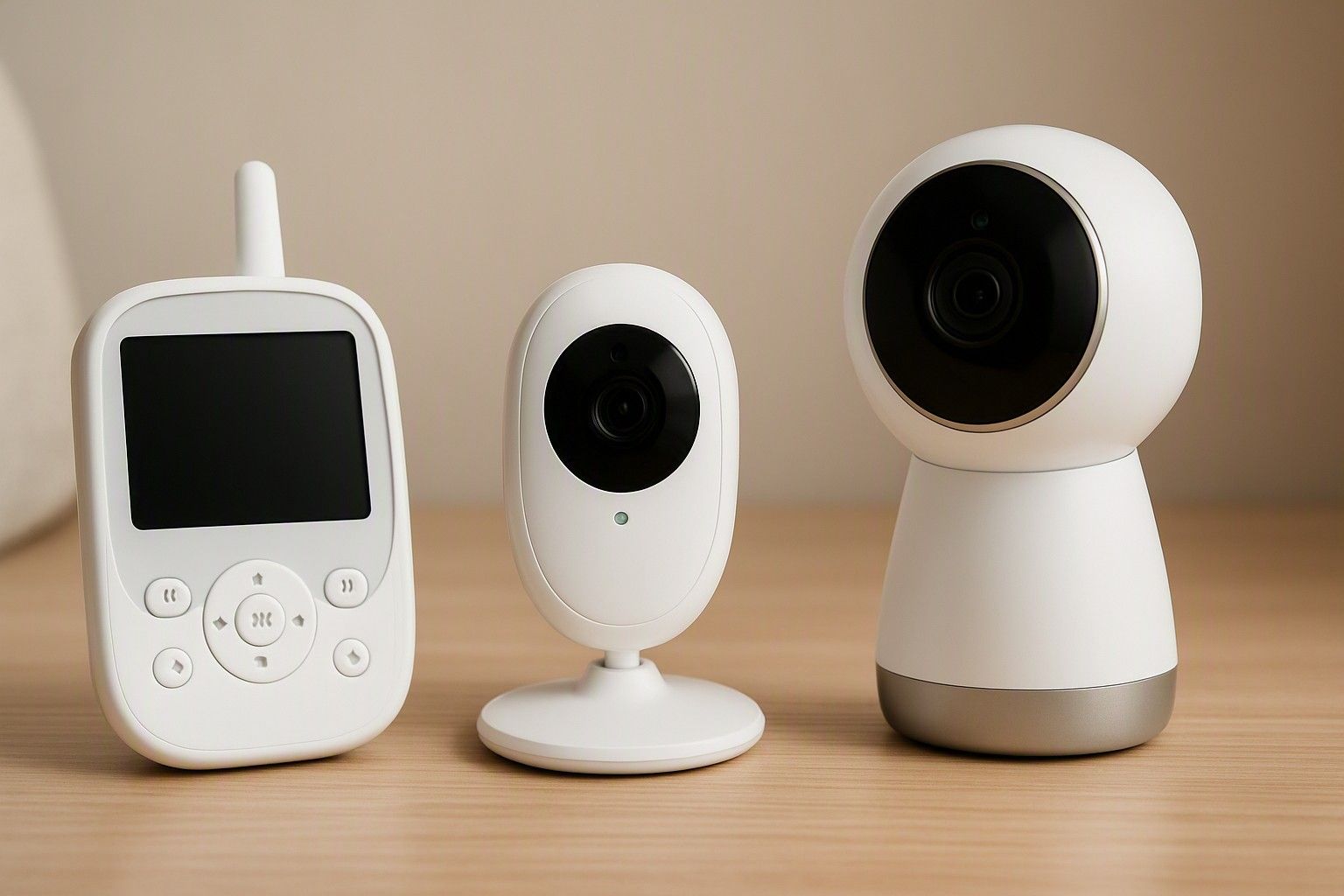
If you already have a security camera pointed at the living room and a baby on the way, the obvious question is whether you really need another gadget. The honest answer is: sometimes yes, sometimes no, and it depends less on the camera's price and more on what you need it to do at 3 AM. Read on before you decide either way.
What a Security Camera Can and Can't Do for a Baby
A home security camera is built to watch a room, and on paper, a crib is just another part of that room. Most of these cameras give you a live video feed, some night vision, and the ability to check in from your phone, which covers the basic job of seeing whether the baby is asleep or awake. Where it starts to fall short is in the details that matter for infant monitoring specifically. Security cameras are usually mounted wide and high to cover an entrance or hallway, not angled and zoomed to watch breathing patterns or catch a baby rolling toward the crib's edge. Night vision on general-purpose cameras is tuned for detecting movement or intruders across a room, not for the close-range, low-glare clarity you want a few feet from a sleeping infant. Audio pickup is another gap: many security cameras only trigger recording on loud, sudden noise, which means the soft fussing that precedes a full cry can go unheard. There's also a practical issue of app design. A security app is built around reviewing clips and getting motion alerts for an empty house, not around a live, always-on view you glance at every few minutes through the night, which quietly changes how usable it feels for this specific job.
Alerts, Two-Way Talk and Real-Time Reliability
This is where the gap between the two device types gets real. Dedicated baby monitors are designed around sound- and cry-detection alerts that push a notification or trigger an audible tone on a parent unit the moment the baby stirs, without you having to keep an app open. Most home security cameras, by contrast, are built around motion detection tuned for larger movements and can either miss the small stirrings of a baby waking up or, in the opposite direction, spam you with false alerts every time a ceiling fan shadow moves across the frame. Two-way talk is another point of difference. Many security cameras do have a speaker and mic, so you can technically speak into the room, but the audio quality and delay are usually adequate for shouting at a delivery person, not for soothing a baby back to sleep with your voice. Reliability under real-time use also differs: baby monitors are engineered to hold a stable, low-latency connection over short in-home distances specifically for constant background monitoring, while security cameras are more often optimised for clip recording and cloud upload, which introduces a lag that matters far less for security footage than it does for a parent trying to react in the moment.
Latency, Wi-Fi Dependence and Power Cuts
Most home security cameras run entirely over Wi-Fi and cloud infrastructure, which means their performance is only as good as your router and your internet connection at that moment. A few seconds of buffering is a minor annoyance when you're checking on an empty house, but it's a real problem when you're trying to see why your baby is suddenly crying. Many dedicated video baby monitors, especially in the ₹8,000 and ₹18,000 range, use a direct wireless connection between the camera and parent unit instead of routing through your home Wi-Fi, which keeps latency low and removes your router as a point of failure. Power cuts are another practical difference that matters a lot in Indian households. A security camera tied to your home Wi-Fi router and cloud service typically goes dark the moment the power goes and stays that way until the router and modem restart, sometimes needing a manual reset. A dedicated baby monitor's parent unit usually runs on its own rechargeable battery, so even if the camera end loses power, you at least know immediately rather than assuming everything is fine because the app just stopped refreshing. For a device you're relying on overnight, this gap in resilience is not a minor detail.
When a Dedicated Baby Monitor Is Worth It
If your only need is an occasional glance at the nursery while you're in another room with a stable Wi-Fi connection, a security camera you already own can genuinely cover that use case, and buying a separate monitor may just be duplicate spending. But a dedicated monitor earns its cost the moment your needs shift toward continuous, hands-free overnight monitoring: a parent unit that beeps the instant the baby stirs without you unlocking your phone, a direct connection that doesn't depend on your Wi-Fi holding up at 2 AM, and audio or video tuned specifically for a sleeping infant rather than a general room. Prices for these dedicated devices run from ₹1,800 to ₹16,000, with a wide spread depending on whether you want basic audio-only alerts or a video feed with two-way talk and temperature sensing, and the average buyer in India lands around ₹7,500. If you're trying to figure out which type actually fits your situation, whether that's a simple audio unit, a video model, or a Wi-Fi-based one you can check from work, it's worth taking the time to compare the dedicated monitor types available before you spend anything, since the right category matters more here than the specific price tier you choose.
Making the Final Call for Your Home
The decision really comes down to how you plan to use the device, not which one is objectively better. If your home has a reliable Wi-Fi connection, you're comfortable checking an app rather than relying on automatic alerts, and your baby's crib is already within a security camera's practical field of view, you can reasonably delay a separate purchase. If you want dependable overnight alerts, a connection that doesn't rely on your router staying up, and audio and video actually built for a crib rather than a hallway, a dedicated monitor in the ₹3,000 to ₹8,000 range covers most Indian households' needs without overspending on features you won't use. Either way, it helps to weigh this against the rest of your household setup rather than deciding in isolation, so it's worth taking a moment to return to the complete buying guide to finalise your choice once you've settled on the type that fits how you actually parent at night.
So, can your existing security camera stand in for a baby monitor? For light, occasional checking with a stable connection, yes. For dependable overnight alerts, low-latency audio, and something that keeps working through a power blip, a purpose-built monitor still does the job a general-purpose camera wasn't designed for. You now have the specific trade-offs to make that call for your own home, rather than guessing.
Comments
Be the first to comment.