Car Seat Features That Genuinely Matter Before You Buy
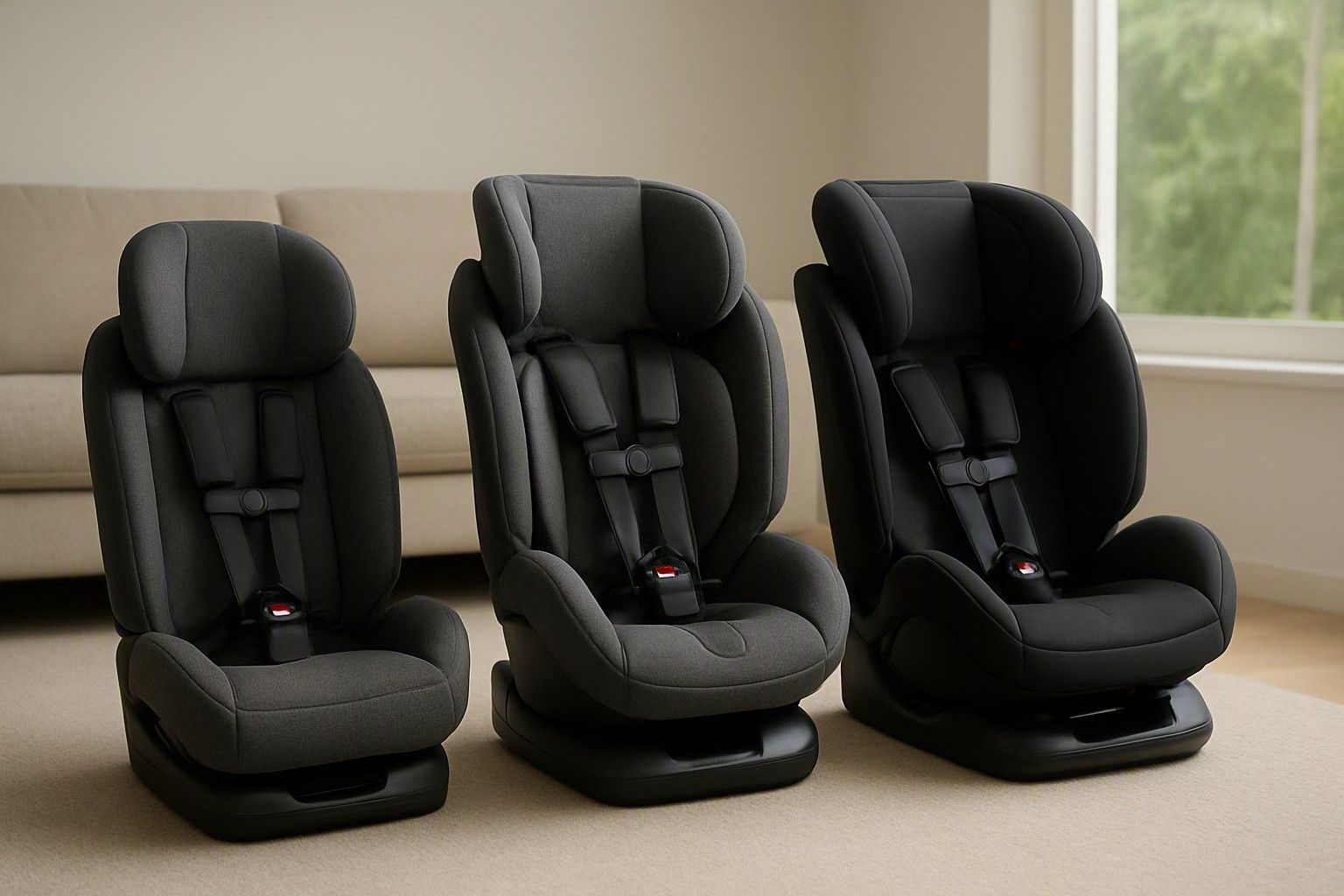
If you've spent any time comparing car seats, you already know the spec sheets look similar until you dig into what each feature actually does for your child on Indian roads. This article breaks down the five or six features that genuinely change how safe, comfortable, and usable a seat is day to day — so you're comparing substance, not just price tags between ₹1,800 and ₹35,000.
5-Point Harness vs Impact Cushion Systems
Most car seats sold in India use a 5-point harness — two shoulder straps, two hip straps, and one between the legs, all meeting at a single buckle. It works by spreading crash force across the strongest parts of a child's body: the hips and shoulders, rather than the soft abdomen. This is the system you want for infants and younger toddlers, and it's standard even in seats near the ₹2,000 price point, so there's no real reason to accept anything less for that age group.
Impact cushion systems, sometimes called a shield or tray, replace the shoulder straps with a padded cushion that sits across the child's chest and stomach, locking into place like a tray table. These appear more often on booster-style seats meant for older toddlers and young children who've outgrown a full harness but still need extra protection over a plain seatbelt. The cushion absorbs and spreads impact force forward rather than through straps, and many children find it quicker to get in and out of independently.
Neither system is universally better — the harness offers more precise restraint and is the safer default for smaller children, while the cushion suits bigger, more independent kids who resist buckles. What matters is matching the system to your child's current stage, not their eventual one, since an oversized harness or an undersized cushion both compromise protection regardless of what else the seat offers.
Side-Impact Protection and Reinforced Shells
Side-impact protection usually shows up as extra padding or a deeper foam-lined shell around the head and torso area, sometimes with a raised wing design on either side of the headrest. In a side collision, which is common in Indian city driving with narrow lanes and cross-traffic at unmarked junctions, this extra shell depth is what keeps a child's head from making direct contact with the seat's hard plastic edge or the car door.
You'll find meaningful variation here even within a similar price band. A seat at the lower end of the ₹6,000 range may offer only a shallow headrest lip, while another seat in the same bracket has a genuinely deep energy-absorbing shell that wraps further around the child. This is one feature where reading the actual product description matters more than the price alone, since two seats priced similarly can differ substantially in how much shell coverage they actually provide.
Reinforced shells also tend to correlate with a heavier overall seat, which is a reasonable trade-off — a slightly bulkier seat that offers real side coverage is worth the extra weight when you're installing it once and using it for months or years. Don't assume a lighter, sleeker-looking seat is automatically less protective, but do check whether the sides extend past the child's ears when seated, since that's the visual cue for genuine wraparound coverage rather than cosmetic padding.
Recline Positions for Sleeping Toddlers
A toddler who falls asleep mid-drive with their chin slumped forward isn't just uncomfortable — an upright seating position during sleep can partially restrict their airway, which is exactly why multi-position recline exists on most seats meant for infants through toddlers. A good recline range lets you angle the seat back enough that a sleeping child's head stays supported and their airway stays open, without loosening the harness fit.
The number of recline positions varies from a single fixed angle on very basic seats to four or five adjustable positions on more feature-rich ones. For a newborn or young infant who sleeps for most car journeys, a near-flat recline option matters a lot more than it does for an older toddler who's mostly awake and sitting up. If your child regularly naps in the car — which is common on longer Indian highway drives or daily school runs that overlap with nap time — prioritize a seat with at least three recline positions and a smooth, one-hand adjustment mechanism you can operate without waking them.
One practical detail buyers overlook: recline adjustment should be possible without removing the harness or loosening the base installation. Seats where you have to re-thread straps every time you recline are frustrating enough that many parents simply stop adjusting them, defeating the point of having the feature at all.
Adjustable Headrests and How the Seat Grows
A headrest that moves independently of the harness is what lets a single car seat stay usable as your child grows taller, rather than becoming obsolete the moment they outgrow the initial height setting. Look for a headrest with multiple height notches — ideally five or more — that you can adjust without re-threading the harness straps through new slots, since combined headrest-and-harness adjustment is faster and less likely to be done incorrectly under time pressure.
The headrest height also determines whether the shoulder straps sit at the correct point on your child's body, which directly affects how well the harness protects them in a crash. Straps sitting too low or too high relative to the shoulders reduce the harness's effectiveness even if every other feature on the seat is excellent. This is exactly why headrest adjustability isn't a comfort feature — it's a safety feature disguised as one.
Because how a seat grows with your child ties directly into which age and weight category it's designed for in the first place, it's worth reading how these headrest and harness adjustments interact with the broader age brackets — you can see how these adjustments link back to age and weight ranges before finalizing which seat category fits your child's current stage and near-term growth.
Ease of Cleaning and Removable Covers
Car seat covers absorb spills, sweat, food, and everything else a toddler produces on a regular drive, so how easily that cover comes off and goes back on matters far more than it looks like on a spec sheet. A cover that unzips fully and reattaches without threading it back through the harness slots saves real time on a weekly basis, whereas a cover that requires partial harness disassembly for even a quick wash tends to get cleaned far less often than it should.
Machine-washable covers are common even on seats priced closer to the ₹2,000 range, but check the care label rather than assuming — some covers marketed as removable are hand-wash only, which is a meaningfully bigger chore. Padding underneath the cover matters too: foam that dries slowly after a wash can smell musty and stay damp against your child's skin for longer than is comfortable.
This cleaning question is inseparable from the fact that Indian cars heat up fast and stay warm even with the AC running, which makes fabric breathability just as important as washability. It's worth understanding why breathable, washable covers matter so much in hot Indian cars, since a cover that traps heat will make your child uncomfortable regardless of how easy it is to clean.
Turning These Features Into a Final Shortlist
None of these features work in isolation — a seat with excellent side-impact shells but a harness that's awkward to adjust daily isn't a better real-world choice than one that's slightly less protective on paper but easy to use correctly every single trip. The seats you're comparing across the ₹1,800 to ₹35,000 range, averaging around ₹7,000, differ mainly in how many of these features they combine well, rather than any one feature being exclusive to expensive seats.
A practical way to shortlist: rank harness fit and side-impact coverage as non-negotiable safety items, then treat recline positions, headrest adjustability, and cover convenience as usability items you weigh against your specific routine — long highway drives, short city trips, or daily nap-time commutes all favor different combinations. A seat in the ₹15,000 bracket often bundles most of these well, but that doesn't mean a ₹6,000 seat is automatically compromised; it depends on which specific features it prioritizes.
Once you've matched these features against your child's age, your car's interior, and your budget, the last step is to weigh these features against every other part of the decision, including installation type and warranty, before you commit to a purchase.
You now have a clear way to separate genuine safety and usability features from ones that just sound good in a listing — harness type, shell depth, recline range, headrest growth, and cover care are the five things worth comparing line by line, whatever price tag the seat carries.

Comments
Be the first to comment.