Car Seat Price Guide for India: What Each Budget Really Gets You
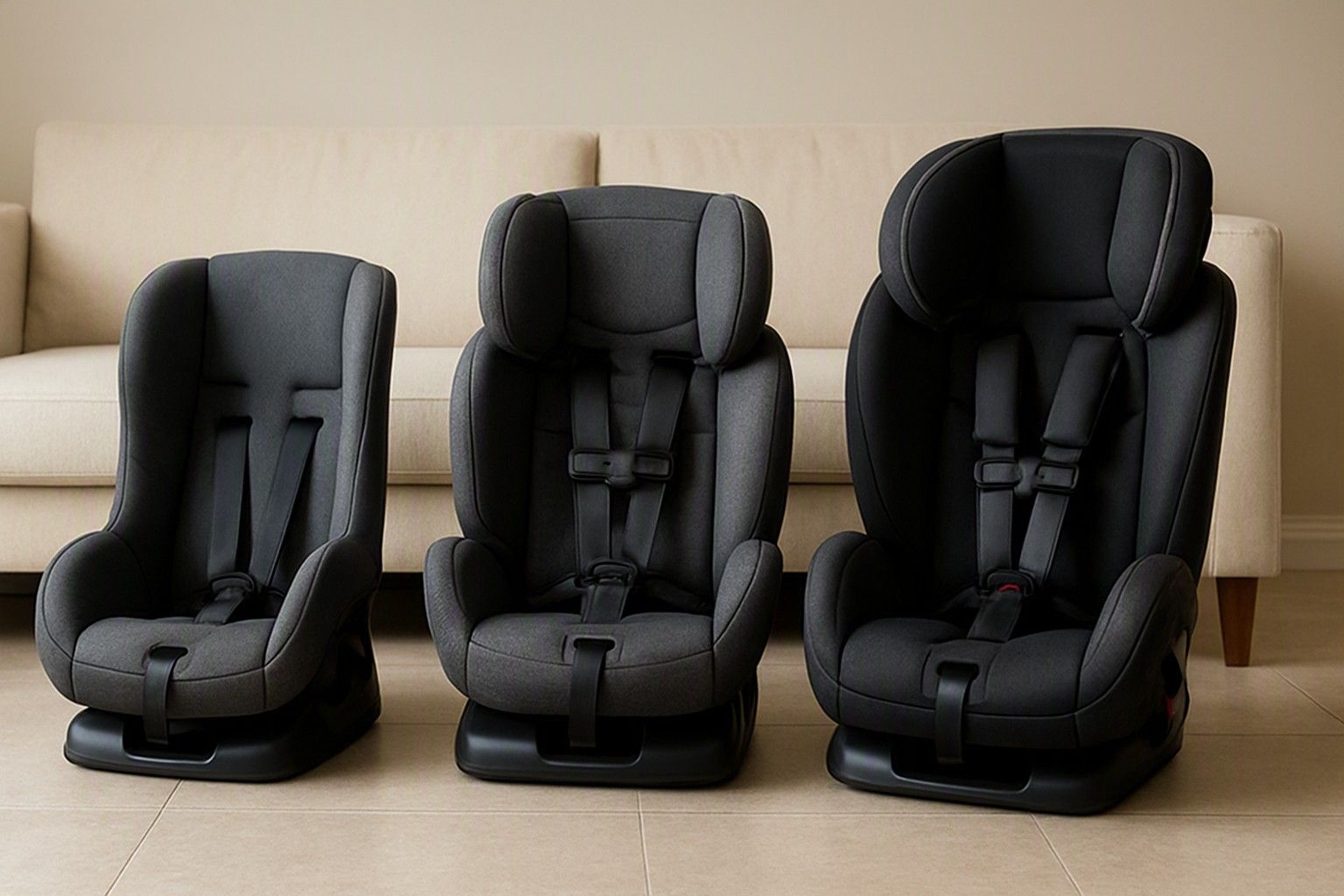
If you're staring at a car seat listing wondering whether the price makes sense, you're asking the right question at the right time. Car seat prices in India span a wide range, and the number on the tag only tells you something once you know what that tier typically includes and leaves out. This guide breaks down what ₹1,800 to ₹35,000 actually buys, so you can look at today's price and decide with confidence instead of guessing.
What Car Seats Cost in India From ₹1,800 to ₹35,000
Car seats sold in India span an unusually wide price band, from ₹1,800 at the bottom to ₹35,000 at the top, with the average landing around ₹7,000. That spread exists because "car seat" covers very different products under one label: a basic booster cushion, a convertible seat that grows with the child through multiple stages, and a fully featured seat with reclining positions, side-impact protection, and premium upholstery all sit somewhere on this line. The price you pay is driven mainly by three things — the build materials and padding density, how many growth stages the seat is engineered to cover, and the complexity of the harness and installation system. A seat priced near the bottom of the range is usually built for a narrower age or weight window, while a seat near the top is designed to be the only seat you buy from infancy through the booster years. Knowing where ₹1,800 to ₹35,000 sits relative to what you actually need matters more than chasing the lowest number on the page, because a seat that's too basic for your child's current stage isn't cheaper if you end up replacing it within a year. The rest of this guide breaks that full range into three practical tiers so you can match your budget to what you'll actually use.
Entry-Level Seats Under ₹2,000
Anything under ₹2,000 sits at the very base of the market, and it's worth knowing exactly what you're getting before you buy on price alone. At this level, you're typically looking at simple booster seats or basic harnessed seats aimed at a single, fairly narrow age or weight range rather than a seat built to grow with your child. Padding tends to be thinner, the shell is usually a simpler moulded plastic without reinforced side-impact zones, and the harness adjustment is often manual with fewer recline or headrest positions. Fabric covers at this tier are functional rather than plush, and you'll rarely find machine-washable covers or breathable mesh panels. That doesn't automatically make these seats unsafe for their intended use, but it does mean the margin for extra features, comfort on long drives, or adaptability as your child grows is thin. This tier makes sense if you have a very specific, short-term need — say, a seat for occasional use, a second car, or a child who's already close to outgrowing car seats altogether. If you're buying a first or only seat for a younger child who'll be using it daily for years, spending everything under ₹2,000 usually means you'll be back in the market sooner than you'd like, which changes the real cost of the "cheap" option.
Mid-Range Seats From ₹6,000
The stretch from ₹6,000 is where most Indian buyers actually end up settling, and it's the tier that tends to offer the best balance of coverage and cost. Seats in this range are far more likely to be convertible — designed to serve a child across multiple stages, from rear-facing infant use through forward-facing toddler use, sometimes into early booster years. You'll start seeing genuine side-impact padding, multi-position recline for both awake and sleep time in the car, and harnesses with several adjustment points instead of just one or two. Covers are usually a step up too, with better breathability and, in some cases, removable and washable fabric, which matters more than it sounds once you're dealing with spills and long trips. Installation options also widen at this level; many seats here support both seatbelt and anchor-based fitting, giving you more flexibility depending on your car. This is the tier where the price genuinely reflects a seat that's meant to last through several developmental stages rather than a single one, which is why it absorbs the bulk of the market. If your primary buyer question is really "what should I spend," the honest answer for most families is that value peaks somewhere in this ₹6,000 band rather than at either extreme.
Premium Seats From ₹15,000
Once you cross into ₹15,000 and above, you're paying for refinement and depth of features rather than basic functionality — the core job of protecting your child in a moving car is already handled well below this price. At this tier, expect denser, more advanced energy-absorbing padding, additional side-impact structures, and harness systems that adjust more precisely and with less effort. Recline and headrest positions multiply, premium seats often include ventilated or memory-foam-style padding for long drives, and covers are typically higher-grade fabric that's easier to clean and more resistant to wear over years of daily use. Some seats in this range also add conveniences like one-hand harness adjustment, rotating bases for easier loading, or extended growth ranges that stretch usable life well beyond what a mid-range seat offers. Whether that jump is worth it depends entirely on what you value — a seat that lasts noticeably longer, is markedly easier to install correctly every single time, or is more comfortable on long highway drives can justify the premium for many families, but not every added feature at this level changes real-world safety outcomes. Before paying near ₹35,000, it's worth taking the time to understand which premium features actually justify the jump in price rather than assuming a higher number always means a meaningfully better seat for your specific car and child.
Is the Average Price of ₹7,000 Worth It Today?
An average price of ₹7,000 sitting inside a ₹1,800 to ₹35,000 range tells you something useful on its own: the market has a real center of gravity, and it lands closer to the mid-range tier than to either extreme. That's a reasonable place for a price to sit, and it reflects the fact that most buyers are choosing convertible, multi-stage seats over the most basic boosters or the most feature-heavy premium models. If you see a seat priced near ₹7,000 today, you're not looking at an inflated number waiting to fall — you're looking at what a genuinely capable, multi-stage seat costs in this market right now. The more useful question isn't whether ₹7,000 is high or low in the abstract, but whether the specific seat in front of you, at that price, matches what a typical mid-range seat should include: real growth-stage coverage, adequate side-impact padding, and a harness system with enough adjustment range for your child's current and near-future size. If it does, the price is doing its job. If a seat priced near or above ₹7,000 is missing those basics, the issue isn't the price point itself, it's a mismatch between price and build, and that's worth checking against the tier breakdowns above rather than treating ₹7,000 as either a red flag or a bargain by default.
Reading Price History Before You Commit
Price history is more useful than a single day's listing price, because it tells you whether what you're seeing right now is a normal price for that seat or an unusual spike. A seat that has consistently sat in a stable band and is currently priced within or near that band is priced fairly for what it is — there's no signal there that says you should hold off. What you're really checking for is whether the current price is an outlier on the high side relative to its own recent history, not whether some lower price might theoretically appear later; chasing a hypothetical future price is a poor use of time when the seat you need is in front of you now. Once you've confirmed the price itself is reasonable against its own history, the more important step is making sure the seat's type, stage coverage, and installation method actually fit your car and your child, because a fairly priced seat that's the wrong fit for your back seat or your child's current weight isn't a good deal at any price. That's really a separate decision from price, and it's worth working through deliberately rather than assuming the budget tier alone settles it — you can connect your budget to the seat type and installation you actually need to close that gap before you check out.
You now have a clear read on what ₹1,800 to ₹35,000 actually buys in India, where your budget realistically lands among the three tiers, and how to judge whether today's price on a specific seat is fair rather than inflated. That's the real answer to how much you should spend and whether it's a good time to spend it — the rest comes down to matching that budget to the seat type and fit your car and child actually need.

Comments
Be the first to comment.