Rear-Facing, Convertible and Booster Seats: Which Type Fits Your Child
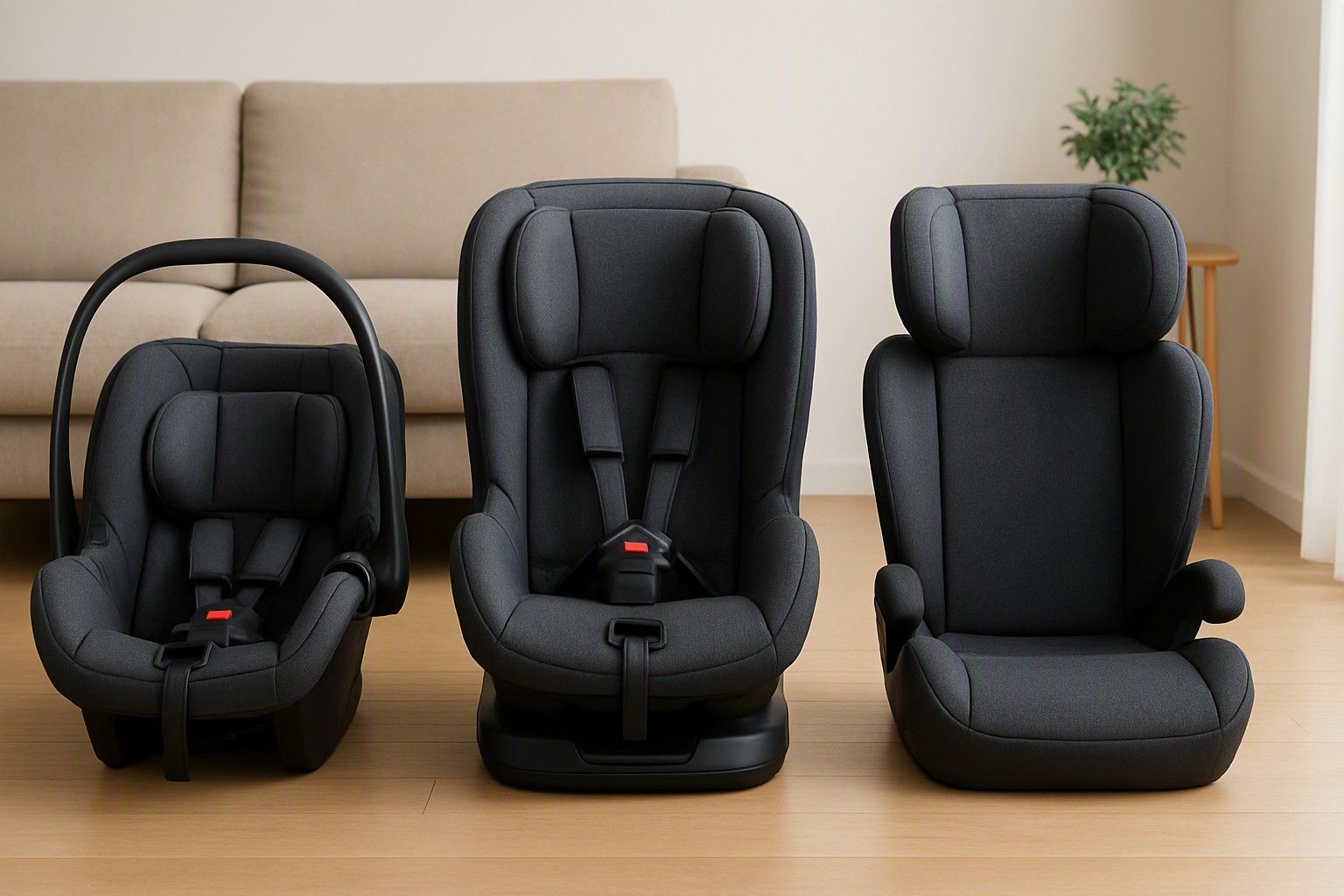
If you're staring at three different car seat categories wondering which one your child actually needs, the answer comes down to two numbers: age and weight, not brand or looks. This article breaks down rear-facing, convertible and booster seats by exactly when each one applies, so you can match a seat to your child's current stage instead of guessing.
Infant Rear-Facing Seats for Newborns
A rear-facing infant seat is built for one job: cradling a newborn's still-developing neck and spine in a position that spreads crash force across the back of the seat rather than the front of the body. These seats are compact, usually come with a carry handle, and often click into a base that stays fixed in the car, so you can lift the baby out without waking them. Most are designed for infants from birth up to somewhere between 9 and 13 kg, depending on the model, and they're deliberately snug — a newborn shouldn't have room to shift inside the shell.
In Indian cars, these seats matter more than people expect, because most everyday driving here involves sudden braking in traffic, not just highway speed. A rear-facing seat handles that kind of stop-start jolt far better than being held in someone's lap or placed in a forward-facing seat too early.
The trade-off is that an infant seat has a short useful life. Babies outgrow the weight or height limit within the first year or so, which means this category is almost never a one-time purchase on its own — it's the first of at least two seats most families will buy, unless they skip straight to a convertible seat designed to work from birth.
Convertible Seats That Grow With Your Child
A convertible seat is built to change orientation as your child grows — it starts rear-facing for infants and toddlers, then turns forward-facing once the child crosses the weight and height threshold set by the seat's manufacturer. This is the category most Indian parents end up buying if they want fewer purchases overall, because a single convertible seat can realistically carry a child from infancy through the early primary-school years.
The seat itself is bulkier and heavier than an infant seat, and it doesn't come with a detachable carry handle or a separate base you can pop in and out — it stays installed in the car. That's a fair trade for the years of use you get out of it. The harness systems on convertible seats are also usually adjustable across multiple slot heights and recline angles, so the seat genuinely reconfigures itself rather than just being a bigger version of the same shell.
What makes this category tricky to shop for is that not every convertible seat suits every child equally well at every stage — some are roomier for bigger infants but less snug for a newborn, others are the reverse. The harness position, buckle height and recline range all shift as your child grows, and getting that transition right matters as much as the seat's price tag. That's the point where it helps to match harness and safety features to the stage your child is in rather than assuming any convertible seat works identically at every age.
Booster Seats for Older Kids
Once a child outgrows the harnessed convertible seat — typically once they're taller and heavier than what the internal harness can safely secure — a booster seat takes over. A booster doesn't have its own harness system; instead, it raises the child up so the car's existing seatbelt sits correctly across the collarbone and hips instead of cutting across the neck or riding up over the stomach, which is what happens when a child this size uses the seatbelt without any lift.
Boosters split into two rough types: high-back boosters that add side support and headrest height, and backless boosters that are essentially a raised cushion with belt guides. High-back versions tend to suit cars with lower seatbacks or no built-in headrest at that height, while backless boosters work fine in cars that already have tall seatbacks and are easier to shift between vehicles.
This is usually the longest-lasting category by calendar time, since children often stay in the appropriate weight and height band for a booster for several years before they're big enough to use the seatbelt alone. It's also the simplest seat to install correctly, since there's no harness routing or recline angle to get right — just correct positioning and a properly worn seatbelt over it.
How Weight and Height Limits Decide the Switch
The single biggest mistake in this whole category isn't picking the wrong seat — it's staying in the right seat for too long or moving out of it too early. Every seat, whether infant, convertible or booster, is stamped with a weight limit and often a height limit too, and those numbers are the actual trigger for switching, not the child's birthday. A two-year-old who's unusually tall may need to move out of a rear-facing position sooner than a same-age child who's smaller, and a five-year-old who's still light for their age might need another year on a harnessed seat before a booster makes sense.
The practical sign that a switch is overdue is usually physical: the top of the child's head getting close to the top of the shell in a rear-facing seat, shoulders rising above the highest harness slot in a convertible seat, or a child slouching to fit a booster meant for someone smaller. Checking these against the specific limits printed on the seat matters more than comparing against what a neighbour's child is using at the same age, since body size varies a lot between children of the same age.
This is also where seat features stop being generic and start being decision-specific — recline range, harness slot count, and shell depth all affect how long a seat actually lasts your child before the numbers force a change. That's worth working through in detail when you match harness and safety features to the stage your child is in, since the right feature set is what stretches or shortens the time before you need the next category.
One Convertible Seat vs Buying Multiple Seats Over Time
There are two honest paths here, and neither is wrong — they just suit different budgets and different tolerance for buying more than once. The first is a single convertible seat bought early, used rear-facing for the toddler years and then turned forward-facing until the child is ready for a booster. The second is buying an infant seat first, replacing it with a convertible seat once outgrown, and then a booster after that — three separate purchases spread over several years.
Buying once with a convertible seat usually means a higher amount spent upfront, since these seats sit toward the middle and upper part of the ₹6,000 to ₹15,000 range rather than the lower end. Buying in stages spreads the cost out, and an entry-level infant seat can be found closer to the ₹2,000 band, but the total spent across three seats over several years often lands higher than what one well-chosen convertible seat would have cost.
There's also a practical angle beyond price: buying in stages means dealing with installation and adjustment more than once, while a single convertible seat means learning the seat's quirks once and living with them for years. Given prices across this category run from ₹1,800 to ₹35,000 with an average around ₹7,000, the gap between the cheapest infant seat and a mid-range convertible isn't as wide as it first looks once you count what you'd spend replacing seats twice. It's worth working out which path fits your situation by looking at how it plays out financially — you can see how each choice affects what you pay across budget tiers before deciding which route to take.
Picking the Right Category for Your Next Step
By now the category itself should be clear: a newborn needs a rear-facing infant seat, a toddler through early-primary years needs either a forward-facing convertible or the forward-facing stage of a convertible bought earlier, and an older child who's outgrown the harness needs a booster paired with the car's own seatbelt. Where people usually get stuck next isn't the category — it's matching that category to a specific seat's features, install method and price without losing track of how the decision fits the rest of the purchase.
Once you know which type you need, the next real question is how that choice interacts with everything else you're deciding — install method, budget, and how long you expect to keep the seat. That's the point to line up your seat-type choice against every other buying decision rather than treating type selection as separate from the rest of the buying process.
Matching your child's current age and weight to the right seat category — rather than to what looks premium or what a friend used — is really the whole decision here. Once you know whether you need a rear-facing infant seat, a convertible, or a booster, the rest of the shopping process is just narrowing down features and price within that category.

Comments
Be the first to comment.