Car Seat Safety Certifications, Expiry and Installation Mistakes
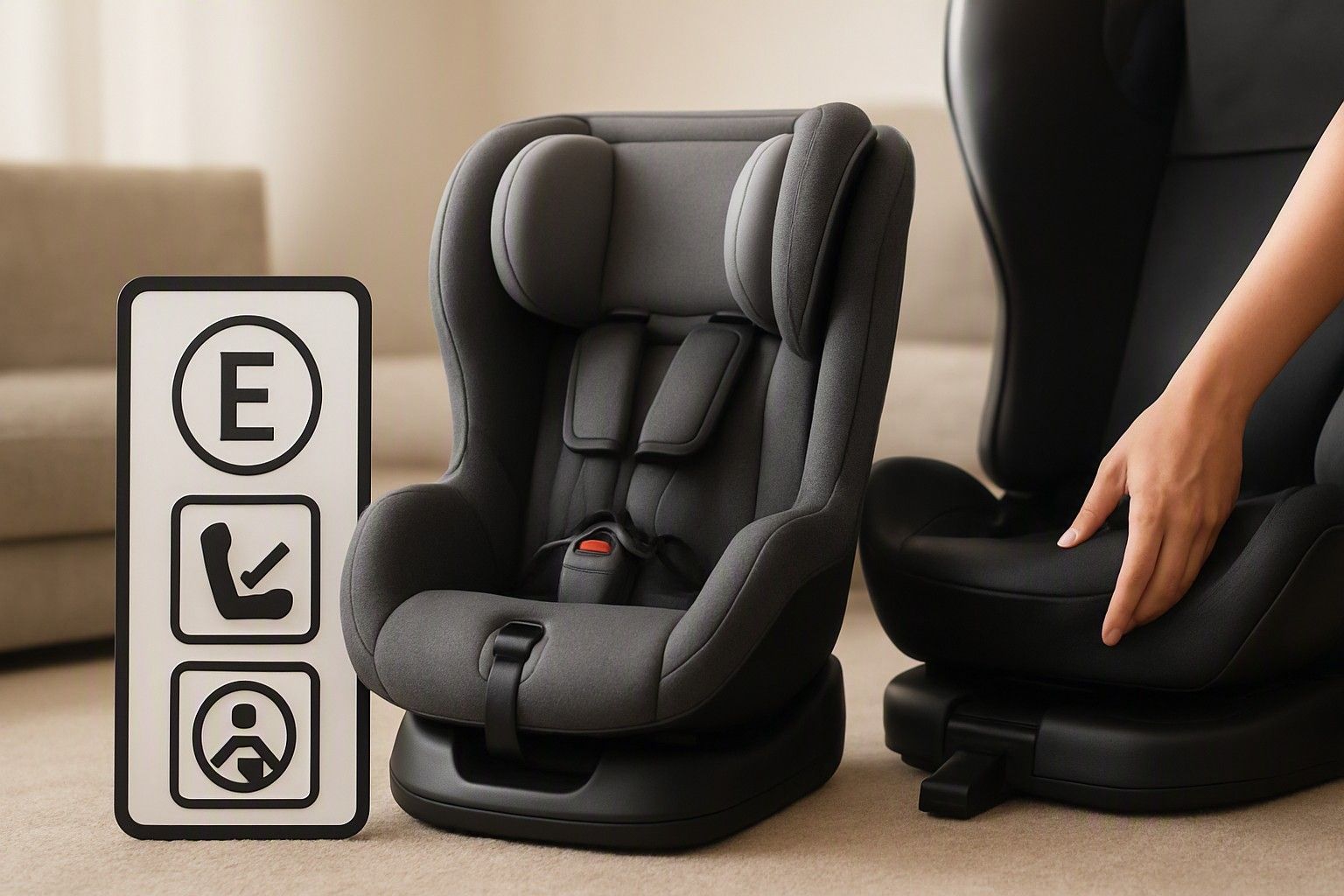
If you're about to buy a car seat, the price tag matters far less than whether the seat is genuinely certified, still within its safe-use life, and fitted correctly in your car. This article walks through exactly what to check on the seat itself, what to check before buying second-hand, and where most parents go wrong during installation. By the end, you'll know how to tell a properly safe seat from one that only looks the part.
Certification Marks to Look For Like ECE R44 and R129
The single most important thing to verify before spending anywhere from ₹1,800 to ₹35,000 on a car seat is whether it carries a genuine safety certification. In practice this means looking for an ECE R44 or the newer ECE R129 mark, usually printed on a sticker or embossed on the plastic shell near the base of the seat, along with an approval number. These are European testing standards that most seats sold in India are built to, since India does not yet run its own mandatory crash-test certification scheme for child seats. ECE R129, also called i-Size, is the more recent standard and tests seats using a wider range of crash-test dummies and includes side-impact testing, which R44 does not always cover in the same depth. Neither standard being "better" on paper matters if the sticker is missing, illegible, or looks freshly glued on — that is usually a sign of a counterfeit or grey-market import. A genuine certification label will also list a weight or height range the seat is approved for, an orientation (rear-facing, forward-facing, or both), and a manufacturing date. If a seller cannot show you this label clearly in photos or in person, treat that as reason enough to walk away, regardless of how attractive the price looks.
Why Car Seats Have an Expiry Date
Car seats are not built to last forever, and most carry a usable life of around six to ten years from the date of manufacture, stamped somewhere on the shell or base. This isn't a marketing tactic to sell you a new one — the plastic shell and foam padding genuinely degrade with heat exposure, UV light through car windows, and repeated stress from daily buckling and unbuckling, all of which are amplified in Indian summers where in-car temperatures regularly climb well above what the seat was tested under. A seat that looks structurally fine after eight years of sitting in a hot parked car may have brittle plastic that cracks on impact instead of flexing to absorb it, which defeats the entire purpose of the seat. Harness webbing also loses tensile strength over time, especially with UV exposure, so a strap that held firm when new may stretch or fray under sudden load years later. This is precisely why checking the manufacturing date matters as much as checking the certification mark — a seat could be R129 certified and still be near the end of its safe life if it was manufactured years before you bought it, including if it sat unsold in a warehouse or store shelf. Always ask for the manufacturing date, not just the purchase date, before buying.
Should You Ever Buy a Used Car Seat?
Buying a used car seat is one of the riskier shortcuts a parent can take, and it deserves more caution than buying most other used baby gear. The core problem is that you cannot see internal damage — a seat that has been in even a minor accident can have hairline cracks in the shell or compressed foam that won't protect a child the way it's designed to, and there is no visible way to confirm this without knowing its full history. If you're considering a used seat from someone you know well and trust completely, the minimum checks are: confirm it has never been in an accident of any kind, check the manufacturing date is still comfortably within its expiry window, inspect the harness webbing for fraying or stretching, and confirm all the certification labels are intact and legible. Buying a used seat from an unknown online seller or a marketplace listing with no accident history is much harder to justify, since the savings compared to a new seat in the ₹2,000 or ₹6,000 range are often not large enough to offset the risk of an unknown history. Given that seats at the lower end of the ₹1,800 to ₹35,000 range already exist for budget-conscious buyers, a new seat with a verifiable manufacturing date is almost always the safer call.
The Most Common Installation Mistakes Parents Make
A certified, unexpired seat still fails to protect a child if it's installed loosely or at the wrong angle, and installation error is where most real-world safety gaps actually show up. The most frequent mistake is a harness that's too loose — the general check is that you shouldn't be able to pinch a fold of the harness strap at the shoulder once your child is buckled in; if you can, it needs tightening. Another common error is installing a rear-facing seat at too upright an angle, which can let a child's head fall forward and restrict breathing on long drives, especially with infants who don't yet have full neck control. Parents also frequently skip the recline-angle indicator or level line built into the seat, assuming "it looks fine" is good enough, when a few degrees off the intended angle changes how crash forces get distributed through the child's body. A seat that rocks or shifts more than an inch side-to-side or front-to-back at the belt path after installation isn't secured tightly enough, no matter how good the seat itself is. Whether you're using the car's built-in anchor system or threading the seatbelt through manually also changes which mistakes are most likely, and it's worth understanding see how ISOFIX and seatbelt fitting differ in getting this right before you assume your current setup is correct. Re-checking the installation every few weeks, and always after moving the seat between cars, catches most of these errors before they matter.
Red Flags That Signal an Unsafe or Fake Seat
Beyond the certification sticker itself, a few practical signs point to a seat that is either counterfeit, poorly made, or simply not worth trusting with a child's safety. A price that sits dramatically below the ₹1,800 to ₹7,000 range for a seat claiming full certification and features is worth questioning — genuine testing and compliance cost money to build in, and a seat priced far outside what the market supports for its claimed features is more likely cutting corners you can't see. Harness buckles that feel flimsy, plastic that flexes or creaks under normal handling, or foam padding that feels paper-thin under the fabric cover are all signs of a shell that hasn't been built to absorb real crash energy. Missing or vague labelling — no manufacturing date, no weight range, no approval number alongside the certification mark — is a bigger warning sign than the mark's absence alone, since it suggests the label itself may not be genuine. Sellers who can't answer basic questions about the seat's certification standard or manufacturing date, or who are reluctant to show close-up photos of the labels, should raise the same suspicion as a missing sticker. It's worth taking a few minutes to cross-check these against the features worth paying for so you're not mistaking a genuine cost-saving feature for a corner being cut on safety. When in doubt, the safer move is to buy from a seller who can clearly document where the seat came from.
Building Your Final Safety Checklist
Pulling this together, a genuinely safe car seat purchase rests on four checks done in order: a legible, genuine certification mark (ECE R44 or R129), a manufacturing date that leaves years of usable life remaining, a seller or listing history free of any accident or unknown-origin red flags, and an installation you've personally verified is tight, correctly angled, and rocking less than an inch at the belt path. None of these checks depend on how much you spend — a seat at ₹2,000 that passes all four is safer than a seat at ₹15,000 that fails even one. Run through this list every time you buy a seat, move it to a new car, or hand it down to a second child, since expiry dates and wear don't pause just because the seat already proved itself once. Once these checks are second nature, you can bring these safety checks together with the rest of your buying decisions and move forward with a purchase you don't need to second-guess.
You now know what a genuine certification mark looks like, why an expiry date matters as much as the price tag, and where installation quietly goes wrong even with a good seat — which is really the full answer to whether a seat will actually protect your child. Carry this checklist with you when you buy, and you can act on a purchase today with confidence instead of second-guessing it later.

Comments
Be the first to comment.