Choosing a Car Seat for Indian Heat and Long Highway Trips
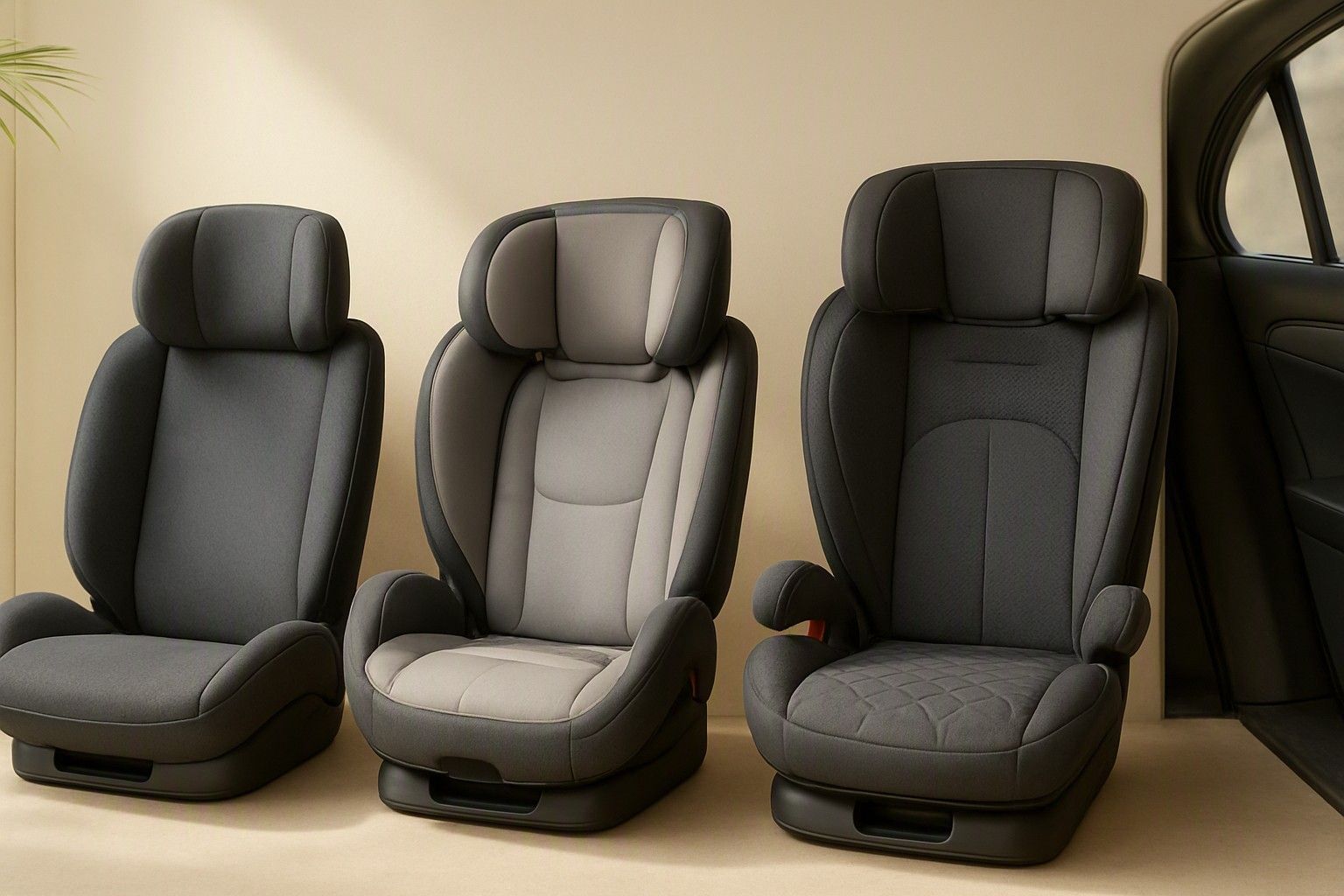
If you're driving long stretches in Indian heat with a child strapped in behind you, comfort and ventilation matter as much as safety ratings. This article looks at what actually holds up to parked-car temperatures, sweaty highway hours, and the mess that comes with both — so you know which features are worth chasing and which are just marketing.
Why Hot Parked Cars Are a Real Car Seat Concern
A car left in an open parking lot in most Indian cities between April and June can turn into an oven within twenty minutes, and the car seat's plastic shell, buckles and harness clips absorb that heat directly. Dark-coloured seats fitted with hard plastic buckles are the worst offenders — a buckle that's been sitting in direct sun can genuinely burn a child's skin on contact, and the padding underneath can stay uncomfortably warm long after you've started the AC. This isn't a theoretical risk limited to extreme climates; it happens in ordinary school-run and errand-running situations across most of the country for a good six months of the year.
This is why heat tolerance deserves to be treated as a real buying criterion here, not an afterthought. Before you strap your child in after the car has been parked, get into the habit of checking the buckle and chest clip temperature with your own hand first. Lighter fabric colours and shells that don't trap heat in thick foam make this daily routine less of a gamble. It also affects how long you can leave a sleeping child in the seat with the engine off — something that comes up constantly on Indian road trips when you stop for food or fuel and don't want to wake anyone. None of this is about finding a seat immune to heat; no seat is. It's about reducing how uncomfortable and risky that first contact is, every single time.
Breathable Fabrics and Ventilated Shells
Once you accept that the seat will get hot regardless, the next question is how quickly it cools down and how bearable it is while your child is actually sitting in it during a drive. This is where fabric choice does more work than most parents expect. A seat covered in thick quilted fabric with no airflow channels traps body heat against a child's back within minutes of sitting down, even with the AC running, because the air conditioning cools the cabin, not the layer of padding pressed against skin. Seats built with mesh panels, perforated foam, or fabric specifically described as breathable let some of that trapped heat escape, which matters enormously on a three or four hour highway stretch.
Shell design plays a role too. Seats with moulded air channels or vents built into the plastic shell behind the padding allow a small amount of airflow even when the seat is stationary, which keeps sweat from building up on a child's back and neck during long sits. This is genuinely more useful in Indian conditions than in cooler markets, which is part of why some seats sold here are designed with visible vent cutouts as a selling point rather than a cosmetic detail. You'll find ventilated designs across price points, including within the ₹6,000 range, so it isn't a feature reserved only for premium seats. Removable, washable covers in breathable fabric are worth prioritising over ones that are simply padded thick, since thickness alone does nothing for heat and actually works against you.
Recline and Support for Long-Distance Comfort
Heat is only half of what makes a long highway trip uncomfortable for a child — the other half is posture and recline, especially when a nap happens somewhere on a four or five hour drive. A seat that only offers one upright position forces a sleeping child's head to loll forward or sideways with no support, which gets uncomfortable fast and can wake them at every bump. Multi-position recline, ideally adjustable without needing to unbuckle the child, lets you drop the seat back for sleep and bring it upright again for feeding or play without a full stop-and-readjust every time.
Side head support matters just as much on Indian highways, where lane changes, potholes and sudden braking are more frequent than on smoother, more predictable roads elsewhere. Deep side wings that cradle the head stop it from snapping sideways during a sharp turn and keep a sleeping child's neck in a more stable position for hours at a stretch. Padding density in the seat base also affects how a child tolerates sitting for long periods — too firm and it becomes uncomfortable on a bumpy road, too soft and it offers no real support and compresses quickly over time. Because these comfort features intersect directly with safety and fit, it's worth taking the time to check which comfort features to prioritise in the seat itself rather than judging recline quality by how it feels for thirty seconds in a showroom.
Sun Shades, Coolers and Useful Accessories
A handful of accessories genuinely earn their place on a long, hot drive, and a few are mostly padding for the price tag. A window-mounted sun shade that blocks direct sunlight from hitting the car seat is one of the most practical additions you can make, since direct sun on a child's arm or face for an hour straight is far more uncomfortable than ambient cabin heat. These are inexpensive, often available well under ₹2,000, and make a noticeable difference regardless of which seat you own.
Seat-specific accessories like clip-on fans, small battery-powered coolers that attach to the headrest, and cooling gel pad inserts are marketed heavily around summer but vary a lot in real-world usefulness. A cooling gel insert that sits under the child directly on the seat padding can meaningfully reduce the sweaty-back problem on a long drive, and it's a low-cost, easy addition regardless of the seat's original design. Clip-on fans depend heavily on your car's own airflow and battery life, and are more of a convenience than a necessity if your seat already has decent ventilation built in. Reflective sunshades for the windscreen and rear windows, used consistently even on short stops, do more to keep the whole cabin — and therefore the seat itself — from overheating than any single seat accessory can on its own.
Keeping the Seat Clean After Spills and Travel
Long trips mean snacks, spilled water bottles, motion sickness, and occasionally worse, and a car seat that's hard to clean turns a minor mess into a multi-day smell problem in a closed car. This is one of the most underrated practical factors for Indian road trips specifically, where AC-heavy, closed-window driving for hours means odours linger far longer than in a car with windows down. A cover that unzips fully and goes into a washing machine is worth prioritising over one that only allows spot cleaning, because spot cleaning rarely gets rid of milk or juice smells completely.
Fabric colour and pattern also affect how forgiving the seat is day to day — a lighter solid colour shows every stain, while a mid-tone pattern hides normal wear far better over months of use. Check whether the manufacturer specifies machine-wash instructions or hand-wash only before you buy, since a cover that needs hand-washing after every spill on a road trip becomes a genuine hassle rather than a minor inconvenience. It's also worth checking how easily the harness straps themselves can be wiped down, since these often get sticky from snacks and are harder to fully clean than the fabric cover. None of this changes safety performance, but it changes how usable and pleasant the seat is on trip after trip, which is ultimately the point of buying one built for real Indian travel conditions.
Balancing Climate Comfort With Your Other Priorities
None of these heat and comfort factors should override the fundamentals of fit, safety rating and age-appropriate design — they're a layer on top, not a replacement. A seat priced anywhere from ₹1,800 to ₹35,000, with the market averaging around ₹7,000, can be built with genuinely breathable fabric and good ventilation; price alone doesn't guarantee climate comfort, and a seat in the ₹15,000 range without vented panels can still leave a child sweating on a long drive. The practical approach is to treat ventilation, recline quality and washability as filters you apply after you've already narrowed down seats by your child's weight, height and the harness type you need.
If you're still working through the wider set of trade-offs — group type, installation method, budget tier — it helps to slot climate needs into the full set of buying considerations rather than shopping for heat comfort in isolation. A seat that handles Indian summers well but doesn't fit your car's back seat properly, or doesn't suit your child's current stage, isn't actually the right buy no matter how cool it stays. Think of everything covered here as a tie-breaker between two or three seats that already meet your non-negotiables, not as the first filter you apply.
The right car seat for Indian heat and highway travel isn't the one with the most accessories — it's the one with breathable fabric, real recline for sleep, easy-to-clean covers, and a shell that doesn't turn into a hazard in a parked car. Match those against your child's fit and your budget, and you've genuinely answered what handles Indian heat and long trips best, rather than just guessed at it.
Comments
Be the first to comment.