What Coffee Maker Capacity Do You Need for Your Household
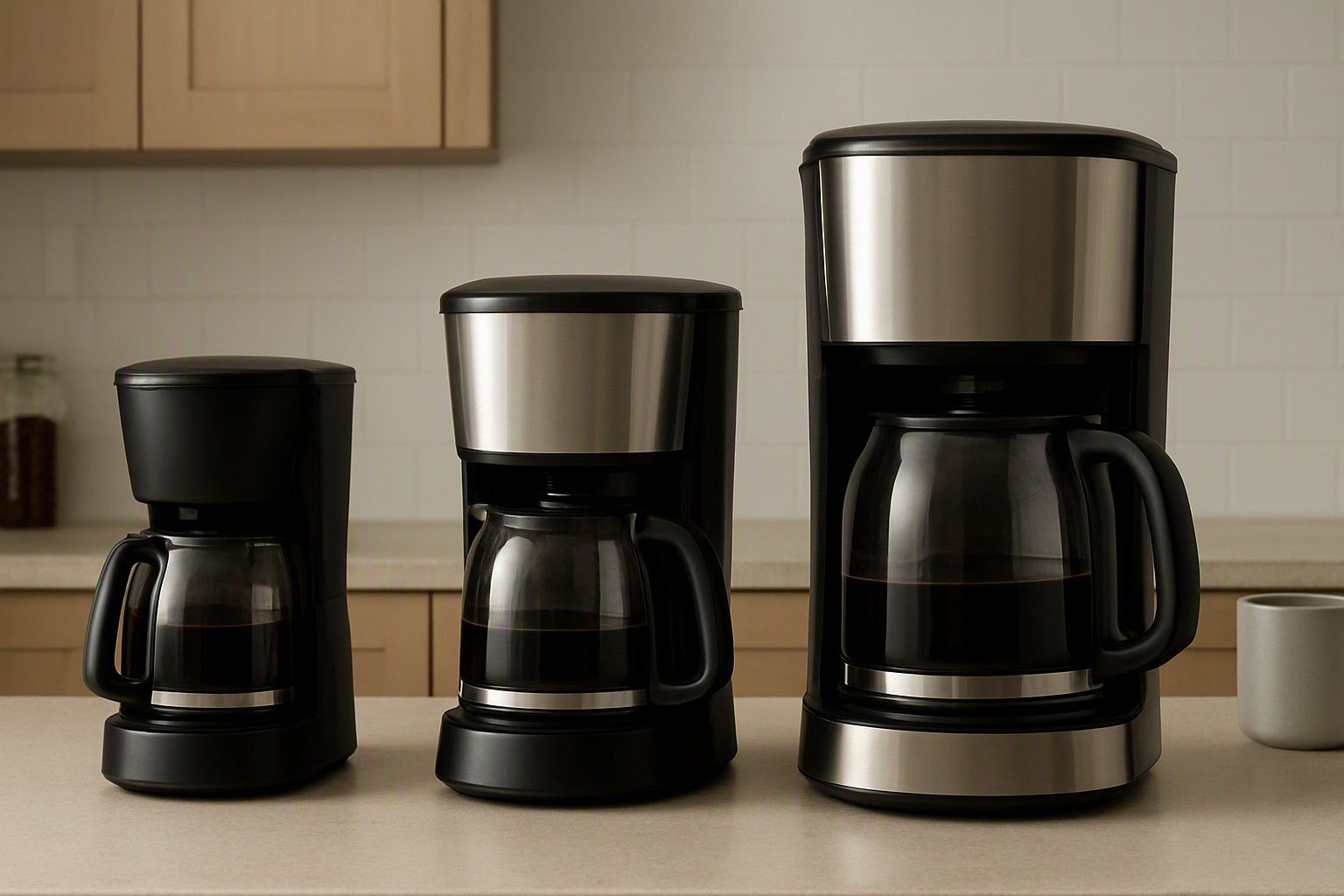
If you've ever brewed a full pot and thrown half of it away, or found yourself refilling the machine three times before everyone's had their coffee, you've already felt what happens when capacity is wrong. This guide walks through how many cups you actually need based on who's drinking, how often guests show up, and how much counter space you're willing to give up for it.
Understanding Cup Capacity Ratings
Cup capacity on the box is one of the most misleading numbers in the entire category, and it's worth untangling before anything else. Most brands rate capacity using a "coffee cup" measure of roughly 80-100 ml, not the 150-180 ml cup you'd actually drink from at home. So a machine advertised as a 12-cup maker is often producing something closer to 6-7 real mugs of coffee, not 12. This matters enormously when you're sizing a machine against your household, because taking the printed number at face value will leave you either underestimating what you need or buying far more machine than your kitchen will ever use.
The honest way to size a coffee maker is to count actual mugs, not manufacturer cups. Ask yourself how many full mugs you need in one sitting, at the busiest single moment of your day, not across the whole day. A household that drinks six mugs spread across morning, afternoon and evening doesn't need a six-mug-capacity machine; it needs whatever comfortably covers its single busiest pour, usually the morning rush. Once you're thinking in real mugs rather than rated cups, the rest of this decision gets a lot simpler, and you stop paying for capacity you'll never actually pour.
For a Couple or Single Working Professional
If you're buying for one or two people, the calculation is straightforward: you rarely need more than 2-4 real mugs in a single sitting, even accounting for a second cup mid-morning. Single-serve drip machines, small French presses, and compact espresso-style makers built for 1-2 servings fit this pattern well, and they dominate the ₹599 and ₹1,499 price bands precisely because most urban Indian households buying a first coffee maker fall into this size bracket.
There's a real cost to over-buying here beyond just money. A larger machine sized for 8-10 mugs, sitting in a kitchen that only ever needs 2, means longer heating cycles for a partial brew, more water and coffee wasted on cleaning cycles designed for bigger batches, and a bulkier footprint on a counter that was never meant to host it. For a couple or a single professional, buying smaller is not a compromise, it's the correct decision. If flexibility matters, look for a machine with a smaller minimum brew setting rather than a large machine you'll run half-full most mornings, since running any coffee maker well below its rated capacity tends to affect brew strength and consistency over time.
Price-wise, this segment is well served across the range, and paying toward the upper end of the ₹499 to ₹2,499 stretch typically buys sturdier build quality rather than more capacity you won't use.
For Joint Families and Frequent Guests
Once you're brewing for four or more people regularly, or hosting guests often enough that it's a weekly occurrence rather than an exception, the math changes completely. A household of five needing coffee within the same 20-minute morning window realistically needs a machine capable of 8-10 real mugs in one brew cycle, not the 4-6 that suits a smaller family. Buying a small machine and running it twice back-to-back might look like a workaround, but it means double the wait, double the cleaning, and a heating element working harder across two cycles than one larger cycle would demand.
Joint families should also factor in variability, not just average daily need. If weekday mornings need 4 mugs but weekend family gatherings or guest visits regularly need 8-10, sizing for the higher number makes more sense than sizing for the average, because running a machine at full rated capacity occasionally is far less wasteful than running an undersized one constantly at its limit. Machines built for this kind of volume tend to sit in the ₹4,999 band and above, reflecting larger water reservoirs, sturdier warming plates, and hardware built to handle repeated full-capacity brews without shortening the machine's working life. Given that prices for this category run from ₹499 up to ₹24,999, a joint family paying nearer the top of that range for a larger, more durable unit is typically buying longevity under heavier daily use, not unnecessary extras.
Countertop Space in Indian Kitchens
Capacity and counter space are two sides of the same decision, and Indian kitchens make this trade-off sharper than most. Modular kitchens in apartments frequently have limited fixed counter length once you account for a mixer grinder, an electric kettle, and daily prep space, so a large 10-12 mug machine can end up permanently occupying a spot you needed for something else. Before deciding on capacity, it's worth physically measuring the spot you intend to keep the machine in, including clearance for the lid to open and steam to vent, rather than judging by the box dimensions alone.
This is exactly where oversizing becomes a real regret rather than a theoretical one. A couple buying a large-capacity machine because it seemed like better value per rupee often ends up frustrated by how much space it eats up daily for a capacity they rarely use. It's one of the mistakes people make with oversized machines, and it's avoidable simply by matching capacity to actual household size before size to shelf space. If your kitchen counter is genuinely tight, a smaller-capacity machine that fits comfortably and gets used daily beats a larger one that gets shoved into a cabinet after the first month.
Matching Capacity to Machine Type
Capacity doesn't behave the same way across every machine type, which is worth knowing before you fix a number in your head. A drip coffee maker's capacity is fairly literal, it's the volume of the reservoir and carafe. A French press's capacity is limited by the size of its glass or steel beaker, and larger presses beyond 4-cup sizes get unwieldy to plunge and pour safely. Espresso-style and single-serve machines measure capacity differently altogether, often in terms of reservoir refills rather than mugs per cycle, since they brew one serving at a time rather than a full batch.
This means the "right" capacity number isn't just about household size, it's also about which machine type you're comparing it against, and it's worth taking a moment to revisit the different machine types before finalising a capacity figure, since a 6-mug drip machine and a 6-serving single-serve machine serve very different daily routines despite the same nominal number. A joint family leaning toward a single-serve machine, for instance, may need to size up on reservoir capacity rather than per-cup capacity, since each family member brewing separately draws down the water tank faster than one shared batch would. Matching the type to your routine first, then sizing capacity within that type, gives a more reliable answer than chasing a cup number in isolation.
Capacity, in the end, comes down to one honest count: how many real mugs your household needs at its busiest single moment, not the inflated number on the box. Size for a couple's smaller daily pour, a joint family's bigger and more variable one, or a single-serve routine's reservoir needs, and you'll land on a machine that gets used every day instead of one that's either constantly overworked or mostly sitting idle on a counter you didn't have room to spare.
Comments
Be the first to comment.