Coffee Maker Maintenance and Running Costs: Descaling, Water and Consumables
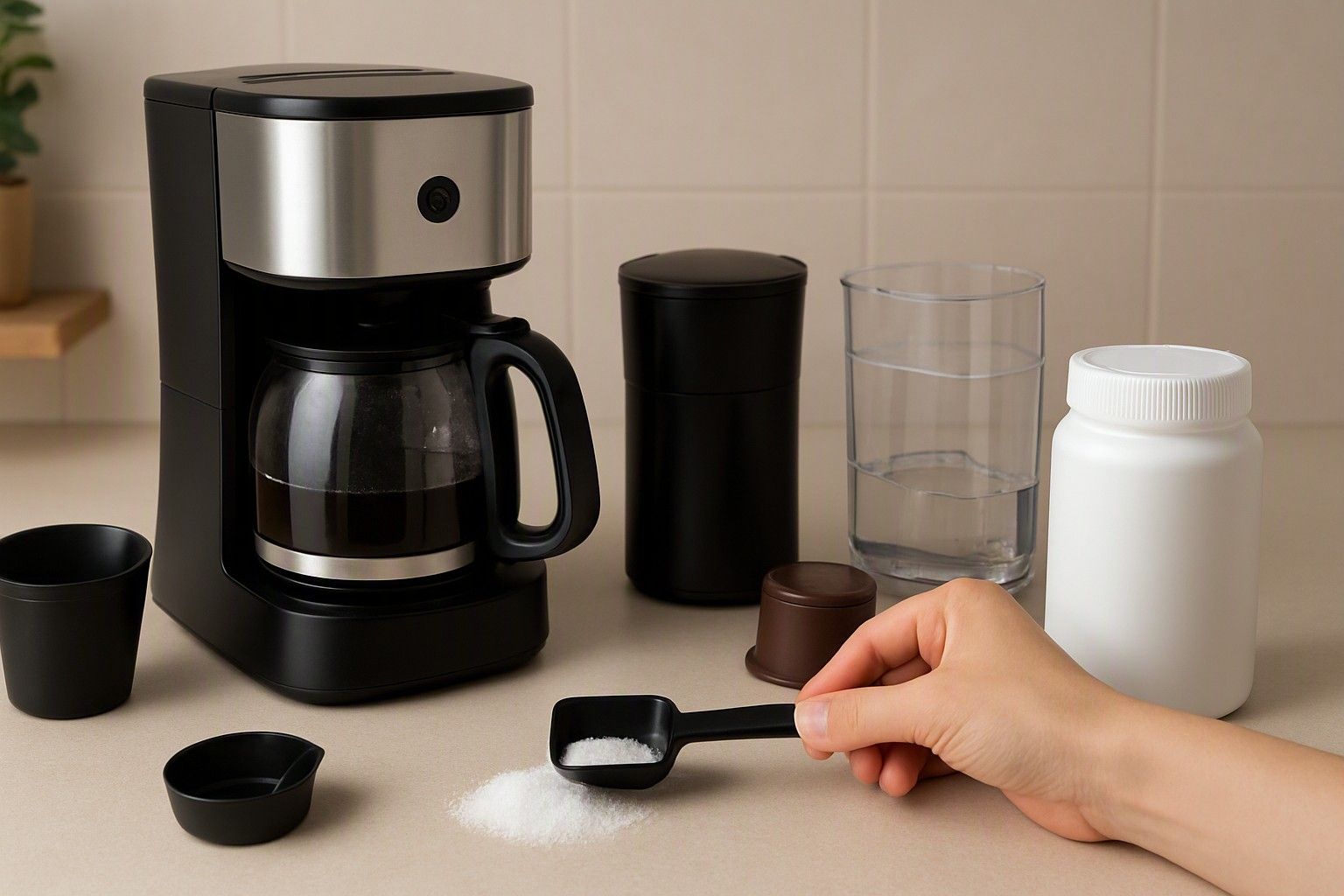
The sticker price of a coffee maker is only half the story. Between descaling for hard water, replacing filters, and buying pods or beans every month, ownership costs can add up quietly over the machine's life. This article walks through exactly what upkeep looks like in Indian conditions, so you can budget for it before you buy, not after.
Why Hard Water Makes Descaling Essential in India
Most Indian tap and borewell water carries dissolved calcium and magnesium, and in large parts of the country this hardness is significant enough to leave visible white residue on kettles, geysers, and coffee makers within weeks. Inside a coffee maker, that same mineral content builds up as limescale on heating elements, internal tubing, and valves. A machine that heats water repeatedly, as every coffee maker does, concentrates this scale faster than a device that simply stores water.
Left unaddressed, limescale does two things: it slows the machine down, since a scaled heating element takes longer to reach brewing temperature, and it eventually blocks narrow water paths, which shows up as weak pressure, sputtering, or a machine that stops dispensing altogether. Espresso-style machines with fine internal tubing tend to feel this earlier than a simple drip filter machine with wider channels, though neither is immune.
This isn't a defect specific to any one machine or price point; it's a consequence of Indian water chemistry that every buyer inherits regardless of whether they spent ₹499 or ₹24,999. The practical takeaway is that descaling isn't optional maintenance you can skip if you're careful with the machine. It's a scheduled task tied to your local water hardness, and treating it that way from day one protects both brew quality and the machine's working life.
How Often to Clean and Descale
Cleaning and descaling are two different tasks on two different clocks, and conflating them is where most owners go wrong. Daily or after-use cleaning is about the parts that touch coffee and milk directly: the brew basket or portafilter, the drip tray, and the milk frother if the machine has one. Rinsing these after every use, and giving them a proper wash every few days, prevents stale coffee oils and dried milk residue from affecting taste and hygiene. This takes a couple of minutes and no special products.
Descaling is separate and is about the water pathway, not the coffee-facing parts. In areas with genuinely hard water, a monthly descale is a reasonable default. In areas with moderately soft water, stretching this to once every two to three months is usually fine, though the honest way to judge is to watch the machine itself: slower brewing, more noise from the pump or heater, or reduced steam pressure are all signs scale has built up regardless of the calendar.
Descaling itself uses a mild descaling solution or a diluted vinegar-and-water cycle run through the machine as if it were brewing, followed by a couple of plain water rinses to clear any residual taste. This is a 15-20 minute task, not a service call, and doing it on schedule rather than reactively is what actually extends a machine's usable life in Indian conditions, more than the brand or price tier it was bought at.
Recurring Costs: Pods, Filters and Beans
The upfront price of a coffee maker tells you almost nothing about what it will cost to run every month, and this is where machine type matters more than machine price. A pod-based machine has the lowest maintenance effort but the highest per-cup consumable cost, since every cup needs a sealed pod bought at a fixed price with no bulk discount possible. A bean-to-cup or espresso machine needs whole beans, which cost less per cup than pods but require a grinder to be cleaned regularly and beans to be bought fresh rather than stockpiled for months. A filter drip machine is the cheapest to run day to day, using ground coffee and paper or reusable filters, with paper filters being a small but real recurring line item and reusable metal filters removing that cost entirely after the first purchase.
There's also a maintenance-cost link back to machine type itself: pod machines have fewer moving parts exposed to water hardness, so they often need less frequent descaling than machines with internal grinders and longer water paths. If you want the fuller picture of how these mechanical differences translate into cost and effort over time, it's worth reading how machine type affects running cost, since the type you choose upfront effectively locks in your monthly spending pattern for as long as you own the machine.
Warranty and Service Availability
Warranty coverage on coffee makers in India typically runs one to two years and generally covers manufacturing defects in the motor, heating element, and electronics, not wear items like gaskets, filters, or scale-related damage. This last point matters: many warranties explicitly exclude damage traced to limescale buildup, which means skipping descaling can void the exact protection you're relying on if something goes wrong.
Service availability varies more by brand network than by price tier, so a machine bought at the ₹599 end isn't necessarily harder to get serviced than one in the ₹4,999 range, what matters is whether the brand has authorised service centres reachable from where you live. Before buying, it's worth checking whether service is available in your city or whether repairs would mean shipping the machine elsewhere, since that affects real turnaround time if a heating element or pump fails.
For buyers outside metro areas, this is a genuinely practical filter to apply before purchase, not an afterthought. A machine with a longer warranty but no nearby service point can end up costing more in downtime and courier charges than one with a shorter warranty but a local technician. Keeping the original invoice and warranty card, and registering the product where the brand allows it, also smooths out any claim if descaling-related wear is ever disputed.
Estimating Your Monthly Cost of a Cup
To get a real monthly running cost, add three things: the consumable cost per cup, multiplied by cups per day, multiplied by days in the month, plus a small monthly allowance for descaling solution, plus an amortised share of eventual part replacement like gaskets or filters. For a household making three to four cups a day, pod or bean costs alone typically dominate this number, with descaling solution adding a modest amount only if done monthly.
This is also where it's worth being honest about the alternative. A machine priced anywhere in the ₹499 to ₹24,999 range, averaging around ₹2,499, still carries an ongoing cost that a traditional filter or decoction setup doesn't, since the latter uses raw coffee and milk with no dedicated consumable line at all. If you're trying to decide whether the convenience is worth the recurring spend, it helps to compare this against a traditional filter side by side on a monthly basis rather than just comparing purchase price.
The honest answer to how much upkeep really costs isn't a single number, since it depends on machine type, local water hardness, and how many cups your household actually drinks. But once you track consumables and descaling as a monthly line item rather than an occasional surprise, the true cost of ownership stops being a guess and becomes something you can plan around confidently.
Upkeep on a coffee maker in India isn't hidden or unpredictable once you know what to track: descale on a schedule tied to your local water hardness, budget for pods, beans, or filters as a real monthly cost, and confirm service reach before you buy rather than after something fails. Get those three right and the machine's price tag stops being the only number that matters.
Comments
Be the first to comment.