Coffee Maker Price Guide: What Each Budget Tier Gets You in India
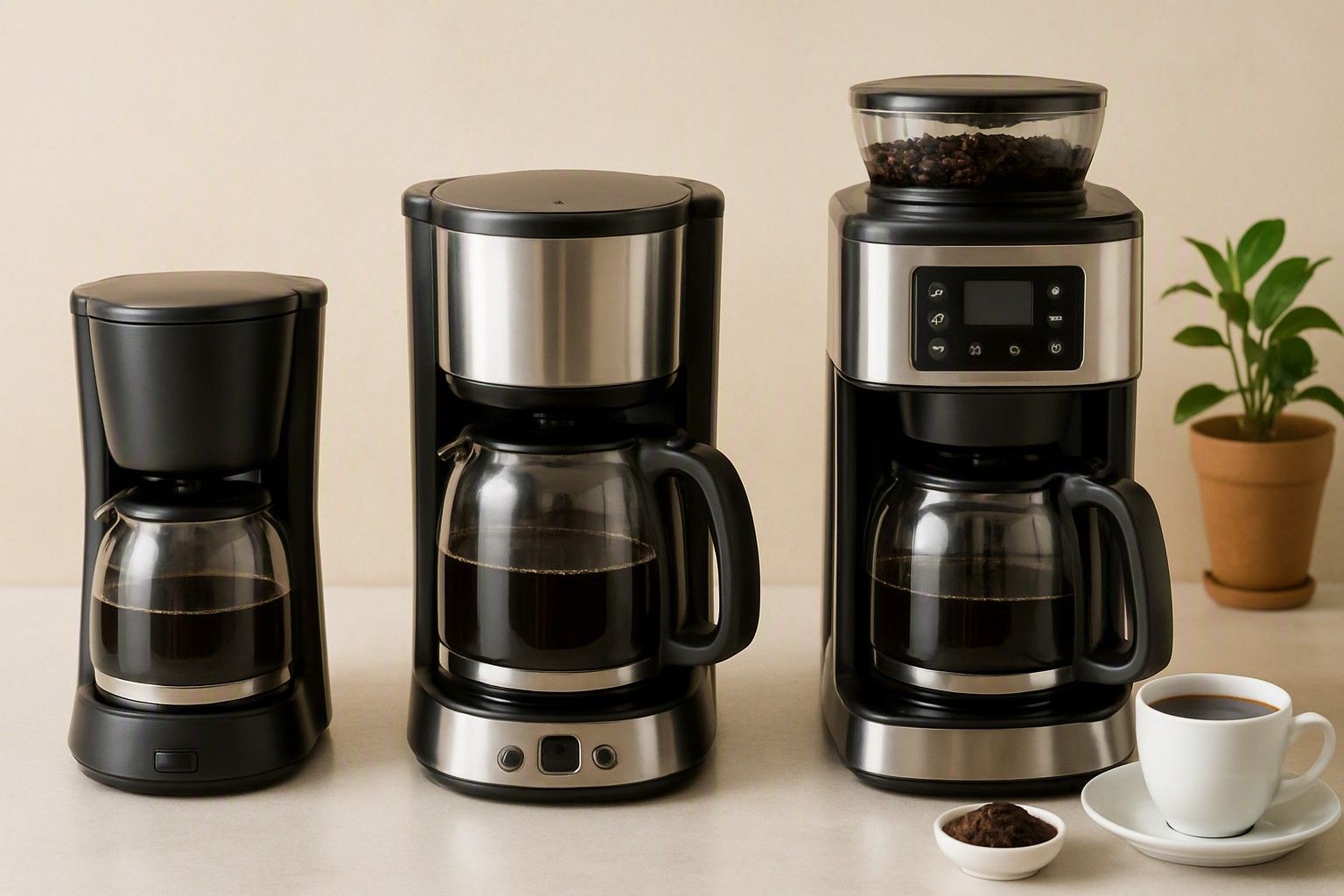
If you're staring at a coffee maker's price tag and wondering whether it's a fair number or you're being oversold, this is the article for that exact moment. Indian coffee maker prices span a huge range, from ₹499 basic drip units to ₹24,999 machines with built-in grinders and pressure systems, and most of that price difference maps to real, specific features rather than brand markup. Once you know what each tier actually buys you, and where the average price of ₹2,499 sits in that spread, deciding how much to spend stops being a guess.
Entry-Level Machines Under ₹599
At this price, you're mostly looking at basic electric kettles with a filter basket, simple moka-style stovetop percolators, or compact single-serve drip units with no frills. Build quality leans on thin plastic bodies, a single on/off switch with no temperature control, and jugs or carafes that hold modest quantities, usually enough for one or two cups at a time. There's rarely an auto-shutoff, a keep-warm plate, or any kind of programmable timer, so you're switching it on and watching it yourself.
This tier makes sense for a single person who drinks one or two cups a day and wants something that works without ceremony, or for a hostel room, small office desk, or as a backup unit. It does not make sense if you're making coffee for a family every morning, want consistent extraction, or care about the machine lasting many years of daily use, since components at this price wear out faster and replacement parts are often not sold separately.
What you're paying for here is basic function, not convenience or durability. If your actual use case is heavier than occasional single-serve brewing, spending slightly more gets you a noticeably sturdier machine, and that jump is worth understanding before you buy on price alone.
Mid-Range Coffee Makers ₹1,499
This is where coffee makers start behaving like appliances instead of gadgets. In this band you'll find drip machines with larger glass or steel carafes suited to two to four cups, auto-shutoff safety features, keep-warm functionality, and sometimes a basic timer so the machine can start brewing before you're even out of bed. Stovetop and electric moka pots in this range are usually made with better aluminium or steel and hold up to repeated daily use without the handle or fittings loosening quickly.
You'll also start seeing removable, washable filter baskets and slightly more thoughtful water reservoirs with level markings, which matters more than it sounds since guessing water quantity is one of the most common reasons coffee turns out weak or bitter. Some machines here add a drip-stop function so you can pull the carafe out mid-brew without a mess on the counter.
The honest way to think about this tier is that you're paying for reliability and small conveniences, not for premium coffee output. Whether that gap is worth it depends heavily on your daily habit, and it helps to know which features justify the extra spend before you pick a specific model, since not every mid-range feature matters equally to every household. For most Indian households making coffee daily for two or more people, this tier is the realistic sweet spot rather than a compromise.
Premium Machines ₹4,999 and Beyond
Above ₹4,999, you're moving into machines built around control and consistency rather than just brewing something hot and caffeinated. This is where built-in burr grinders, pressure-based espresso systems, milk frothers or steam wands, and programmable brew strength settings show up. Bodies shift to stainless steel or die-cast metal instead of plastic, water reservoirs get larger to reduce refilling, and many machines include descaling reminders or indicators since mineral buildup is a real issue with India's variable water hardness.
At the very top of this range, closer to ₹24,999, you're often looking at machines that combine grinding and espresso extraction in one unit, with multiple pre-set drink options and finer control over temperature and pressure than anything in the lower tiers offers.
The honest trade-off is upkeep, not just upfront cost. Premium machines need more consistent cleaning, occasional descaling, and sometimes specific filter or capsule compatibility, so the ongoing effort is higher even though the daily coffee quality is noticeably better. This tier fits someone who drinks espresso-style coffee regularly, wants café-like results at home, or has already outgrown a mid-range drip machine and knows specifically what feature gap they're solving. It does not make sense as a first coffee maker if you're still figuring out your daily brewing habits, since you'd be paying for control you may not use yet.
Understanding the ₹499 to ₹24,999 Range
A nearly fiftyfold spread between ₹499 and ₹24,999 looks alarming until you break down what's actually driving it. Material cost is one factor: plastic bodies and thin heating elements sit at the bottom, while stainless steel construction, insulated carafes, and precision pumps sit at the top. Functionality is the bigger driver, though. A basic drip machine only needs to heat water and pass it through a filter, while an espresso machine with a grinder needs a motor, burrs, a pressure pump, and often a boiler system, each of which adds real manufacturing cost, not just brand premium.
The average price of ₹2,499 sits much closer to the bottom of this range than the middle, which tells you something useful: most coffee makers sold in India are simple drip or basic filter machines, and the expensive end represents a smaller, specialised segment rather than the typical purchase. That's a helpful reality check if you're comparing a specific listing's price against "average" figures you see online, since a machine priced well above ₹2,499 isn't necessarily overpriced, it may simply belong to a different functional category entirely.
The practical takeaway is to stop comparing price in isolation and start comparing it against function. A ₹4,999 espresso machine and a ₹599 drip unit aren't competing products, so judging one against the other's price tells you nothing useful about either.
Is Today's Price Fair? Reading the Price History
Once you know which tier fits your needs, the next question is whether the specific price you're seeing right now is reasonable for that machine, and price history is the most reliable way to answer that. Look at how the price has moved over recent months rather than just the current number: a machine that's been fairly stable and is currently sitting at or near its typical range is a safe buy today, since waiting is unlikely to change the economics meaningfully. A machine showing a temporary spike well above its usual range is worth more scrutiny, not because you should hold off, but because it tells you the "normal" price is lower and you have a clearer reference point for what you're really paying extra for.
Be careful of a few common traps: a listed "discount" percentage that's calculated against an inflated original price, a price that looks low but excludes a part you'd need separately, like a specific filter type or descaling solution, or a jump in price that coincides with a minor cosmetic change rather than any real functional upgrade. These aren't reasons to delay a purchase, they're reasons to make sure the price you're comparing against is the real baseline and not a manufactured one.
If you want a fuller sense of how sellers dress up pricing to look better than it is, it helps to avoid overpaying with these buying mistakes before you finalise anything, since several of them show up specifically around price framing rather than the product itself. A fair price today is one that sits close to the machine's normal historical range for its tier, and that's a judgment you can make right now with the data in front of you.
Getting the Best Value at the Average Price of ₹2,499
At ₹2,499, you're squarely in the space where a coffee maker should already deliver real convenience: a decent-sized carafe, auto-shutoff, a washable filter basket, and build quality that survives daily use without loosening or leaking within months. If a machine at this price is missing more than one of those basics, that's a signal to compare against other listings in the same band rather than assume this is simply what ₹2,499 buys.
Value at this price point comes down to matching features to your actual routine rather than chasing the longest spec list. Someone brewing two cups a day for one person doesn't need the same reservoir size or timer sophistication as a household making coffee for four people every morning, and paying the same ₹2,499 for mismatched features is where a lot of buyers feel shortchanged later, even when the price itself was fair.
Before you commit, it's worth stepping back and looking at the decision as a whole rather than tier by tier, since fit matters as much as price. The complete buying guide before you decide walks through how size, brew type, and daily habits should shape your final choice, which pairs directly with everything covered here on price. Spending at the average isn't settling, it's often the most rational choice for typical daily use, as long as the specific machine actually delivers what that price tier promises.
You now have a working answer to how much to spend: match the tier to how you actually drink coffee, not to the longest feature list, and judge any specific listing against its own price history rather than a discount claim. Whether that lands you near ₹499 for simple daily brewing or well past ₹2,499 for espresso-level control, the number in front of you is easy to judge fairly once you know what it's supposed to buy at that tier.

Comments
Be the first to comment.