Common Coffee Maker Buying Mistakes First-Time Buyers Make
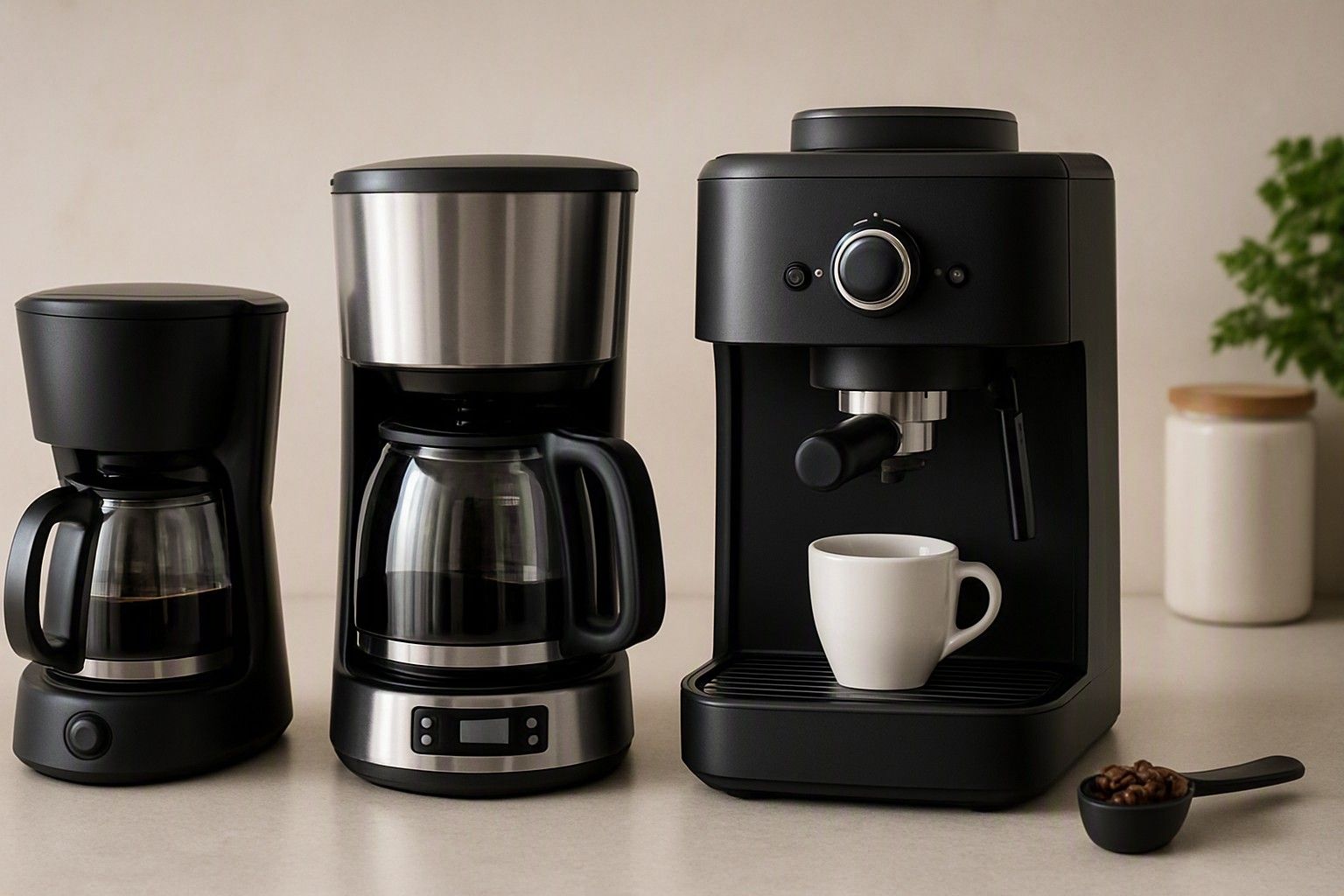
Most regret with a first coffee maker doesn't come from a bad product, it comes from a bad match between the machine and the buyer's actual habit, kitchen, and water. If you're about to buy your first one, the mistakes below cover almost every complaint you'll find on review pages after the fact. Go through them once and you'll buy with more confidence than the reviews you're reading right now.
Buying the Wrong Type for Your Coffee Habit
The single biggest mistake first-time buyers make is picking a machine based on what looks good in photos rather than what matches their actual coffee habit. Someone who drinks one strong filter coffee a day doesn't need a machine built for espresso shots and milk frothing, and someone who wants café-style cappuccinos every morning will feel let down by a basic drip machine no matter how well it's built. This mismatch is why so many machines end up unused within a few months, not because they're faulty, but because they were never the right fit to begin with.
The honest way to avoid this is to write down what you actually drink most days before you look at a single listing. Filter or drip machines suit black coffee drinkers who value consistency over ceremony. Moka pots and stovetop options suit people comfortable with a slightly hands-on process. Espresso-style machines suit those who want milk-based drinks and are willing to learn a small learning curve. There's no universally right type, only a right type for your habit, and it's worth taking the time to get the machine type right first before you compare a single price or spec. Buyers who skip this step are the ones most likely to write a disappointed review a month later, blaming the product for a decision that was really about mismatched expectations.
Overspending on Features You Won't Use
The second common mistake is paying for features that sound impressive on a listing page but never get used in daily life. Programmable start timers, multiple brew-strength settings, built-in grinders, and elaborate milk frothing systems all add to the price, and if you're not going to use them regularly, that money would have been better spent on build quality or capacity that actually suits your household. Indian first-time buyers often get pulled toward the most feature-dense option in their budget, assuming more settings automatically means better coffee, when in reality it just means more things that can go wrong and more buttons you'll never touch.
The fix is to be honest about your routine before you shop. If you make coffee at roughly the same time every day, a timer is genuinely useful. If your household drinks coffee at different times depending on who's up first, it's a feature you'll pay for and ignore. The same logic applies to strength settings and frothing attachments — useful if you vary your drink daily, unnecessary if you make the same cup every time. Before comparing models, it helps to know which features actually matter for your specific habit rather than for a generic "best machine" checklist. Spending across ₹599, ₹1,499, or ₹4,999 only makes sense when every rupee above the basic version is buying something you'll actually use week after week.
Ignoring Descaling and Water Hardness
A mistake that shows up months after purchase, not at the time of buying, is ignoring how hard your local water is and what that means for maintenance. Most of India has moderately to highly hard water, and every coffee maker that heats water — drip, espresso, or pod-based — will accumulate scale inside its heating element and pipes over time. Buyers who skip this consideration often find their machine brewing slower, tasting off, or throwing error lights within the first year, then wrongly assume the product itself is low quality.
The reality is that descaling isn't optional, it's a recurring task tied directly to your tap water, and first-time buyers rarely budget time or thought for it. If you're in a hard water area, you'll need to descale more frequently, possibly monthly, using a descaling solution or a vinegar-water mix depending on what the manufacturer allows. Machines with a descale-alert light make this easier to stay on top of, but even without one, it's a five-minute task you have to remember to do. Before you buy, it's worth taking the time to plan the real maintenance effort involved, because a machine that seems low-maintenance in the store can become a source of daily frustration if scale builds up and nobody addresses it. This single oversight is behind a large share of "my coffee maker stopped working" complaints that are actually just neglected descaling.
Choosing the Wrong Capacity
Capacity mistakes go in both directions, and first-time buyers tend to make one or the other. Someone living alone buys a large multi-cup machine because it seems like better value, then finds themselves reheating stale coffee or throwing out half a pot every day. Someone buying for a family of four gets a compact single-serve machine because it was cheaper, then ends up running it three or four times every morning just to serve everyone, which is slower and more annoying than a single brew cycle would have been.
The right approach is to size the machine to your household's actual morning routine, not to your budget or to what looks compact and modern on a kitchen counter. A single person or couple is usually well served by a smaller capacity machine that brews one or two cups fresh each time, avoiding the reheating problem entirely. A larger household benefits from a machine that can brew four cups or more in one go, even if it takes up more counter space, because the alternative is repeated brew cycles eating into everyone's morning. It also helps to think about whether your household's coffee drinking happens all at once or staggered through the morning — staggered households often do better with a slightly smaller machine used more than once, rather than a large pot that goes half-cold waiting to be finished.
Paying Above the Fair Price
The final mistake is one of pure information gap: paying well above what a coffee maker is actually worth because there's no easy way to tell a fair price from an inflated one at the point of purchase. Coffee makers in the Indian market span from ₹499 to ₹24,999, with the average sitting around ₹2,499, and where a specific machine falls in that range should match its features and build, not just its brand name or how it's marketed on a listing page. Buyers who don't check this end up paying premium prices for machines that belong in a lower tier, simply because they didn't have a reference point.
The way to avoid this is to look at where a machine's current price sits against its historical price range before deciding it's a good deal or a bad one. A machine that's currently priced near the top of its historical range isn't automatically overpriced if it belongs there based on features, but one that's priced like a premium product while offering only basic-tier features is worth questioning. It genuinely helps to check what each budget tier really offers so you know whether you're paying for real functionality or just for a listing that photographs well. This isn't about waiting for a discount — it's about knowing, right now, whether the number on the screen matches what you're actually getting for it.
Go back through these five points against the machine you're actually considering, and you'll know whether it fits your coffee habit, your kitchen, your water, and your budget before you pay for it. That's the real answer to what to avoid as a first-time buyer — not a list of red flags to fear, but a short checklist to run through so the machine you bring home gets used every single day instead of becoming a counter decoration by the third month.
Comments
Be the first to comment.