Types of Coffee Makers Explained: Drip, Espresso, Capsule and French Press
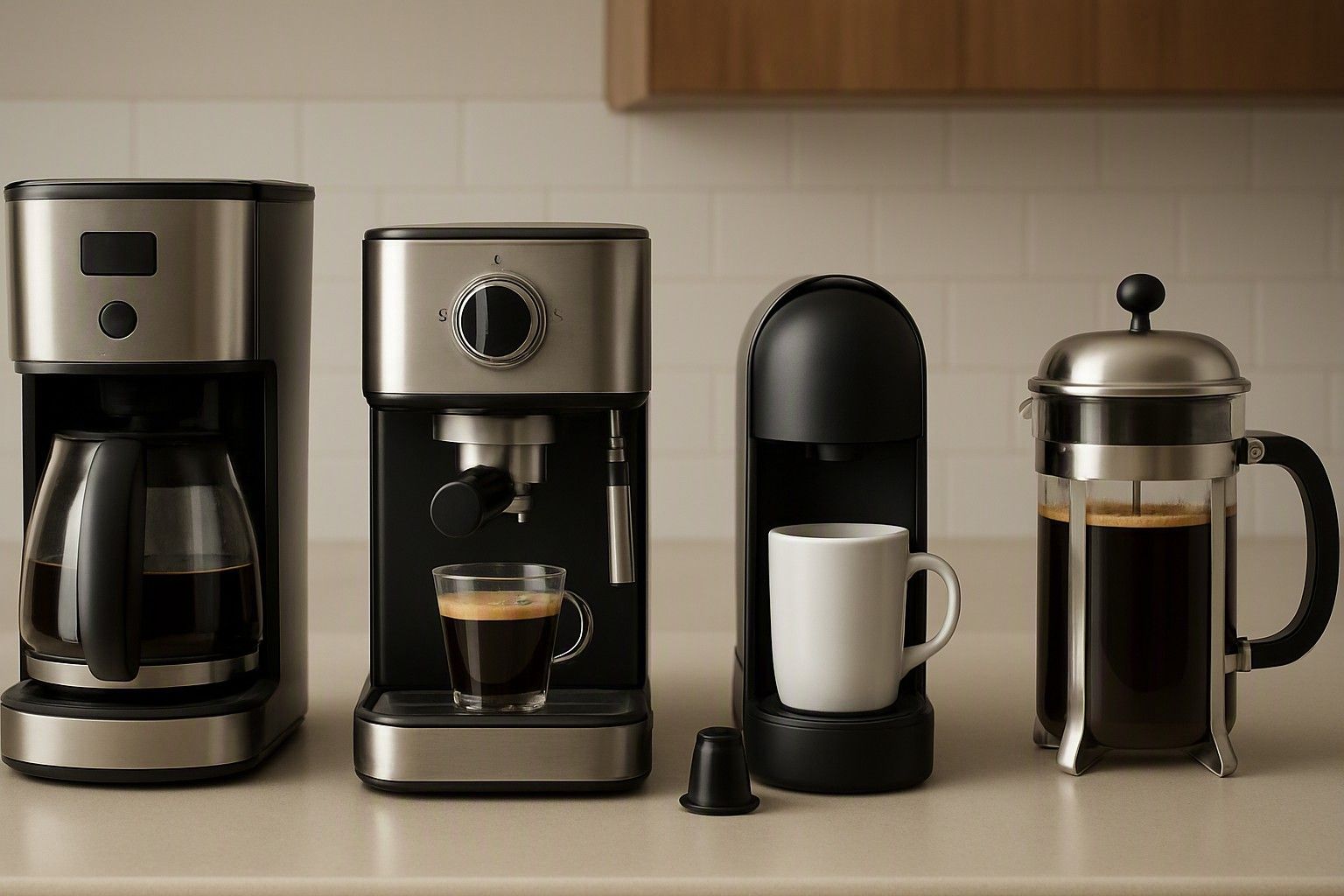
"Coffee maker" isn't one machine — it's a category of very different devices that make very different coffee for very different money. If you're trying to figure out whether you need a drip machine, an espresso setup, a capsule machine, or just a French press, this is the article that sorts them out before you spend anything.
Drip Coffee Makers: The Everyday Filter Coffee Machine
A drip coffee maker is the simplest automatic machine you can buy, and it's the closest thing to a default choice for a household that drinks filter-style coffee daily rather than occasional espresso shots. Water is heated and dripped over ground coffee sitting in a paper or mesh filter, and it collects in a jug or carafe below — no pressure, no pods, no fuss. This is the type most Indian households already understand intuitively because it mimics the pour-over habit many people grew up with, just automated.
The big advantage is volume and simplicity. A drip machine can brew multiple cups at once, which matters if more than one person in the house drinks coffee in the morning, and cleanup is usually just rinsing the carafe and filter basket. Running cost is low because you're buying ground coffee in bulk rather than pre-packaged pods, and the machines themselves sit at the more affordable end of the market, often within the ₹599 and ₹1,499 range depending on capacity and build.
What you don't get is espresso-style intensity or crema — drip coffee is lighter-bodied by nature because there's no pressure involved in extraction. If your household's coffee habit is closer to filter coffee than cappuccino, a drip machine answers the primary question directly: it's the type built for consistent, no-drama, everyday brewing rather than café-style variety.
Espresso and Pump Machines: Strong Coffee at Home
Espresso and pump-driven machines exist for a different habit entirely — people who want strong, concentrated coffee, often as a base for milk-based drinks like cappuccino or latte, and who are willing to spend more upfront and learn a bit of technique. These machines force hot water through finely packed coffee grounds at high pressure, which is what produces the thicker body and crema that drip coffee simply cannot replicate. This is the category where price spreads out the most, running from simpler pump machines to elaborate setups near ₹24,999, well above the category's overall average of ₹2,499.
The trade-off is real and worth being honest about. Espresso machines demand more from the user — grind consistency, tamping pressure, and steam wand handling if you want milk foam — and they're harder to clean than a drip jug because of the group head and portafilter. They also cost more to maintain in terms of descaling and occasional part replacement. What you get in return is café-equivalent coffee at home, which for a genuine espresso drinker justifies both the price and the learning curve.
If this is the direction you're leaning, don't just look at the price tag — the difference between a machine that makes acceptable espresso and one that makes genuinely good espresso comes down to build details like pressure consistency and steam power. It's worth reading through the features that decide espresso quality before comparing specific machines, because two machines at similar prices can perform very differently based on those factors alone.
Capsule and Pod Machines: Convenience vs Running Cost
Capsule machines split the difference between drip and espresso in a specific way: they give you espresso-style output with almost none of the technique, because the coffee is pre-measured and sealed inside a pod that the machine punctures and brews automatically. For someone who wants a strong, consistent cup without grinding, tamping, or cleaning a portafilter, this is the most convenient type on the market, and the machines themselves are often priced reasonably, frequently landing in the ₹1,499 or ₹4,999 bracket.
The catch isn't the machine price — it's what happens after you buy it. Every cup requires a fresh pod, and pods cost noticeably more per serving than an equivalent amount of ground coffee used in a drip or espresso machine. Over months of daily use, that difference adds up to real money, often exceeding what you saved by buying a cheaper machine in the first place. There's also less flexibility in strength, roast, and blend compared to using your own beans, since you're limited to whatever pod formats the machine supports.
This is exactly the kind of decision that looks simple at the shelf and gets complicated a year in, so it's worth working through the recurring cost of pods and consumables before deciding a capsule machine is the convenient choice — for some households it genuinely is, for heavy daily drinkers it often isn't.
French Press and Manual Brewers: The Low-Cost Entry
A French press, along with other manual brewers like pour-over drippers, is the lowest-cost and lowest-complexity way to make real coffee at home, and it's worth taking seriously rather than treating as a fallback option. There's no electricity involved — coarsely ground coffee steeps in hot water for a few minutes, then a mesh plunger separates the grounds from the liquid. Machines in this category sit at the very bottom of the price range, often available under ₹599 and rarely above ₹499 to a modest step up from there.
What you sacrifice is automation and convenience — someone has to heat water separately, time the steep, and clean out wet grounds by hand each time, which is more effort than pressing a button on a drip machine. What you gain is a fuller-bodied cup than most drip machines produce, since the metal mesh lets more natural oils through than a paper filter, along with zero ongoing running cost beyond the coffee itself and no electronics to eventually fail or need repair.
For a single person, a couple, or anyone testing whether they even like brewing their own coffee before committing to a bigger appliance, a French press answers the primary buyer question honestly: it's coffee-maker territory without the machine, and it's the type least likely to end up unused in a cupboard because it doesn't demand a routine to justify its cost.
Which Type Fits Your Coffee Habit
The right type comes down to three things: how many cups you make at once, how strong you like your coffee, and how much daily effort you're willing to put in. A household making filter-style coffee for several people each morning fits a drip machine. Someone chasing café-quality espresso and milk drinks, and willing to learn the technique, fits an espresso or pump machine. A person who values convenience above running cost fits a capsule machine, provided the ongoing pod expense doesn't quietly outweigh the machine's low upfront price. And anyone starting out, brewing for one or two people, or simply avoiding electronics fits a French press.
Across the whole category, prices run from ₹499 to ₹24,999, with an average around ₹2,499 — a wide enough spread that the type you choose matters more to your final spend than the specific model you pick within that type. Once you've matched your habit to a type here, start with the full coffee maker buying guide to work through capacity, features, and budget in more detail before you shortlist anything.
However you take your coffee — a full jug of filter coffee, a proper espresso shot, a quick pod-brewed cup, or something pressed by hand — you now know which machine type actually matches that habit, and roughly what it costs to own, not just to buy.

Comments
Be the first to comment.