Coffee Maker Features That Actually Matter Before You Buy
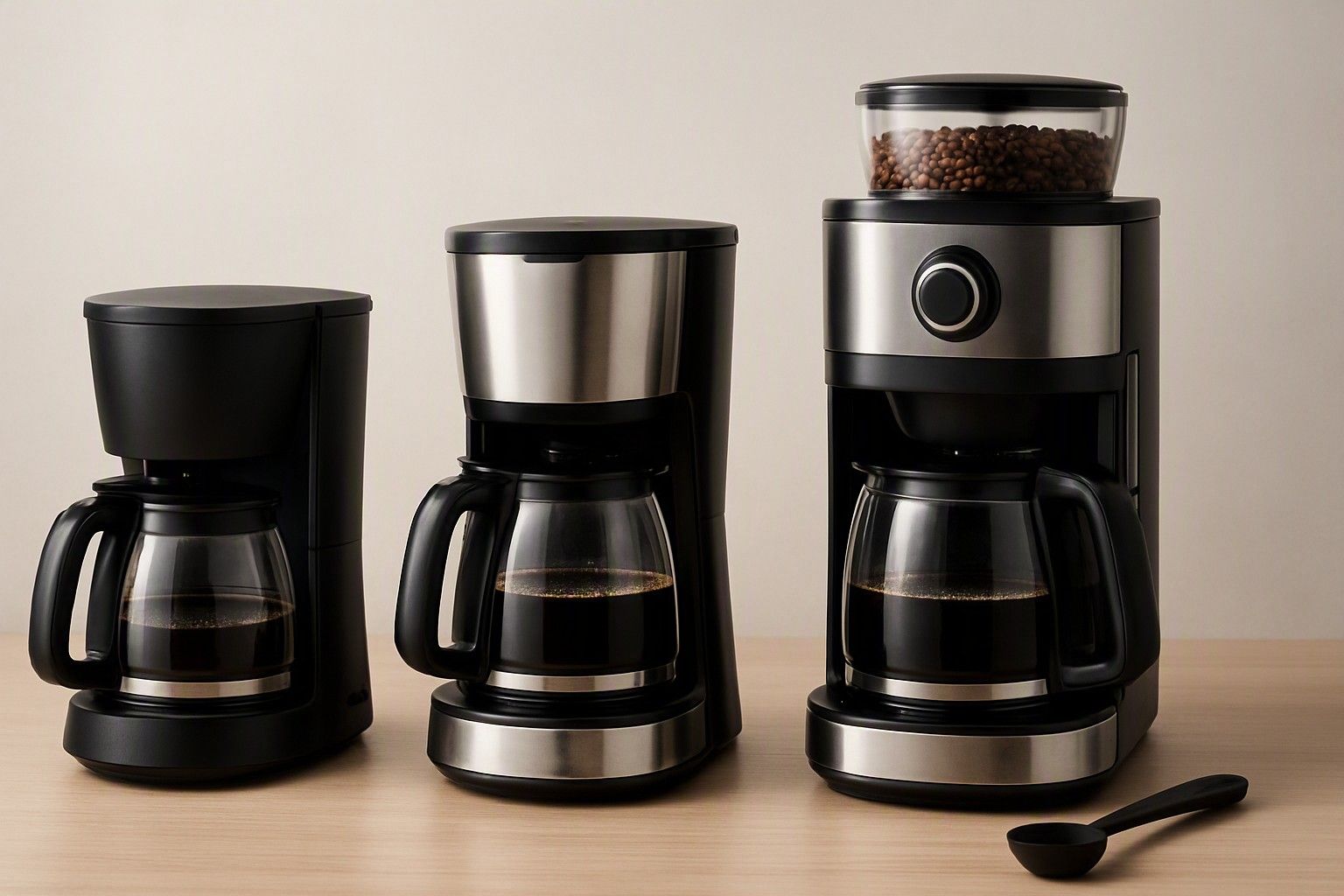
Every coffee maker listing throws numbers at you: bar pressure, wattage, auto shut-off, "smart" this and that. Some of these decide whether your coffee tastes good every single morning; others are just lines on a spec sheet that justify a higher price tag. This guide sorts the two apart so you know exactly what to check before you pay for a coffee maker in India.
Bar Pressure and Why It Matters for Espresso
Bar pressure only matters if you're buying an espresso machine — it's meaningless for a drip or filter coffee maker, so the first thing to check is which category you're actually shopping in. For espresso machines, this figure tells you how much pressure is used to force hot water through packed coffee grounds, and it's the single number most responsible for whether you get a thick, crema-topped shot or a thin, watery one. The commonly quoted benchmark is 9 bar, which is close to what commercial machines use to extract flavour and oils properly without over-extracting bitterness. Machines advertising 15, 19 or even 20 bar aren't necessarily better — most espresso recipes still target extraction around 9 bar, and pushing far beyond that can pull out unwanted bitterness rather than improve the shot. What actually matters more at that point is whether the machine holds pressure consistently through the extraction, not the peak number printed on the box. If you're buying at the lower end of the price range, treat any bar-pressure claim with a bit of skepticism, since cheap pumps often can't sustain their rated pressure for a full shot. If espresso isn't your goal — if you mostly want filter coffee or a moka-style brew — you can ignore bar pressure entirely and focus on the sections below instead.
Milk Frothing: Steam Wand vs Built-in Frother
If your daily order is a latte, cappuccino or cold coffee with a milk layer, how a machine froths milk matters more than almost any other spec. A steam wand, usually a metal pipe that releases pressurised steam, gives you control over texture — you decide how much air to introduce and can build the microfoam needed for a proper cappuccino. It has a learning curve and needs to be purged and wiped after every use to stop milk residue from clogging it, but it rewards practice with genuinely better texture than most automated alternatives. A built-in or automatic frother, usually a small wand or chamber that draws milk in and aerates it mechanically, is far more convenient: press a button, get frothed milk, no technique required. The trade-off is texture and volume control — automatic frothers tend to produce foam that's more uniform and less adjustable, and some struggle with plant-based milk. For a household where one person makes coffee and enjoys the process, a steam wand is worth the extra effort and usually the extra cost. For a shared kitchen where speed and consistency matter more than café-style foam, a built-in frother earns its keep. Neither is objectively superior — they solve for different priorities, and buying the wrong one for your habits is a common regret.
Carafe Type, Keep-Warm and Auto Shut-Off
These three features work together, so it helps to think of them as one decision rather than three separate specs. A glass carafe is the default on most drip machines because it's cheap and lets you see how much coffee is left, but it only stays hot if the machine's keep-warm plate is running underneath it — and that same heat is what slowly cooks the coffee, turning it bitter and stale within an hour or two. A stainless-steel double-wall carafe insulates the coffee itself, keeping it hot for several hours without any plate underneath, which also means no risk of that burnt, over-cooked taste. If you drink your whole pot within thirty minutes of brewing, a glass carafe with keep-warm is perfectly fine and usually cheaper. If coffee tends to sit for a while before the second or third cup, an insulated steel carafe is the better long-term choice even though it typically appears on models priced higher in the range. Auto shut-off is a safety feature more than a taste feature — it switches the machine off after a set period so it isn't left heating unattended, which matters in Indian households where power cuts and forgotten switches are common. It's worth having on any machine with a hot plate, but it's not something to pay a premium for; treat it as a baseline expectation, not a selling point.
Programmable Timers and Ease of Cleaning
A programmable timer lets you set the machine to start brewing at a fixed time, so coffee is ready the moment you're out of bed — genuinely useful if your household runs on a tight morning schedule, and largely pointless if you brew on demand or your timing varies day to day. It's a convenience feature, not a quality one, so it shouldn't be the deciding factor between two machines unless your routine specifically calls for it. What matters more day to day, and gets far less attention on spec sheets, is how easy the machine actually is to clean. Removable drip trays, detachable water tanks, and filter baskets that lift out fully make the difference between a thirty-second rinse and a fiddly ten-minute scrub-and-reach job — and you'll be doing this every single day the machine is in use. This is closely tied to how manageable descaling is over the machine's life, since mineral buildup from Indian tap water is one of the biggest reasons coffee makers lose performance early. It's worth reading how design affects daily cleaning and descaling before you commit, because a machine that's a pain to clean tends to get used less carefully, cleaned less often, and replaced sooner than one built with easy access in mind.
Features You Can Safely Skip
Not every feature on a coffee maker's box translates into a better cup, and knowing which ones to ignore saves money you can put toward something that actually matters. Wi-Fi and app connectivity look impressive in a listing but add little beyond scheduling a brew from your phone instead of the machine itself — convenient at best, irrelevant at worst. Elaborate digital displays with multiple brew-strength presets often just adjust brew time or water volume, something a simpler dial or button does just as well for less money. Built-in grinders sound efficient but are frequently the weakest part of an all-in-one machine, producing an inconsistent grind compared to a separate burr grinder, so paying extra for one bundled into a budget machine rarely pays off. Multiple pre-set drink icons — "cappuccino," "americano," "macchiato" — are usually just the same one or two brewing methods relabelled, not genuinely different mechanisms inside the machine. The right approach is to match features to your budget tier: at the lower end, prioritise a stable brew and an easy-to-clean design over any of these extras, and only consider added features once the fundamentals are already covered by the machine's price.
Strip away the marketing language and a coffee maker really comes down to a handful of decisions: whether you need real bar pressure, which frothing method fits how you actually drink coffee, whether an insulated carafe suits your routine, and how much daily cleaning you're willing to do. Get those right and the rest of the spec sheet stops mattering — you'll know which features earn their place in your kitchen and which ones were never worth paying for.

Comments
Be the first to comment.