Traditional Filter vs Electric Coffee Maker: What Indian Kitchens Should Choose
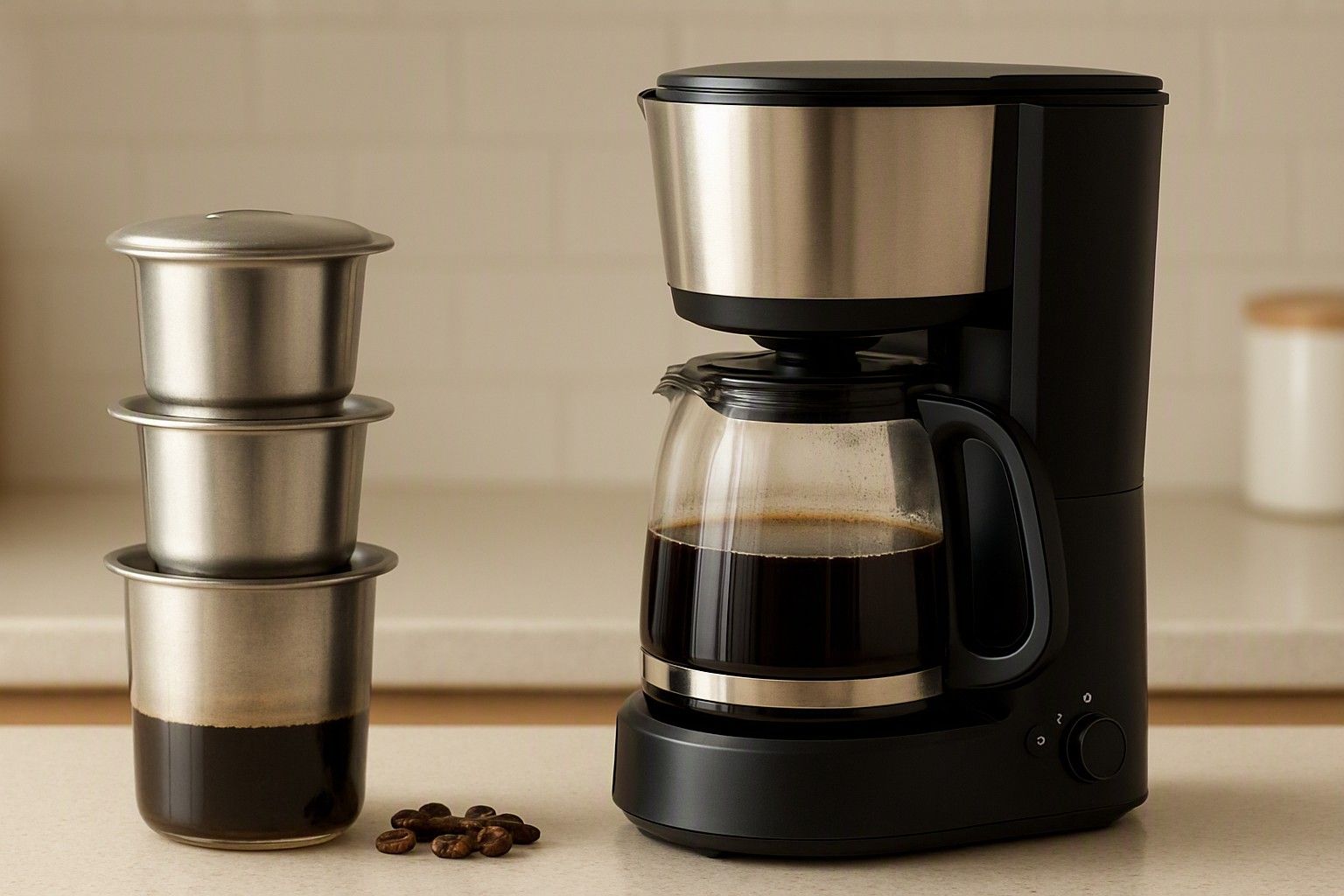
If you grew up on filter coffee made in the classic steel tumbler-davara set, the idea of an electric coffee maker probably feels like a solution to a problem you don't have. But the question isn't which device is "better" in the abstract — it's whether your mornings, your household size, and your taste preferences justify a change. This article lays out exactly where the traditional filter still wins, where an electric machine earns its place on the counter, and how to decide without guesswork.
How the Traditional Steel Filter Works
The South Indian steel filter is about as simple as brewing equipment gets, and that simplicity is exactly why it has survived generations of kitchens unchanged. It has two chambers: an upper chamber with a perforated base and a press-disc where you pack coarsely ground filter coffee, and a lower chamber (the davara) that collects the brewed decoction. You pour hot water over the grounds, put the lid on, and let gravity do the work — the water slowly percolates through the coffee bed over roughly 15 to 20 minutes, pulling out a strong, concentrated decoction with no electricity involved at all.
There's no pump, no heating element, and no circuit board to go wrong, which means a well-made steel filter can last decades with nothing more than a wash after each use. The trade-off is time and attention: you need to grind or buy filter-fine coffee powder, boil water separately, and wait for the decoction to drip before you can mix it with hot milk. For households that already have a filter passed down or bought for a few hundred rupees, there's rarely a strong case to replace it purely for the brewing method itself — the decision usually comes down to convenience and volume, which is where the comparison actually gets interesting.
Where an Electric Coffee Maker Wins on Convenience
An electric coffee maker's entire value proposition is time and repeatability. Fill the water tank, add ground coffee to the basket or capsule slot, press one button, and walk away — most machines brew a cup or a full carafe in under five minutes without you standing over it. For a working household where two or three people need coffee within the same ten-minute window before leaving for the day, this matters far more than it sounds on paper; the traditional filter simply can't produce multiple servings that fast because the decoction has to drip through slowly to extract properly.
Machines with a keep-warm plate or an insulated carafe also solve a problem the steel filter can't: coffee made once and still drinkable an hour later. Drip machines, single-serve pod machines, and even basic moka-style electric percolators all remove the manual steps of boiling water and timing the drip, which is precisely the convenience that pulls buyers toward this category in the first place. If you want to understand how these convenience features actually differ across drip, pod, French press-style, and espresso machines before deciding which fits your routine, it helps to see how machine types differ. The honest catch is that convenience isn't free — it comes with a device that needs maintenance and eventually replacement, unlike a filter that essentially doesn't wear out.
Taste and Strength: Which Makes Better Coffee
This is where filter coffee loyalists have a genuinely strong case. The slow drip through a packed coffee bed in a steel filter extracts a dense, syrupy decoction that, mixed with hot milk and sugar, produces the specific strong-and-milky profile most South Indian households consider "real" filter coffee. Electric drip machines use a faster flow-through method that produces a thinner, more American-style brew unless you deliberately use a higher coffee-to-water ratio and a finer grind, and even then most drip machines don't replicate that exact decoction texture.
Where electric machines pull ahead on taste is consistency and range. A steel filter's result depends on how tightly you pack the grounds, the water temperature, and how patient you are with the drip time — get any of these wrong and the coffee is either weak or bitter and over-extracted. A decent electric machine removes that variability by controlling water temperature and flow automatically, and machines built around espresso or pressure brewing can produce a genuinely different, more concentrated style of coffee that a filter was never designed to make. So the honest answer depends on what "better" means to you: if you want the traditional strong decoction taste, the steel filter still does it best; if you want a consistent, café-style cup with less trial and error, an electric machine has the edge.
Cost Comparison Over a Year of Daily Use
A traditional steel filter is a one-time purchase, often costing a fraction of even the cheapest electric machine, and its only ongoing cost is the coffee powder itself. There's no electricity draw beyond boiling water on your existing stove or induction top, no filter papers to replenish, and no descaling required, ever.
An electric coffee maker changes that math. Machines in India span ₹499 to ₹24,999, with the average buyer paying around ₹2,499 — you'll find genuinely usable options in the ₹599 range for basic drip brewing, more capable machines with better build and features in the ₹1,499 band, and feature-rich or espresso-capable machines from ₹4,999 upward. Beyond the upfront price, you're also looking at recurring costs the filter doesn't have: electricity for daily heating cycles, paper filters if your machine uses them, pods if you go that route, and periodic descaling to keep hard water deposits from damaging the heating element — a real concern in most Indian cities. It's worth reading how those recurring costs actually add up before you commit, so you can factor in descaling and running costs against the convenience you're paying for. Over a year, the electric machine will almost always cost more in total than the filter, but the comparison isn't really about which is cheaper — it's about whether the time saved is worth that difference to your household.
Who Should Buy Which
If you live alone or with one other coffee drinker, already enjoy the ritual of making filter coffee, and aren't pressed for time in the morning, there's little reason to add an electric machine to the kitchen — the steel filter does its one job well and asks nothing of you but patience. It's also the more sensible choice if your household strongly prefers the traditional strong-decoction taste over any other style of coffee, since no electric machine fully replicates it without extra effort.
An electric coffee maker earns its keep in busier households: multiple people needing coffee at the same time each morning, anyone who wants more than one style of coffee (espresso-based drinks alongside regular brewed coffee, for instance), or anyone who values consistency over the trial-and-error of manual brewing. It also suits people who don't drink filter coffee at all and want a cappuccino or Americano-style cup instead, which a steel filter was never built to produce. If you're still weighing these trade-offs against your specific kitchen and budget, it's worth going back to return to the main buying guide to decide for the fuller picture on machine types, features, and pricing before you buy.
Neither device is objectively right — the steel filter remains the better choice for anyone who values the traditional taste and doesn't mind the wait, while an electric coffee maker earns its cost when speed, consistency, or variety matter more to your morning than ritual does. Match the choice to your household's actual pace and taste, and you'll know exactly which one belongs on your counter.

Comments
Be the first to comment.