Electric Toothbrush Battery and Charging: What to Check in India
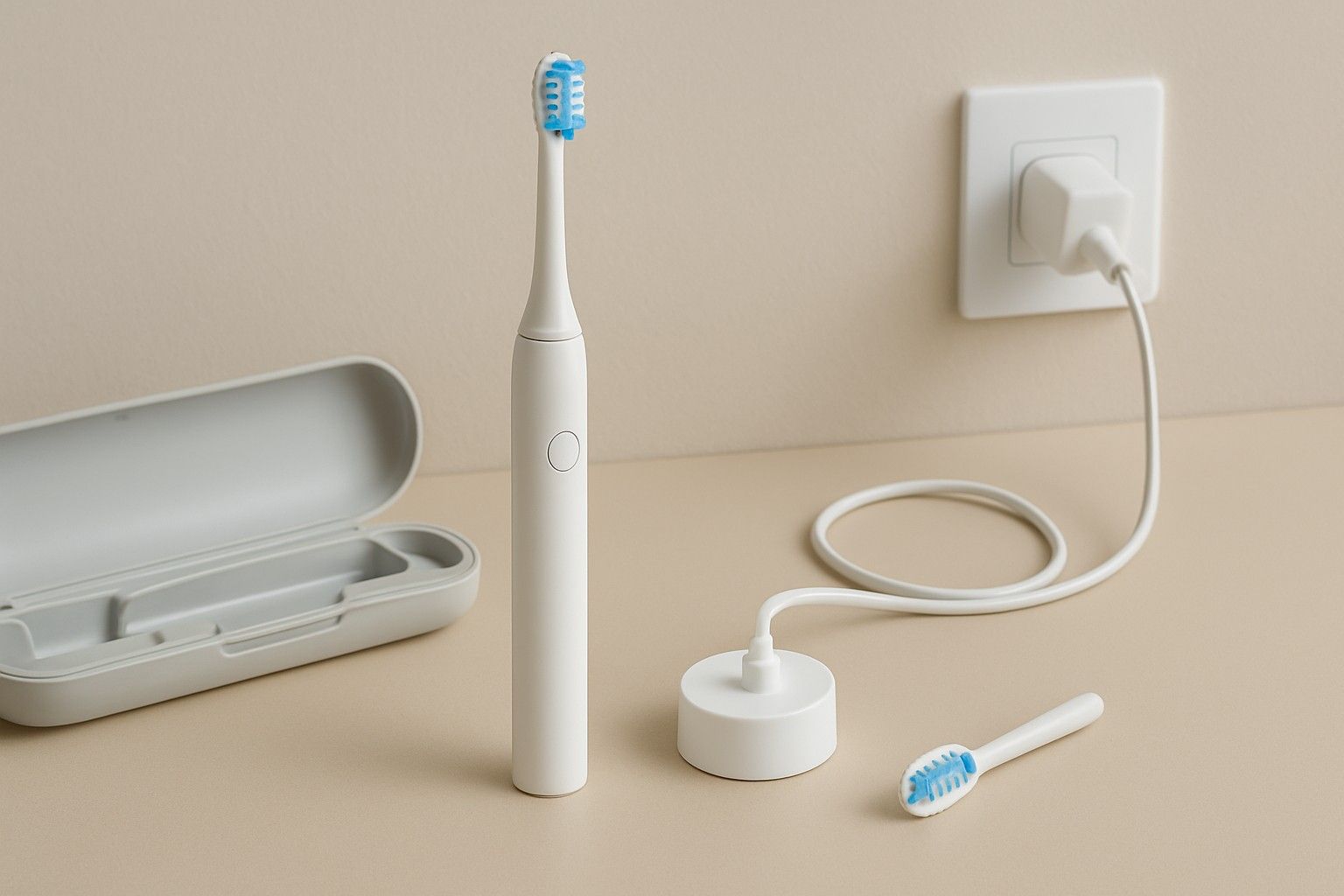
If you've ever wondered whether an electric toothbrush will die on you mid-trip, or how often you'll actually be hunting for a charging point, this is the decision that battery type and charging setup settle. It matters more in India than the spec sheet suggests, because power cuts, shared sockets and travel weeks are routine, not exceptions. Here's what to actually check before you commit to a model.
Rechargeable vs Replaceable-Battery Toothbrushes
Most electric toothbrushes sold in India today use a built-in rechargeable battery, usually lithium-ion or NiMH, that you top up on a dock or cable. A smaller number, mostly at the very entry level, run on replaceable AA or AAA batteries instead. Each approach solves a different problem, and knowing which one you're buying matters more than it seems.
Rechargeable models cost more upfront but work out cheaper over years of daily use, since you're not buying batteries every few weeks. They also tend to sit in the ₹1,499 and ₹4,999 price bands, where better motors and smarter charging circuits come as standard. The catch is dependency on a charger or dock, which is a real inconvenience if you travel light or move houses often.
Replaceable-battery brushes, often priced near ₹199 to the lower end of ₹499, are genuinely useful for a specific kind of buyer: someone who wants a basic vibrating brush for occasional use, a backup for a child, or a travel-only unit that never needs a socket. They're not a downgrade so much as a different tool built for infrequent or backup use rather than daily primary brushing. If your toothbrush is going to be your everyday one, rechargeable is the more sensible default; if it's a spare or gifted-to-a-relative situation, replaceable batteries remove the charging question entirely.
How Many Days a Full Charge Really Lasts
Manufacturers often advertise battery life in terms that sound generous but rarely match daily reality once you factor in two-minute brushing sessions, twice a day, at full vibration intensity. A full charge on a decent rechargeable model typically carries a household through roughly one to two weeks of normal twice-daily use before it needs topping up again, though this varies with battery capacity, motor type, and how often you use higher-intensity or additional cleaning modes.
Cheaper models near ₹199 to ₹499 tend to have smaller batteries and can drop to charge cycles every four to six days, especially once the battery has a few months of wear on it. Mid-range and higher options in ₹1,499 and ₹4,999 generally hold charge longer per session and degrade more slowly, which matters if you're the sort of person who forgets to charge things until the low-battery warning starts.
The honest way to plan around this is to treat the advertised number as a best-case figure and mentally halve it for real-world estimation, particularly if you use pressure sensors, timers, or multiple brushing modes, all of which draw more power. If you're brushing for two people off one charger, or sharing a single charging dock in the bathroom, expect to charge more frequently than the specs imply, and build that into how you judge whether a model's stated battery life actually suits your household.
Charging Options: Dock, USB and Travel Cases
Three charging setups dominate the Indian market, and each suits a different lifestyle more than the others. The classic charging dock, usually a small stand with a two-pin plug, is the most common setup on rechargeable models across every price band. It's simple and reliable at home, but it occupies a socket permanently, which can be awkward in bathrooms with limited or shared power points, a common layout in Indian homes and PGs.
USB charging, either via a cable that plugs into the brush's base or a magnetic charging puck, has become more common on models in ₹1,499 and above. This is genuinely useful for travel since you can charge off a power bank, laptop, or the same adapter you use for your phone, without needing a dedicated wall socket at all. If you travel for work or move between hostel and home frequently, a USB-chargeable brush removes a real point of friction.
Travel cases with built-in charging are less common and usually appear on higher-priced models toward ₹14,999, doubling as both protection and a charging point when you're away from your usual dock. They're a genuine convenience for frequent flyers but not essential for someone who mostly stays in one place. If your routine involves regular travel, weigh the charging format as seriously as the brush's cleaning modes, since a dock-only model can leave you stranded with no easy way to top up on the road.
Battery Life With Erratic Power and Frequent Travel
Voltage fluctuations and unscheduled power cuts are a fact of life in much of India, and they do affect how electric toothbrush batteries behave over time, even if the effect is gradual rather than immediate. Frequent voltage spikes, especially in areas without stabilised wiring, can shorten the working life of a lithium-ion battery faster than steady, well-regulated power would. If your area sees regular cuts or surges, using a basic socket extension with surge protection for the charging dock is a small step that meaningfully protects the battery's long-term health.
Travel adds a different kind of stress. Leaving a brush half-charged for days at a time, then fully draining it before the next charge, is harder on lithium-ion cells than a steady top-up routine, and this pattern is common for people who travel for work every week or two. If your travel schedule is unpredictable, a model with USB charging and a slightly larger battery buffer gives you more slack, since you're less likely to be caught at zero percent with no dock in reach.
For households that lose power for extended stretches, it also helps to know that most electric toothbrushes retain charge state fine through outages; the battery itself isn't affected by the mains being down, only by how you charge and discharge it around that outage. The practical takeaway is to charge in shorter, more frequent bursts when your power supply is unreliable, rather than waiting for a rare stretch of stable current to do one long charge.
How Battery Health Fades Over Years of Use
Every rechargeable battery loses capacity over time, and electric toothbrush batteries are no exception. Somewhere around two to three years of regular daily use, most users notice the brush needs charging more often, or that a full charge simply doesn't last as many days as it used to. This isn't a defect; it's normal lithium-ion or NiMH degradation, the same wear pattern you'd see in a phone or a wireless earbud battery.
How fast this happens depends heavily on charging habits. Frequent full-drain-to-full-charge cycles tend to wear a battery faster than a routine of shorter, more frequent top-ups. Heat also plays a role, so a brush charged in a humid, poorly ventilated bathroom may show battery fade a little sooner than one kept somewhere cooler and drier.
The practical issue is that on most electric toothbrushes, the battery isn't replaceable by the user, so once it fades significantly, the sensible move is usually to replace the whole handle rather than attempt a repair. This is a genuine part of the toothbrush's total cost of ownership that's easy to overlook when you're focused only on the sticker price, and it's worth thinking through before you buy, especially at the higher end of ₹4,999 where you're paying for years of expected use, not just today's features. To weigh this properly against upfront price, it helps to understand how battery ageing affects long-term value before you finalise a model.
Choosing the Right Battery Setup for You
There's no universally right answer here, only the setup that matches how you actually live. If you have a stable bathroom socket, don't travel much, and want the lowest fuss, a standard dock-charging rechargeable model in ₹1,499 covers most needs comfortably. If your work or lifestyle involves regular travel, prioritise USB charging or a travel case over marginal gains in brush features, since a dead battery mid-trip defeats the purpose of an electric brush entirely.
Budget-conscious buyers who want a backup, a child's first electric brush, or an occasional-use unit shouldn't feel pressured into a rechargeable model at all; a reliable replaceable-battery option near ₹199 does the job without the charging commitment. And if erratic power or frequent outages describe your household, factor in surge protection and shorter charging cycles as part of the decision, not an afterthought.
Once you've matched the battery and charging setup to your actual routine, the rest of the decision, motor type, bristle heads, pricing tier between ₹199 and ₹14,999, falls into place more easily. It's worth stepping back to return to the main buying decision once battery and charging are settled, so you're choosing the rest of the toothbrush's features against a setup you already know will fit your life.
Battery type and charging format aren't a side detail on an electric toothbrush purchase in India, they're often the difference between a brush that fits your routine and one that becomes a source of daily friction. With dock, USB and replaceable-battery options all genuinely available across the ₹199 to ₹14,999 range, the right choice comes down to matching the setup to your power situation and travel habits, not chasing the longest advertised runtime on the box.
Comments
Be the first to comment.