Electric Toothbrush Buying Mistakes and Red Flags to Avoid
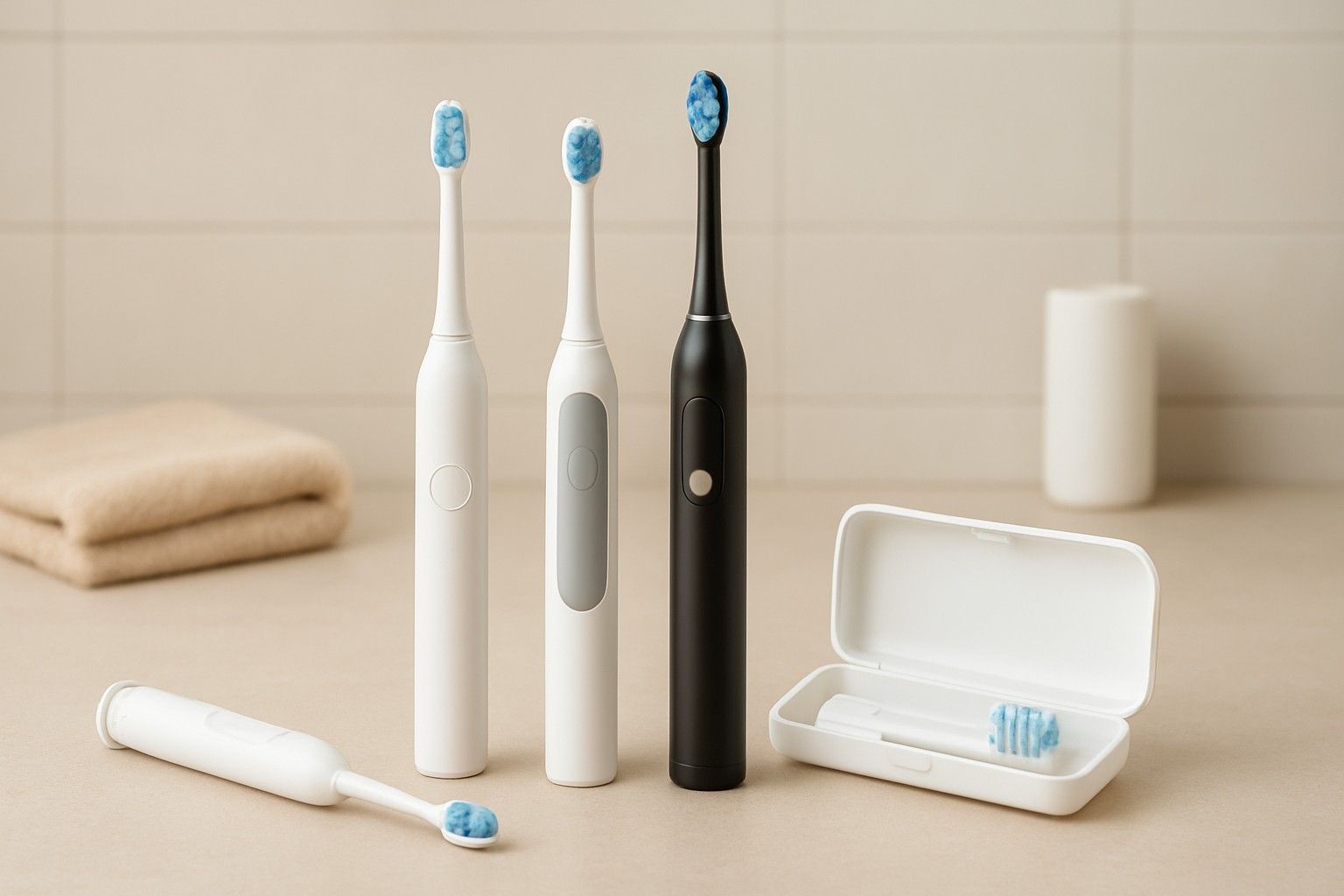
You've narrowed down a budget and maybe even a shortlist, but before you pay, it's worth checking for the mistakes that don't show up until weeks or months later — a handle whose brush heads vanish from shelves, a warranty card no one honours, or a "deal" unit that was never meant for the Indian market. This article walks through those red flags one by one so the purchase you make today doesn't turn into a problem you're solving six months from now.
Buying a Handle With No Reliable Brush Head Supply
The single most common regret with an electric toothbrush purchase isn't the handle at all — it's realising a few months in that replacement brush heads are hard to find, sold only in odd multi-packs, or priced high enough to make the whole purchase feel like a mistake. This happens most often with handles bought purely because they were cheap at the time, from brands with thin retail presence in India, or from listings that don't clearly show ongoing head availability. A handle at ₹199 means very little if you can't get a head for it six months later without a special order.
Before you commit to any handle, check that the specific brush head model it uses is sold independently, in stock across more than one seller, and priced in a way that doesn't erase the savings you made on the handle. This matters more than almost any other spec on the box, because the handle is a one-time cost but heads are a recurring one for as long as you own the brush. It's worth pausing here and going to confirm head availability before you buy the handle so you're comparing the full cost of ownership, not just the sticker price on day one. A handle that looks like a bargain against the ₹1,999 average can quietly become the expensive option once you factor in what heads cost over two or three years.
Counterfeit and Grey-Market Units to Watch For
Electric toothbrushes are small, light, and easy to package convincingly, which makes them a soft target for counterfeit and grey-market listings — especially online, where a genuine-looking box photo is all a seller needs. A grey-market unit is technically a real product, but one imported outside official channels, meaning no local warranty support, no guarantee the charging voltage matches Indian standards, and no reliable brush head supply through authorised sellers. A counterfeit unit is worse: a look-alike built to resemble a known design, often with a weak motor, unsafe charging components, or bristles that don't hold up.
A few signs point to trouble. Pricing far below the ₹499 tier for a handle that's normally sold well above it is the biggest tell — real discounting has limits, and anything wildly below the historical range should raise questions rather than feel like luck. Missing or mismatched serial numbers, packaging with printing errors, a seller with no other listings or reviews, and a charger that doesn't match the plug type sold in India are all worth checking before you click buy. Reviews that are all five-star, all posted within days of each other, and written in oddly similar phrasing are also a signal — genuine buyer feedback on a toothbrush is usually mixed and specific, mentioning battery life, bristle feel, or noise, not generic praise. If a listing has none of that texture, treat it as a red flag rather than a shortcut to a good price.
Warranty, Service and Where to Buy Safely in India
An electric toothbrush is a low-drama product until the charging base stops working or the motor starts rattling, and that's exactly when warranty terms matter. Before buying, check whether the warranty is honoured by an authorised India-based service point or only by the manufacturer abroad — the second kind can mean shipping the unit out of the country at your own cost, which usually isn't worth it for a product in the ₹499 to ₹1,499 range. Read the actual warranty period rather than assuming it matches what you've seen for a different brand, since coverage on toothbrushes varies more than most people expect.
Where you buy matters almost as much as what you buy. Purchasing through an authorised retailer or the brand's own storefront on a major marketplace gives you a paper trail if something goes wrong — a genuine invoice, a traceable order, and a seller who's accountable for the warranty claim. Third-party sellers with no brand affiliation, unusually vague listings, or no return window are harder to fall back on if the unit fails in month four. This is especially relevant once you're spending toward the ₹4,999 tier or beyond, since a failure on a ₹14,999 unit with no service backup is a genuinely expensive mistake, not a minor inconvenience. Keep the invoice and box until the warranty period has fully passed — it's the one habit that saves the most hassle if a claim is ever needed.
Overpaying for Modes and Smart Features You Won't Use
It's easy to end up paying for a longer feature list than you'll ever use, because brush modes and app connectivity are cheap to advertise but not always cheap to justify. A handle with six cleaning modes, Bluetooth tracking, and a travel case sounds like more value than a simple two-mode brush, but if you only ever use the default cleaning mode, the extra cost bought you very little. This is one of the most common ways buyers push themselves from the ₹1,499 tier into ₹4,999 territory without a real gain in day-to-day brushing outcomes.
Before paying more for a feature-heavy model, it helps to sanity-check which features you truly need, since the honest answer for most buyers is that a pressure sensor and a reliable two-minute timer do more for brushing habits than an app dashboard ever will. Smart features aren't useless — some people genuinely use brushing history to build consistency, and a sensitive-gum mode can matter if you have a specific dental concern. But they should be a deliberate choice based on how you actually brush, not a default upgrade because the box lists more numbers. Paying near the ₹14,999 end of the range only makes sense if you can name the specific feature you're paying for and how you'll use it.
Ignoring Battery Replaceability and Long-Term Cost
Most electric toothbrushes use a sealed rechargeable battery, which is fine for the first couple of years but becomes a real decision point once that battery starts holding less charge — a common outcome for any daily-use rechargeable device. On a sealed handle, a weak battery usually means replacing the entire handle, not just a part, because there's no user-accessible way to swap it out. This is rarely mentioned at the point of sale, but it's the single biggest hidden cost of buying an electric toothbrush over several years.
Before buying, it's worth checking whether the model has any documented battery life expectancy or replacement pathway, and treating that as part of the real cost, not an afterthought. A handle at ₹199 that needs full replacement after a year is a worse long-term buy than one nearer the ₹1,999 average that reliably runs for several years on a single battery. If you brush twice daily without fail, battery longevity matters more to you than it would to an occasional user, so weigh this against your own habits rather than assuming every handle ages the same way. This is less about picking the "best" battery spec and more about not being surprised when a sealed unit eventually needs full replacement rather than a simple fix.
A Final Pre-Purchase Checklist
Pull all of this together and the checklist is short: confirm brush heads are genuinely available and reasonably priced before you fall for the handle price, buy from a seller you can trace back to if something goes wrong, read the warranty terms rather than assuming they're standard, and be honest with yourself about which modes and smart features you'll actually use versus which ones just look good on the box. Add to that an honest look at how the battery ages over time, since that's the cost most buyers don't think about until it's already a problem.
None of this means you need to wait or keep hunting for a better moment to buy — prices across the ₹199 to ₹14,999 range have always moved within roughly the same band, and there's no signal here to delay a decision you're otherwise ready to make. If you want to walk through the whole decision from scratch with all of these checks built in, it can help to run through the complete buying decision once more before you finalise. Otherwise, the checklist above is enough to buy today without the regrets this section was built to prevent.
The mistakes that trip up electric toothbrush buyers in India are rarely about picking the wrong brand or missing a discount — they're about the details that only surface after the sale: a head you can't replace, a warranty no one honours, features you never touch, or a battery that quietly gives out. Check for those before you pay, and the purchase you make today should hold up for the years you actually use it.
Comments
Be the first to comment.