Sonic vs Oscillating Electric Toothbrush: Which Type to Buy
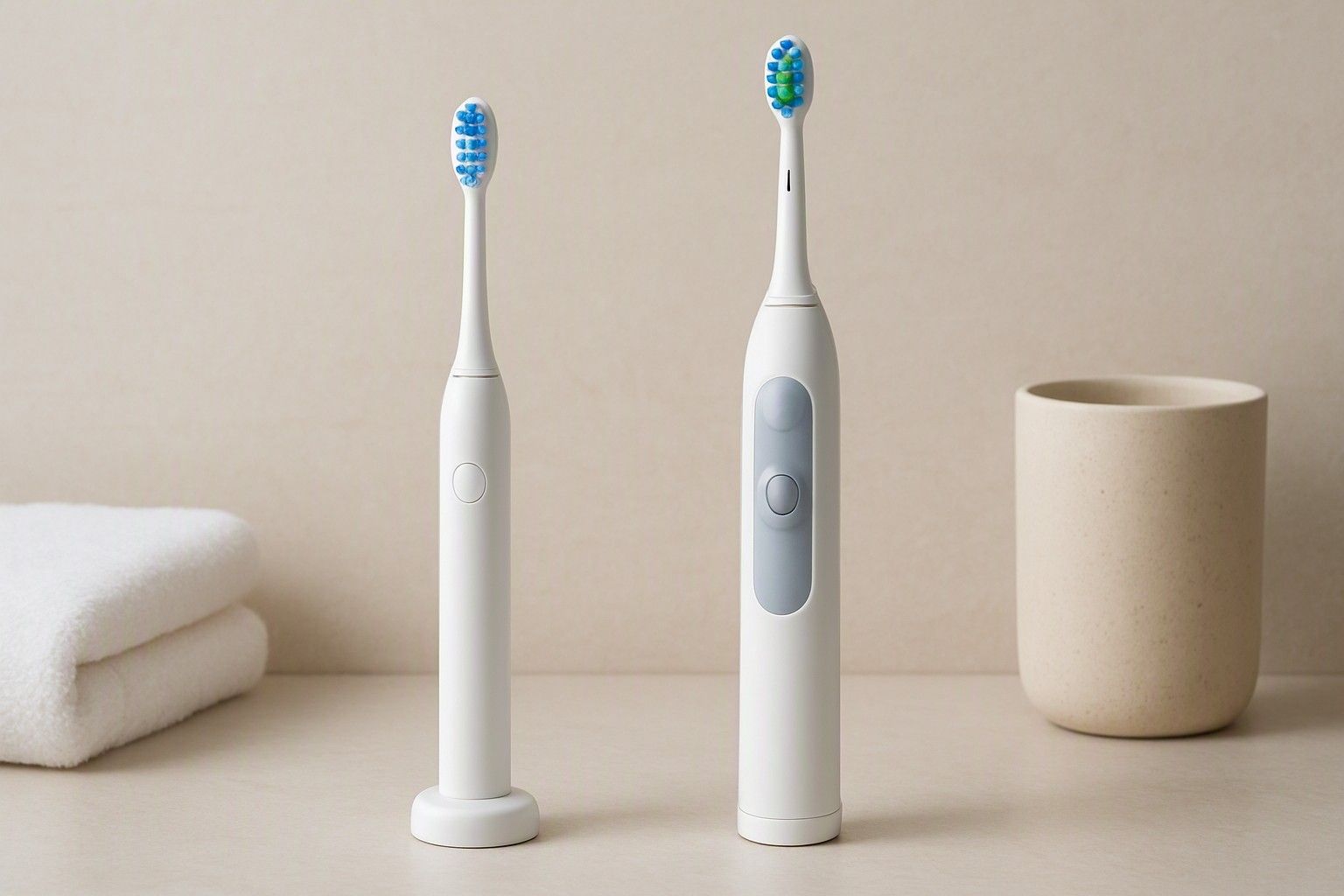
If you're standing between two boxes trying to decide whether to buy a sonic toothbrush or an oscillating one, the honest answer is that both clean teeth well — the real difference is in how the brush moves, how it feels in your mouth, and what it costs you to keep running. This article breaks down that difference plainly, so you can pick a technology that suits your gums, your budget, and your habits rather than whichever box has louder marketing on it.
How Sonic Brushing Works
A sonic toothbrush moves its bristles side to side at very high speed — typically tens of thousands of strokes a minute — using a magnetic drive inside the handle. The bristle head itself is shaped like a manual brush, oval or slightly elongated, and it vibrates rather than spins. What actually cleans your teeth isn't just the bristle contact — at these speeds, the brush also agitates fluid between your teeth and along the gumline, pushing saliva and toothpaste into spaces the bristles never physically touch. That's why sonic brushes are often described as cleaning "around" the tooth surface, not just "on" it.
Because the motion is a vibration rather than a mechanical rotation, sonic brushes tend to feel smoother and less mechanical in the hand — many users describe it as a buzzing hum rather than a grinding motion. This design also allows sonic brushes to cover a wider stroke path per pass, which can mean fewer passes needed to feel like you've covered your full mouth. In the Indian market, sonic models are available across every price band, from brushes near ₹199 to premium ones pushing toward ₹14,999, so the technology itself isn't gatekept by budget — the price difference usually comes down to speed settings, battery life, and build quality rather than the core sonic mechanism changing.
How Oscillating-Rotating Brushing Works
An oscillating-rotating toothbrush works on a completely different principle. Instead of a wide bristle head vibrating side to side, it uses a small, round brush head that spins in one direction and then reverses, often combined with a slight pulsing motion in and out. The head is deliberately small — roughly the size of a single tooth — so the idea is to place it on each tooth individually and let it rotate against the surface, rather than sweeping it across several teeth at once like a manual or sonic brush would.
This mechanical, tooth-by-tooth action is where oscillating brushes get their reputation for physically "scrubbing" plaque off, particularly on the outer surfaces of teeth. Because the motion is a genuine rotation rather than a vibration, the sensation is more distinctly mechanical — you can usually feel the head turning under your fingers as it works. Oscillating-rotating brushes are less commonly stocked at the very bottom of the market in India; most models start appearing from the ₹1,499 range upward, since the internal gearing needed to drive rotation is a more complex mechanism to build cheaply than a sonic vibration motor. If you've used a rotating brush before and liked the tooth-by-tooth feel, that same mechanical logic carries through across most brands and price points.
Cleaning Feel, Noise and Gum Comfort Compared
This is usually where the decision actually gets made, because both types clean adequately — what varies is how the experience feels day to day. Sonic brushes generally feel gentler on the gums because the vibration is spread across a wider bristle surface and the fluid-agitation effect does some of the work without heavy bristle pressure. People who've had gum sensitivity or mild recession often find sonic more comfortable for this reason. The sound is also different: sonic brushes produce a steady, higher-pitched hum, which most users get used to quickly and find less intrusive in a shared bathroom or early-morning routine.
Oscillating brushes, by contrast, feel more distinctly mechanical — you're aware of the head turning, and the sound is typically a lower, more percussive whirr rather than a hum. This isn't a flaw; some users specifically prefer this because it feels more "active," like the brush is doing visible work on each tooth. Where it can be a genuine drawback is with sensitive or receding gums, since the rotating head concentrates pressure on a smaller contact area, and pressing too hard is easier to do without noticing. Most decent brushes in either category now include a pressure sensor to catch this, but it's worth checking for on any oscillating model, especially in the ₹499 and ₹1,499 bands where sensors are sometimes left out to hit a price point. If comfort and quiet operation matter more to you than a strong scrubbing sensation, that alone tends to point toward sonic.
Brush Head Availability and Price for Each Type in India
Buying the toothbrush is a one-time decision, but buying heads for it is a recurring one, and this is where the two types genuinely diverge in the Indian market. Sonic brush heads come in a wider range of shapes and price points because more brands manufacture them, and generic or compatible third-party heads are easier to find both online and in local stores. Oscillating brush heads, being a more specific round shape tied closely to the rotating mechanism, are typically sold by fewer manufacturers, and compatible options can be harder to track down outside larger cities or major online marketplaces.
This difference matters more than it seems at first purchase, because a toothbrush handle usually outlasts several sets of heads, and if you can't easily find replacement heads for your specific model, you either end up overpaying for imported stock or switching brushes sooner than you'd like. Before deciding purely on the handle price, it's worth taking a moment to check how brush head supply differs between the two types, since the ongoing cost and convenience of replacements can outweigh a small difference in the upfront price of the handle itself.
Which Type Suits First-Time Users vs Experienced Users
If you've never used an electric toothbrush before, sonic is generally the easier starting point. The vibration is less abrupt, the sensation is more forgiving if your brushing pressure isn't well calibrated yet, and the broader bristle head behaves closer to the manual brush motion you're already used to — you're not relearning a tooth-by-tooth technique, just adding power to a familiar sweeping motion. This makes the adjustment period shorter and reduces the chance of the brush feeling harsh enough that you go back to manual brushing within a week, which is a common early dropout point for first-time electric brush buyers.
Experienced users, or those who've specifically used a rotating brush before at a dentist's recommendation, often prefer sticking with oscillating technology because they've already adapted to the tooth-by-tooth method and associate it with a stronger clean. If you're upgrading from a basic manual brush and have no strong preference yet, starting with a sonic brush in the ₹499 or ₹1,499 range gives you a lower-risk way to test whether electric brushing suits your routine at all, before spending more on either technology. Someone who already knows they like the mechanical, targeted feel of rotation, on the other hand, doesn't need to be talked out of it just because it's a smaller or pricier category — buying what you already know you'll use consistently is usually the better call.
Picking the Right Technology for Your Needs
Neither sonic nor oscillating is objectively the better technology — they're solving the same problem with different mechanics, and the right pick depends on your gums, your budget, and how much friction you're willing to tolerate around finding replacement heads. Prices across both types in India span from ₹199 to ₹14,999, with the market averaging around ₹1,999, so budget alone rarely forces you into one technology over the other. What should drive the decision is the fit between the brush's mechanics and your mouth, plus how easily you can keep it stocked with heads over time. For a fuller view of how this technology choice fits alongside battery life, warranty, and other buying factors, you can see how this fits the wider buying decision before finalising a model.
At this point the sonic-versus-oscillating question isn't really a mystery — sonic gives you a gentler, quieter clean with easier access to replacement heads, while oscillating gives you a more mechanical, targeted scrub that some experienced users prefer once they're used to it. Match that trade-off against your gum sensitivity and how much you value convenient head replacements, and you'll know which type belongs in your bathroom, not just which one has the better advertising.

Comments
Be the first to comment.