Electric vs Manual Toothbrush: Is the Upgrade Worth It in India?
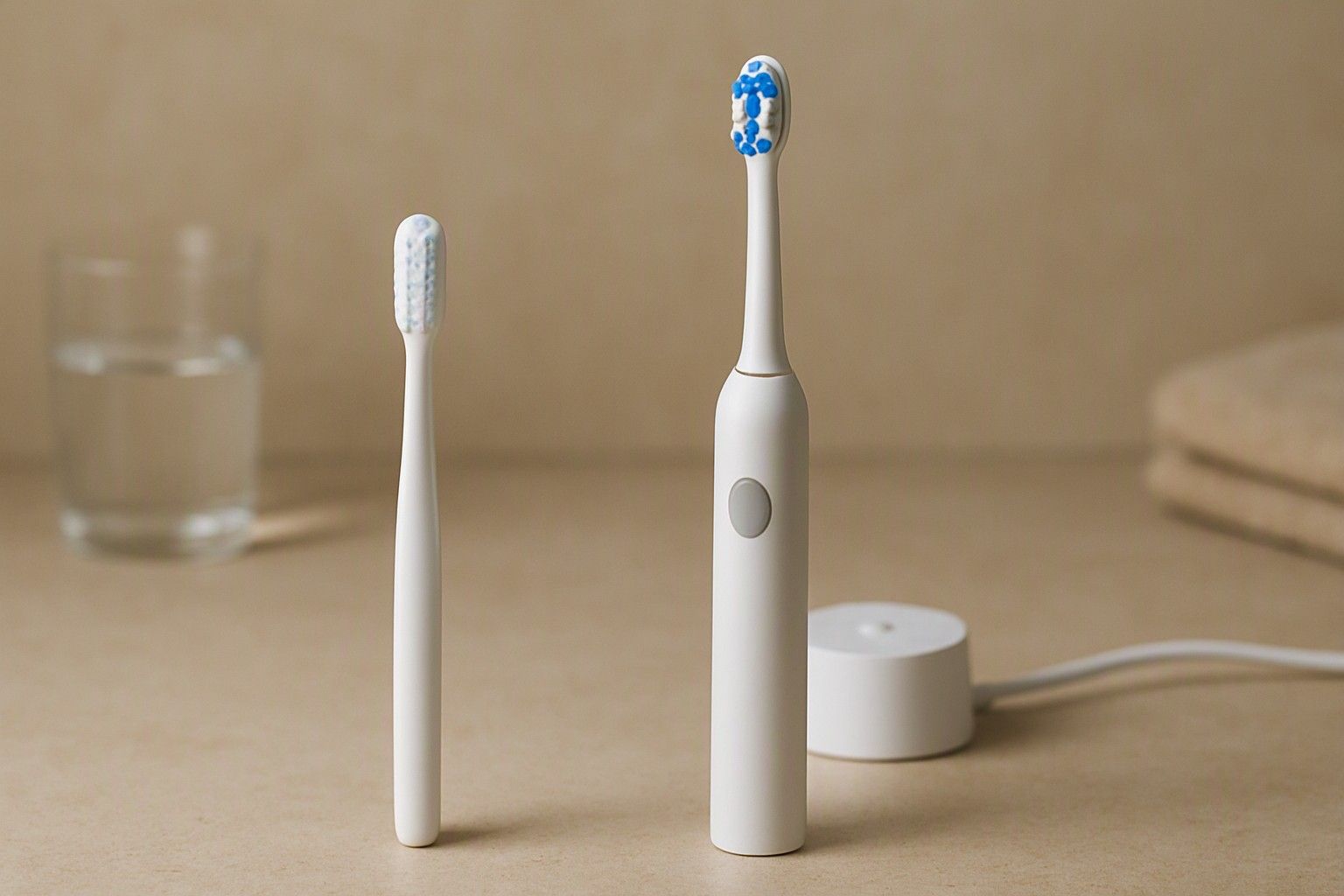
If you've been brushing fine with a manual toothbrush for years, the question isn't whether electric brushes exist or work — it's whether the upgrade changes anything for your mouth and your wallet specifically. This article looks at what genuinely improves, who notices it most, and where an electric brush is just extra spend for the same result. By the end you'll know which side of that line your household falls on.
What an Electric Toothbrush Does That a Manual One Cannot
A manual toothbrush cleans as well as the person holding it. Its entire performance depends on your brushing angle, pressure, stroke pattern and how long you actually stick around at 6 AM before you get bored and rinse. An electric toothbrush removes most of that variability. The head moves in tight oscillating, rotating or sonic-vibration patterns at a speed and consistency no hand can replicate for two full minutes, twice a day, every single day. That consistency is the actual upgrade — not raw cleaning power in a lab sense, but the fact that a mediocre brushing session with an electric brush still does more than a mediocre session with a manual one.
Most electric brushes sold in India also carry a built-in two-minute timer, often with 30-second interval buzzes to prompt you to move to the next quadrant of your mouth. This alone fixes one of the most common manual-brushing habits: people brush for 45 seconds and think they've done a full clean. Pressure sensors on mid-range and higher models add another layer — they alert you when you're pressing too hard, which is something a manual brush simply cannot warn you about, and hard pressure over years is a real contributor to gum recession and enamel wear. None of this makes an electric brush a medical device, but it does close gaps that willpower alone struggles with.
Cleaning and Gum-Health Differences That Actually Show Up
Where this actually shows up isn't in one dramatic clean — it's over months. Plaque along the gumline and in the tighter back-tooth spaces is where manual brushing tends to fall short, especially with a flat or worn-out manual head. Oscillating and sonic electric brushes reach that gumline margin more evenly because the motion is built into the brush, not dependent on you angling your wrist correctly at the end of a tiring day. People who switch from manual to electric commonly report less gum bleeding within a few weeks, which usually reflects better plaque removal at the gumline rather than any special ingredient or feature.
That said, the difference isn't universal. Someone who already brushes carefully with correct technique, a soft-bristled manual brush, and a full two minutes twice a day often sees only a modest improvement from switching. The real gap opens up for people who brush too fast, too hard, or inconsistently — which, realistically, is most people. It's also worth being honest that an electric brush doesn't replace flossing or interdental cleaning; gum health depends on both, and no motor compensates for skipping the spaces between teeth. If your dentist has flagged gum recession, sensitivity, or gingivitis at your last checkup, that's a more concrete signal to consider than the marketing claims of any single brush.
Who Benefits Most: Braces, Sensitive Gums and Older Family Members
The case for electric gets noticeably stronger for specific people rather than for everyone equally. People with braces struggle to clean around brackets and wires with a manual brush — an electric brush's smaller, focused head and consistent vibration make it easier to dislodge food particles and plaque in those tight spots without extra scrubbing effort. Similarly, anyone with sensitive gums or early gum recession benefits from the pressure-sensor feature that stops them from brushing too hard, a habit that's genuinely difficult to self-correct with a manual brush.
Older family members, especially those with arthritis, limited grip strength, or reduced fine motor control, often find an electric brush physically easier to use because the brush does the scrubbing motion for them — all they need to do is hold it in place and guide it around the mouth. This matters more than it sounds; a parent or grandparent who's been under-brushing because a manual brush is tiring to use for two full minutes may see a real improvement simply from switching to something that requires less manual effort. Kids transitioning from parent-assisted brushing to independent brushing can also benefit, since the timer and built-in motion reduce how much technique they need to get right on their own. In each of these cases, the upgrade is solving a specific problem, not just adding a feature.
The Real Cost Gap Once You Add Brush Heads
The upfront price difference is the easy part to compare. Electric toothbrushes in India span from ₹199 at the entry level up to ₹14,999 for higher-end models, with the market averaging around ₹1,999. A manual toothbrush, by contrast, costs a fraction of even the lowest electric price point, so the sticker shock is real if you're comparing them side by side without thinking further.
But the number that actually matters over time is the recurring one. Electric brush heads need replacing every three months, same as manual brushes, except each head costs meaningfully more than a manual brush ever did — and unlike a manual brush, you can't just buy whatever's cheapest at the local store, since heads are typically brand- and model-specific. Over a year, that's four head replacements stacked on top of the original brush cost, every year, for as long as you own it. This is exactly why it's worth doing the math properly rather than reacting to the shelf price alone — factor in the recurring brush head cost before deciding, because a ₹499 brush with expensive heads can end up costing more over two years than a ₹1,499 brush with cheaper ones. The handle price is a one-time decision; the head cost is the one you live with.
When Sticking With a Manual Brush Is the Smarter Choice
An electric brush isn't automatically the better choice for every household, and there's no shame in staying manual if your situation doesn't call for the upgrade. If you already brush correctly — soft bristles, gentle pressure, full two minutes, twice daily — and your dentist hasn't flagged any gum or plaque concerns, a manual brush is doing its job and an electric one won't meaningfully out-clean it. Budget-conscious households with multiple family members brushing daily should also weigh the ongoing head-replacement cost against just buying manual brushes for everyone, since that recurring spend adds up faster across four or five people than it does for one.
Travel-heavy lifestyles are another case where manual holds up better — electric brushes need charging, add bulk and weight to a bag, and are one more thing that can be lost or forgotten, where a manual brush just goes in the pouch and works anywhere. And if you're buying for a young child who's still developing basic brushing habits under supervision, a simple manual brush with parent guidance often teaches technique better than letting a motorised head do the work early on. None of these are compromises — they're just situations where the extra cost and complexity of electric doesn't translate into a proportional benefit.
Making the Final Call for Your Household
Bring the decision down to your own bathroom rather than a general recommendation. Look honestly at whether anyone in the household has bleeding gums, braces, arthritis, or a habit of rushing through brushing — those are the situations where electric earns its price gap quickly. If nobody in the house fits that description and everyone already brushes properly for the full two minutes, the manual option remains a perfectly sound choice and the switch is optional rather than necessary. If you're leaning toward buying, don't wait on price — the ₹199 to ₹14,999 range with an average around ₹1,999 reflects the current spread of the category, and a well-chosen model at any tier does its job well from day one. For a wider view of how to weigh features, price tiers and brush types before you commit, you can go back to the full electric toothbrush decision checklist.
The question you started with — whether electric is actually better and worth the money for your situation — comes down to who's brushing and how they brush today. For inconsistent brushers, braces, sensitive gums or anyone with limited dexterity, the upgrade pays for itself in gum health you can actually notice. For a household that already brushes carefully and isn't dealing with any of those issues, staying manual costs less and loses nothing. Either way, you now have the actual trade-offs rather than a sales pitch to decide from.

Comments
Be the first to comment.