Electric Toothbrush Price Guide: What ₹199 to ₹14,999 Gets You
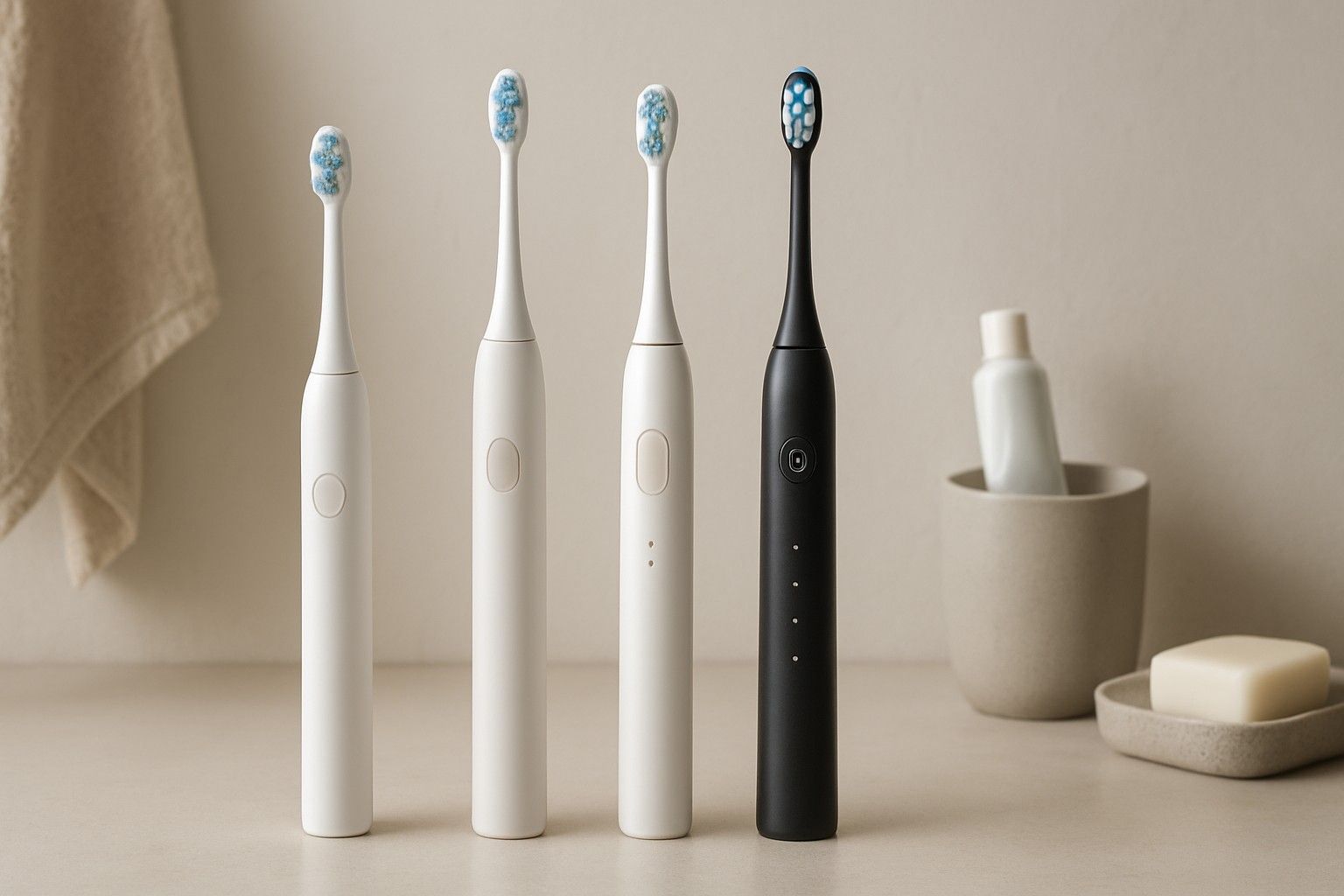
If you're staring at an electric toothbrush listing and wondering whether the price is justified or just a random number, this is the guide that maps it out. Prices in this category run from ₹199 to ₹14,999, and knowing what each band actually gets you is the difference between a confident purchase and a guess.
Under ₹499: What This Entry Tier Realistically Offers
Anything priced under ₹499 is doing one job: giving you a motorised brush head instead of a manual one. That's genuinely useful for anyone who has never used an electric toothbrush before, but you should walk in with modest expectations. At this level you typically get a single vibration mode, no pressure sensor, and a battery that's charged via a basic cradle or even AA batteries in some cases. Timers, when present, are often a simple beep rather than the quadrant-based pacing that mid-range brushes offer.
Build quality is the other thing that gets compromised. Plastic bodies at this price tend to feel hollow, and the motor inside is usually a basic eccentric-rotation type rather than the sonic vibration technology used further up the range. That doesn't make it useless — it still oscillates far faster than your wrist ever could, which is the core benefit of going electric in the first place.
Where this tier makes sense is as a low-risk entry point: a first electric toothbrush for a teenager, a spare for travel, or simply testing whether you or your family will actually stick with the habit before spending more. If you're buying for a child or as a backup unit, this band does the job without asking you to justify a bigger spend on a feature set you may not use consistently.
₹499–₹1,499: The Mainstream Sweet Spot
This is where most electric toothbrushes sold in India actually sit, and it's the band where the core promise of the category — better plaque removal with less manual effort — starts to hold up properly. Brushes between ₹499 and ₹1,499 typically add a proper two-minute timer with 30-second quadrant alerts, which matters more than it sounds because it's what actually improves your brushing technique over time rather than just adding vibration.
You'll also start seeing multiple brushing modes — usually a standard clean plus a gentler sensitive mode — and rechargeable lithium batteries that last one to two weeks per charge instead of needing daily topping up. Some models in the upper half of this band introduce a basic pressure sensor that alerts you if you're brushing too hard, which is a genuinely protective feature for gum health rather than a gimmick.
Build quality is noticeably better too: bodies feel less hollow, brush heads snap on more securely, and charging docks are more stable. For most households, this is the band that answers the primary question sensibly — you're not overpaying for features you won't use, but you're also not stuck with the compromises of the entry tier. If your budget allows it, this is the range to shop in rather than stretching for extras you may not need or settling for a bare-minimum motor.
₹1,499–₹4,999: Premium Features Worth Considering
Once you cross ₹1,499 and move toward ₹4,999, you're paying for refinement rather than the basic function itself. Brushes in this band commonly offer four to five brushing modes (whitening, gum care, sensitive, deep clean), Bluetooth connectivity with a companion app that tracks brushing coverage, and travel cases with their own charging capability. Battery life often stretches to three or four weeks per charge, and the motors are genuinely quieter and smoother than anything in the lower tiers.
Pressure sensors here tend to be more granular too, sometimes with a visual or app-based alert rather than just a buzz, which is useful if you or a family member has a habit of brushing too aggressively. Some models also add UV sanitising docks for the brush head, which is a nice-to-have rather than essential, but does extend head hygiene between replacements.
Whether this jump is worth it depends entirely on whether you'll actually use the extra features. An app that tracks brushing patterns is only valuable if you'll check it; a travel case only matters if you travel often. Before deciding, it's worth taking a closer look to see which higher-tier features justify the jump, since not every buyer needs everything this band offers, and some of it is closer to convenience than necessity.
What Pushes Models Toward ₹14,999
At the very top of the range, near ₹14,999, you're no longer paying primarily for cleaning performance — the core sonic or oscillating technology doesn't change dramatically between a ₹4,999 brush and one near ₹14,999. What changes is the ecosystem around it: multiple interchangeable brush head types (whitening, tongue cleaning, orthodontic), pressure-sensitive handles with fine-grained feedback, premium materials like metal accents instead of plastic, and app integration that offers detailed brushing analytics, personalised coaching, and sync with dental visit records.
Some models at this level are also bundled with water flossers or additional oral care accessories as a set, which inflates the price relative to a standalone brush. Battery life and charging speed see marginal improvements, but the difference between three weeks and five weeks of battery life rarely justifies a price jump on its own.
This tier makes sense for buyers who genuinely want a connected oral care routine, have specific dental needs an orthodontist has flagged, or simply want the most refined version of a daily-use object they interact with twice a day. It's a legitimate choice, but it's not the tier most people need to hit in order to get real health benefits from switching to electric.
The ₹1,999 Average and Where Most Buyers Land
The average price across the category sits at ₹1,999, and that number is worth paying attention to because it tells you where the bulk of genuinely useful, well-reviewed models cluster. It sits comfortably inside the ₹499–₹1,499 mainstream band, confirming that most Indian buyers are neither settling for the bare-minimum entry tier nor stretching into premium territory — they're landing on brushes with a proper timer, decent battery life, and at least one extra brushing mode.
This average is a useful anchor when you're evaluating a specific listing. If a brush is priced well above ₹1,999 but its feature list reads like an entry-level unit — single mode, no pressure sensor, basic timer — that's a signal the price isn't matching what you're getting. Conversely, a brush priced near or below the average that includes app connectivity or multiple modes is punching above its price point.
Using the average this way turns a single number into a practical filter: it's not about chasing the cheapest option or assuming higher price means better quality, but about checking that a given listing's price roughly matches its actual spec sheet relative to where the rest of the category sits.
Judging Whether Today's Price Is Actually Good
Once you know what a tier should include, the last step is confirming that the specific listing in front of you is priced fairly against its own history, not just against the category average. A brush that normally sells between ₹499 and ₹1,499 but is currently listed near ₹4,999 isn't necessarily a bad buy if that's genuinely close to its usual range — but if it's a temporary spike well above where it typically sits, that's useful to know before you commit.
The most reliable way to judge this isn't to look at the price in isolation, but to check where today's number falls within the product's full historical range from ₹199 up to ₹14,999. A price sitting in the lower half of a model's own historical band is a reasonable signal to buy now with confidence, rather than a reason to second-guess the decision. Before you finalise anything, it's worth taking a moment to check the price history before you commit to buying, since this single check protects you from the two most common mistakes: overpaying during a temporary spike, or assuming a listed price is a discount when it's actually just the model's normal rate. Judging fairness this way — against real history rather than gut feeling — is what turns a price tier guide into an actual purchase decision.
Between the tier breakdown and the ₹1,999 benchmark, you now have a concrete way to answer both halves of the original question: how much to spend, based on which features you'll actually use, and whether today's number is fair, based on where it sits against the product's own ₹199–₹14,999 history rather than a guess. That's enough to buy with confidence rather than hesitation.

Comments
Be the first to comment.