Mattress Buying Mistakes Indian Shoppers Should Avoid
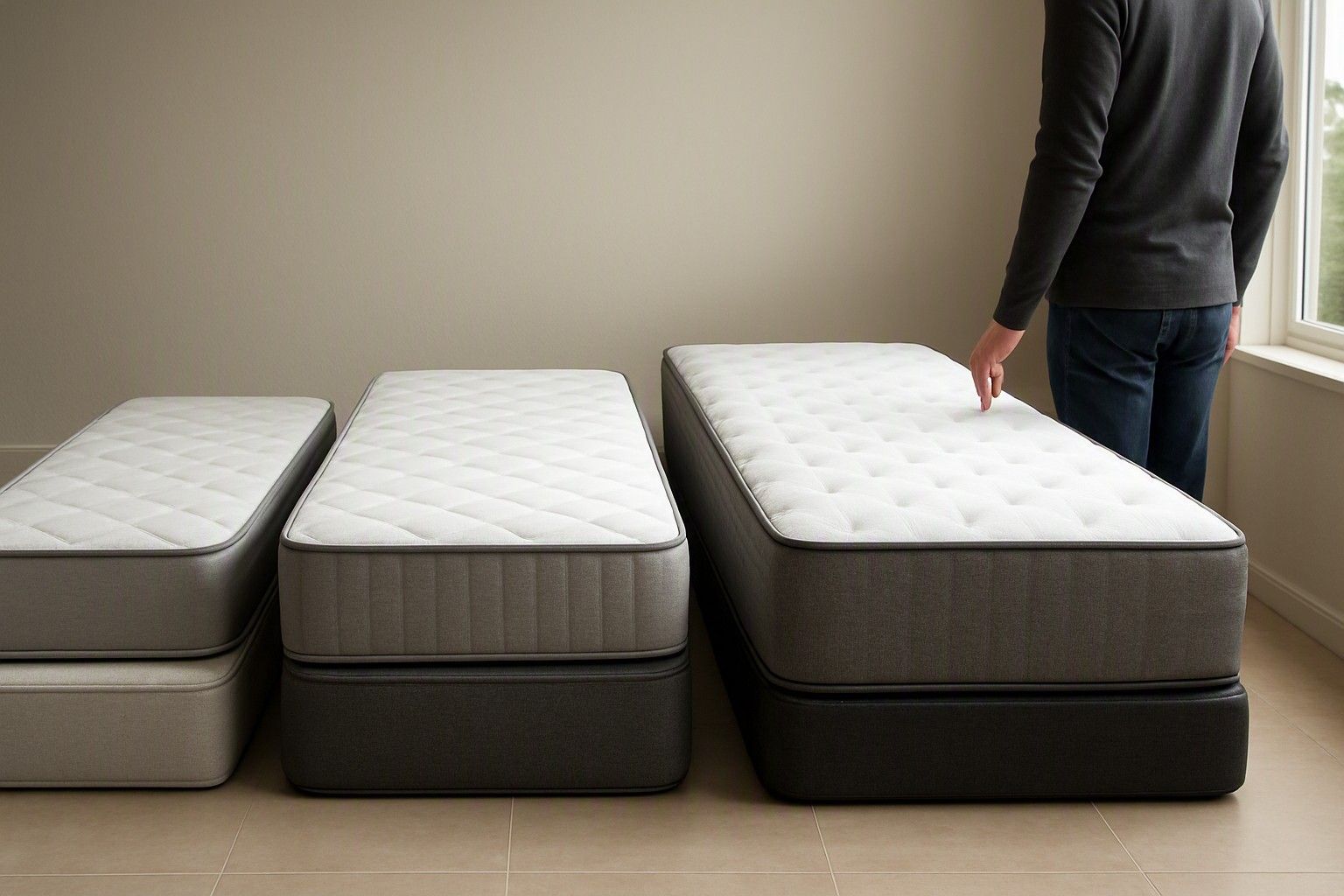
If you're about to place an order and want a last check before paying, you're in the right place. Most mattress regrets in India don't come from a bad brand — they come from a handful of avoidable mistakes made in the last mile of buying: judging comfort too quickly, guessing at firmness or size, and skimming past the terms that actually protect you. Here's what to fix before you check out.
Judging Comfort From a Few Minutes in a Showroom
A five-minute lie-down in a showroom, fully dressed, in the middle of a busy afternoon, tells you almost nothing about how a mattress will feel after eight hours of actual sleep. Showroom testing is designed to make mattresses feel good fast — the lighting, the fresh sheets, the salesperson standing nearby all nudge you toward a quick decision. Your body doesn't settle into its real sleep position, your spine doesn't relax the way it does at 1 a.m., and you have no way to judge how the mattress handles heat build-up or partner movement over a full night.
This is exactly why almost every mattress sold in India today, whether bought online or in-store, comes with a trial period of several weeks to a few months. Treat the showroom visit as a rough filter to rule out mattresses that are obviously too hard or too soft, not as the final test. The real decision should be made at home, sleeping on it the way you actually sleep, for at least a couple of weeks, before you decide it's a keeper. Buyers who skip this and commit fully based on a showroom impression are the ones most likely to request a return or live with a mattress they never quite got comfortable with.
Getting the Firmness Wrong for Your Body
Firmness is the single biggest reason mattress purchases go wrong in India, and it's rarely because a mattress is defective — it's because it was never right for the buyer's body or sleep style in the first place. A heavier person on a soft mattress will sink too far and wake up with a stiff lower back, while a lighter side-sleeper on a very firm mattress will feel pressure at the shoulder and hip within a week. Couples with a noticeable weight difference face an even trickier version of this problem, since one partner's ideal firmness can be the other's discomfort.
The mistake most buyers make is picking firmness based on what a friend recommended, what felt impressive for two minutes in a showroom, or a vague assumption that firmer is automatically better for the back. None of these account for your actual body weight, your preferred sleeping position, or whether you run warm at night. It's worth working through how to pick a firmness that actually suits your weight and sleep style before you finalise anything, because firmness is much harder to correct after the trial window closes than it is to get right at the point of ordering. Getting this one decision right resolves more post-purchase complaints than any other single factor in mattress buying.
Buying the Wrong Size for the Bed Frame
It sounds basic, but a surprising number of returns and exchanges in India happen simply because the mattress doesn't match the bed frame. Indian bed sizes aren't as standardised as people assume — a frame bought years ago, a carpenter-made bed, or a cot inherited from family can all have dimensions that don't line up neatly with standard queen or king mattress sizes sold today. Ordering by size name alone, without measuring, is one of the easiest mistakes to make and one of the most annoying to fix after delivery, since an oversized or undersized mattress usually can't be adjusted — it has to be exchanged.
The fix takes five minutes: measure the inner length and width of your bed frame, not just its outer dimensions, and check that figure against the exact size you're about to order rather than relying on a generic label like "queen" or "king." It's also worth thinking about room clearance, especially in smaller Indian bedrooms where a slightly larger mattress can block a wardrobe door or leave no walking space. Take a moment to double-check dimensions so the mattress fits your frame and room before you confirm the order — it's a small step that prevents one of the most common and most avoidable post-purchase headaches.
Ignoring Trial and Warranty Fine Print
Many buyers skim past the trial and warranty terms because the number looks generous at first glance, then discover too late that the fine print changes what that number actually means. A trial period might exclude the first week or two as a mandatory "break-in" period during which returns aren't accepted, even if the mattress feels wrong from day one. Warranty terms are just as easy to misread — a multi-year warranty against manufacturing defects is not the same as a comfort guarantee, and most warranties won't cover sagging within limits the brand defines as normal wear, or damage caused by using the mattress without a proper base or slats.
Before ordering, check three things specifically: how pickup and return logistics work if you do want to send the mattress back, whether a return triggers a full refund or only a store credit or exchange, and what exactly voids the warranty, since improper base support is a common exclusion many buyers don't realise until they've already filed a claim. None of this is meant to make trials or warranties sound worthless — they're genuinely useful protections. The mistake is assuming the headline number is the whole story and not reading the two or three lines underneath it that determine whether that protection actually applies to your situation.
Overpaying During So-Called Sale Events
Mattress prices in India swing widely by design, and the category as a whole ranges from about ₹2,500 to ₹85,000, with the typical mattress selling around ₹12,000. Sale events are timed to make a price look like a rare drop, but many listed "discounts" are measured against an inflated reference price that few people ever actually paid. The mistake isn't buying during a sale — it's assuming the sale price alone tells you whether you're getting good value, without checking where that price actually sits against the mattress's real historical range.
A mattress that typically sells within the ₹12,000 band and is currently priced at the low end of that range is a solid buy regardless of whether a banner calls it a sale. One that's been nudged up before a "discount" to look bigger than it is, is worth skipping even if the percentage-off looks impressive. This is exactly why checking actual price history matters more than checking the current campaign messaging — it tells you whether today's number is genuinely competitive or just well marketed. If the price you're looking at falls comfortably within the ₹4,000, ₹12,000, or ₹35,000 range that matches the mattress type and quality you need, there's no reason to wait around for a bigger-looking discount that may never come or may not even be real.
A Final Sanity-Check Before Ordering
By this point you've caught the mistakes that trip up most Indian buyers: judging comfort too quickly, guessing at firmness, skipping measurements, glossing over trial and warranty terms, and reacting to sale banners instead of real price history. What's left is to run through the full list of buying factors one more time as a single check, rather than trusting memory for each one individually. It only takes a few minutes and it's the difference between ordering with confidence and ordering with a nagging doubt you'll only resolve after the mattress arrives.
Go through firmness, size, trial terms, warranty terms, and price together rather than in isolation, since a mattress that's right on four of these but wrong on one can still leave you unhappy. If you haven't already, it's worth taking the time to run through every buying factor one last time before you order so nothing gets missed between the research you've done and the order you're about to place. A mattress is not a purchase most people revisit for years, so the extra ten minutes here is genuinely worth it.
That covers the mistakes that actually cost Indian buyers money or sleep after the order is placed, not just the obvious ones. If you've checked comfort expectations, firmness, size, the trial and warranty fine print, and where the price sits against its real history, you're not guessing anymore — you're ready to order with a clear reason behind every choice you made.
Comments
Be the first to comment.