Mattress Size Guide: Single, Queen and King Dimensions
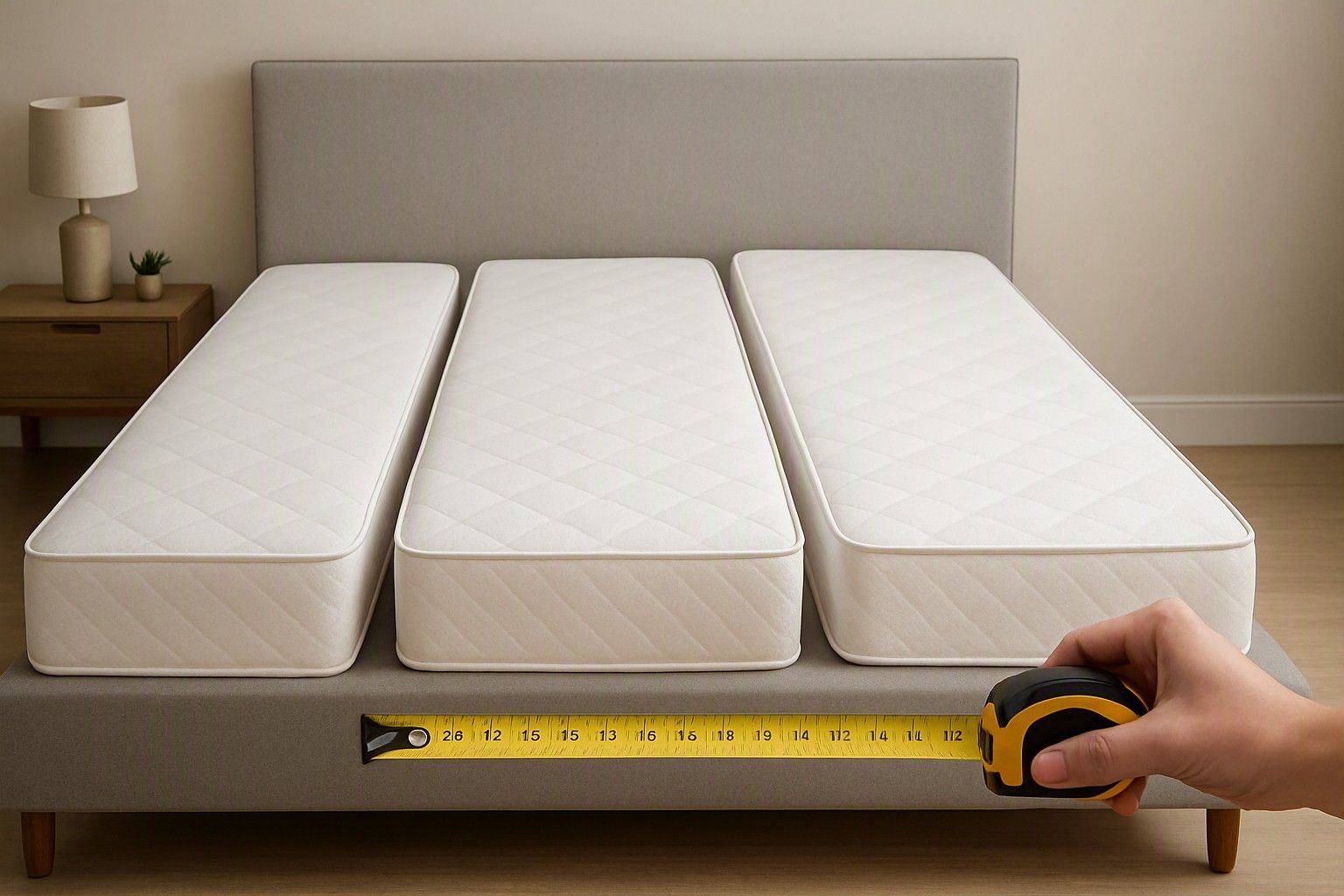
If you've ever ordered a mattress and had it hang off the bed frame by two inches, or found it swimming in a room with no space to open the wardrobe, you know that "queen size" doesn't mean the same thing to every seller. This guide breaks down exactly what single, queen and king mean in Indian bed dimensions, how to measure your own frame and room before you order, and how to think about size when you're sharing the bed with a partner or a child. By the end you'll know precisely which size to put in your cart.
Standard Indian Mattress Dimensions
Indian mattress sizing doesn't follow a single global standard, and that's the root of most sizing confusion. The most common sizes sold here are single (75x36 inches), queen (75x60 inches), and king (75x72 inches), though you'll also see a smaller "single" at 72x30 for children's rooms or narrow bed frames, and a larger king at 78x72 for taller sleepers. Length also varies more than most buyers expect — 75 inches is standard, but 78-inch options exist specifically for people above roughly 5'10", and buying a standard-length mattress when you need the longer one is a common regret.
What makes this trickier than it sounds is that these aren't enforced measurements. One brand's queen can be 60 inches wide, another's 58, and the difference is enough to leave gaps against the bed frame's side rails or make fitted sheets pull at the corners. Some manufacturers also list dimensions in centimetres without converting cleanly, so a mattress listed as 152x198 cm might not match what you expect from "queen."
The practical takeaway: don't buy by size name alone. Always check the exact width, length, and sometimes even the depth listed in the product specifications, and match them against your own bed frame's inner measurements rather than assuming a queen is always a queen.
Measuring Your Bed Frame Before You Order
The single most reliable way to avoid a returns headache is to measure your existing bed frame before you look at a single mattress listing. Use a tape measure to get the inner length and inner width of the frame — the space between the head board and foot board, and between the two side rails — not the frame's outer dimensions, which will always be larger and will mislead you into buying oversized.
Measure twice, at two different points along each side, because many bed frames (especially older wooden ones made by local carpenters rather than factory-produced) are not perfectly rectangular. If you find a variance of more than half an inch between measurements, plan around the smaller number so the mattress isn't forced into a tight corner.
If you're buying both a new bed frame and mattress together, reverse the process: pick your mattress size first based on room fit and sleeping needs, then choose a frame built to that exact size rather than eyeballing it. This avoids the common trap of ending up with a frame that's a custom or non-standard size, which then limits you to a narrow set of mattress options later, or forces a costly custom order.
One more detail buyers skip: check the height of the bed frame's side rails if you're choosing a thicker mattress. A tall mattress in a frame with low rails can look and feel unsupported, even if the length and width are a perfect match.
Sizing for Small Apartments and Compact Bedrooms
In compact Indian apartments — the studio or 1BHK bedroom that also has to fit a wardrobe, a study table, and walking space — mattress size is really a room-planning decision, not just a sleep decision. Before deciding on queen or king, measure the clear floor space around where the bed will sit, factoring in at least 24-30 inches of clearance on the sides you'll actually walk through daily. A king mattress that leaves only a foot of gap to the wardrobe door will make the room feel and function smaller every single day, even if it sleeps beautifully.
For single-occupant compact bedrooms, a well-chosen single or a slightly wider "single XL" can be the more livable choice over a queen, freeing up space for storage furniture that a small apartment desperately needs. For couples in compact apartments, queen is usually the practical ceiling — king in a genuinely small room tends to create more friction with daily movement than it solves in sleeping comfort.
It's also worth checking door and stairwell widths in older buildings before ordering a king, since rolled or folded mattresses still have minimum unrolled dimensions and rigid queen or king frames can be genuinely difficult to manoeuvre into upper-floor apartments without a lift. A quick check with the building's lift dimensions and stairwell turns, done before ordering rather than after delivery attempts fail, saves a frustrating return process.
Choosing Size for Couples and Co-Sleeping With Kids
For two adults sharing a bed, queen (75x60) is the realistic minimum for uninterrupted sleep — it gives each person roughly 30 inches of width, which is workable but tight if either partner moves a lot at night. King (75x72 or 78x72) adds a meaningful 12 extra inches of shared width, and couples who report better sleep after upgrading almost always cite reduced disturbance from a partner's movement as the reason, not a change in mattress feel.
The calculation changes again once a child regularly co-sleeps, even occasionally. A queen that comfortably fits two adults becomes noticeably cramped with a child added, and many families end up sleeping poorly for months before deciding to upsize, when planning for it upfront would have avoided the disruption. If co-sleeping is a regular part of your household's routine rather than an occasional event, size the mattress for that reality rather than for the two-adult scenario alone.
There's a secondary benefit to sizing up for a shared bed that goes beyond simple space: a wider mattress also makes it practical for each sleeper to have a different firmness zone or even a split mattress setup, which is genuinely one of when a bigger bed also lets each person get their preferred firmness situations worth knowing about before you buy, since partners with different firmness preferences are extremely common and a king-size format handles this far better than a queen.
Mattress Thickness and Why It Matters
Thickness (sometimes listed as height or profile) is a separate decision from length and width, but it directly affects how a mattress performs on a given bed frame, and it's frequently overlooked until after purchase. Thinner mattresses, roughly in the 4-6 inch range, suit divan or storage-style bed frames where a lower profile keeps the overall bed height manageable, and they also work well on the floor or on low platform frames common in smaller Indian bedrooms. Thicker mattresses, from around 8 inches upward, generally offer more room for layered foam or spring construction and tend to suit people who want more give before feeling the base beneath them.
Thickness also interacts with bed frame height in ways that are easy to miss while measuring only length and width. A thick mattress on a tall frame can push the total sleeping height uncomfortably high, making it harder to get in and out of bed, particularly relevant for elderly users or shorter individuals. Conversely, a thin mattress on a very low frame can feel like sleeping too close to the floor, with reduced airflow underneath contributing to quicker wear or dampness issues in humid regions.
When fitted sheets and bed frame side rails are involved, check the specific thickness against the rail's depth, since sheets and toppers are usually sized to a particular thickness range and a mismatch here causes the same slipping-corner problem as an incorrect width or length.
How Size Affects the Price You Pay
Size is one of the most direct multipliers on mattress price, often more influential than the material or brand itself. Moving from single to queen typically means roughly 60-70% more material, and from queen to king another meaningful jump, so it's realistic to expect the price to scale with the square footage rather than staying flat across sizes within the same product line.
Across the market, prices range from ₹2,500 to ₹85,000, with the average sitting around ₹12,000, and the size you choose is one of the clearest ways to predict where in that range you'll land. A single mattress in a basic foam construction can sit comfortably in the ₹4,000 band, while the same construction in queen often moves into the ₹12,000 band simply because of the added material, independent of any change in quality or features. King-size versions of better-constructed mattresses, especially those with layered foam or hybrid spring builds, commonly land in the ₹35,000 band.
This matters practically when you're comparing listings: a king mattress priced similarly to a queen from the same brand is worth a closer look at its actual specifications, since it may indicate a thinner profile or lower-density material being used to hit a price point rather than a genuine value difference. Understanding how jumping up a size shifts you into a higher spending band helps you budget realistically before you start comparing individual listings, rather than being surprised midway through checkout.
Fitting Size Into Your Full Mattress Shortlist
Size is only one of several decisions that need to line up together, and treating it in isolation can undo the rest of your research. A well-chosen size on a mattress with the wrong firmness for your sleeping position, or one that's priced outside a comfortable budget, still leaves you with the wrong purchase, just wrong in a different dimension. Once you're clear on the size your bed frame and room genuinely support, the next steps are confirming the mattress type and firmness suit how you actually sleep, and checking that the price fits within a band you're comfortable spending in.
Rather than treating each of these as a separate research task, it helps to line up size with type, firmness and budget in one place so the choices reinforce each other instead of contradicting one another midway through your shortlist. A queen decided on room measurements alone, for instance, might still need revisiting once you factor in that a heavier sleeper needs a firmer or thicker profile, which can shift which specific products are even viable at that size.
With your bed frame measured, your room's clearance checked, and a clear read on how thickness and size push price up or down, you're no longer guessing at "queen" or "king" as vague labels — you know the exact dimensions your space and your sleep actually need. That's the sizing question answered; the rest of the decision is just matching a mattress to it.

Comments
Be the first to comment.