Soft, Medium or Firm: How to Pick Mattress Firmness
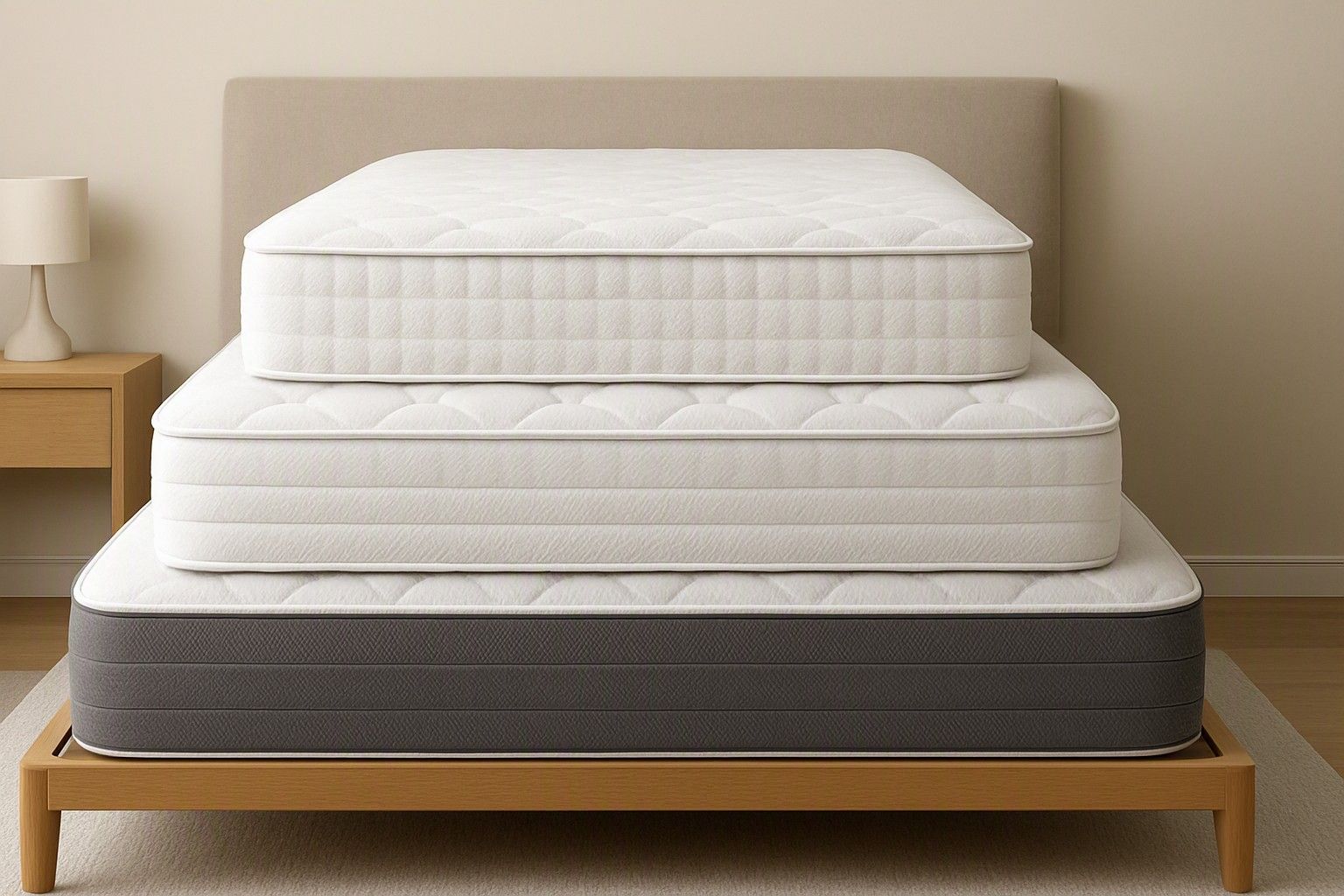
If you've been asking whether to buy a soft, medium or firm mattress, the honest answer is that it depends on how you sleep, how much you weigh and whether your back needs support or cushioning - not on which one sounds more premium. Firmness is a separate decision from mattress type or brand, and getting it wrong is the single biggest reason people end up with backache or a mattress they stop enjoying within months. This guide walks through exactly how to match firmness to your body and habits, so you can commit to a mattress with confidence rather than guessing.
How Firmness Is Actually Measured
Firmness in mattresses is usually described on a rough 1-to-10 scale, where 1 is sink-in-soft and 10 is close to sleeping on a plank. In practice, almost every mattress sold in India sits somewhere between 4 and 8, because the extremes aren't comfortable or supportive for most people. The catch is that this scale isn't standardised - a brand's idea of "medium-firm" can feel noticeably different from another's, because firmness depends on the top comfort layer (foam, latex, or fabric quilting) sitting over the support core, and how thick that comfort layer is.
This is also why firmness and mattress type get confused. A coir mattress and a memory foam mattress can both be labelled "firm", but they'll feel completely different under your body - one pushes back immediately, the other resists slowly and contours. Firmness tells you how hard or soft the surface feels; it doesn't tell you what's inside creating that feel. That's a separate question worth understanding on its own.
When you're comparing mattresses, treat the firmness label as a starting point, not a guarantee. Two mattresses rated the same firmness can still feel different once you factor in your weight and how you sleep, which is exactly what the next few sections work through.
Matching Firmness to Side, Back and Stomach Sleepers
Sleeping position is the clearest signal for firmness because it decides which parts of your body carry pressure and need cushioning versus which parts need to stay aligned.
Side sleepers generally need a softer to medium feel. Lying on your side puts concentrated pressure on the shoulder and hip, and a surface that's too firm won't let these points sink in, which forces your spine out of alignment and often causes shoulder or hip soreness by morning. A medium to medium-soft mattress lets those pressure points settle slightly while still holding up the waist.
Back sleepers do best on a medium to medium-firm mattress. Your spine has a natural curve at the lower back, and the mattress needs to support that curve without letting the hips sink lower than the shoulders. Too soft, and the midsection sags; too firm, and the lower back doesn't get filled in, leaving a gap that strains the muscles overnight.
Stomach sleepers need the firmest end of the range, generally medium-firm to firm. In this position, the stomach and hips are the heaviest points, and if the mattress is too soft, they sink first and pull the spine into an unnatural curve, which is a common cause of lower back pain reported by stomach sleepers. A firmer surface keeps the body closer to a flat, neutral line.
If you switch positions through the night, which most people do, a medium firmness is the safest middle ground because it doesn't fail badly in any single position.
Body Weight and Firmness for Indian Body Types
Firmness doesn't work in isolation from body weight, because the same mattress will feel very different under a 55 kg frame versus a 95 kg frame. This is one of the most overlooked parts of picking firmness, and it matters a lot given how wide the range of body types is across Indian households buying for parents, couples and children on the same budget.
Lighter individuals, roughly under 60 kg, often find that a mattress marketed as "medium" actually feels firm to them, because there isn't enough body weight to compress the top comfort layer and let it do its job. For this group, leaning slightly softer than what the general recommendation suggests usually gives a truer medium feel and better pressure relief at the shoulder and hip.
Average body weights, roughly 60-90 kg, are what most mattresses are designed and firmness-rated for, so the standard soft, medium or firm guidance based on sleeping position applies fairly directly here.
Heavier individuals, above 90 kg, tend to sink further into any given mattress, which means a mattress rated medium can feel closer to soft, and a genuinely firm or medium-firm mattress is usually needed to get proper support and avoid the middle of the mattress sagging over time. This also affects durability - a softer mattress under a heavier body compresses faster and may lose its shape sooner than the same mattress would under a lighter person.
When two people of very different weights share a mattress, this mismatch is often the real reason one partner feels well-supported and the other doesn't, even on a mattress that's objectively good quality.
Firmness for Back Pain and Orthopaedic Needs
If back pain is driving your mattress search, the instinct is often to buy the firmest mattress available, on the assumption that firm equals supportive. That assumption is only partly right. Research and orthopaedic guidance generally point to medium-firm as the sweet spot for most chronic lower back pain, because it supports the spine's natural curve while still allowing enough give at the hips and shoulders to avoid new pressure points. A mattress that's too firm can actually aggravate back pain by holding the lower back in an unsupported, slightly arched position all night.
That said, the right firmness for back pain still depends on your sleeping position and weight, which is why this isn't a one-size answer. A back sleeper with lower back pain usually does well on medium-firm, a side sleeper with back pain often needs a slightly softer medium to avoid punishing the hip and shoulder, and a heavier person with back pain typically needs to go firmer than a lighter person would for the same complaint, simply to get equivalent support.
Mattresses marketed as "orthopaedic" in India are usually firmer, denser constructions built to limit sinkage and keep the spine level, and they can genuinely help people with disc issues or chronic stiffness. But orthopaedic doesn't automatically mean the firmest mattress in the shop - it means one engineered to keep the spine supported without collapsing under sustained pressure, which for many people lands at medium-firm rather than rock hard. If back pain is severe or diagnosed, treat firmness as one part of the decision and get a doctor's input on the specific support you need.
Why Firmness Preferences Differ Within a Couple
It's common for two people sharing a bed to want different firmness levels, and this usually isn't a matter of one person being fussy - it comes down to the same factors covered above: different sleeping positions, different body weights, or both. A side-sleeping partner under 60 kg and a back-sleeping partner over 85 kg are, in effect, looking for two different mattresses, even though they need to end up on the same bed.
There are a few realistic ways to handle this. One is to compromise on a single medium firmness that doesn't fully satisfy either person but doesn't badly fail either one either - workable, but not ideal long-term. Another is to buy two single mattresses of different firmness and place them side by side under one set of bedding, which solves the firmness mismatch completely but requires a frame that can accommodate the joint. A third option, and one that's easy to overlook, is that going up a mattress size gives each partner more of their own surface area, which reduces how much one partner's movement or sinkage affects the other, even if the firmness itself is shared. This is exactly why a larger shared mattress size helps when partners prefer different feels - it doesn't fix a firmness mismatch on its own, but it takes pressure off the compromise and is worth weighing before you settle on a single mattress.
Whatever route you pick, it helps to test lying down together in the actual position you sleep in, rather than each person testing separately, since the mattress behaves differently under combined weight and movement.
How Firmness Ties Into Construction Type
Firmness and construction are related but not the same decision, and it's worth understanding how one shapes the other before you shop. Coir-based mattresses tend to sit on the firmer end naturally, since coir fibre resists compression, which is why they're common in "firm" and orthopaedic listings. Foam mattresses cover a much wider range - a dense, higher-grade foam feels firmer and more supportive, while a lower-density foam with a thick top layer feels softer and sinks more, so foam firmness varies a lot even within the same category. Memory foam adds a slow-contouring feel that can make a mattress feel softer initially even at a similar firmness rating, because it responds to body heat and pressure rather than pushing back immediately. Spring and pocketed-coil mattresses generally land in the medium to medium-firm range and tend to hold that feel more consistently over years of use, since the coils don't compress permanently the way lower-quality foam can.
This matters because a firmness label alone won't tell you how that firmness will hold up, or how it'll actually feel against your skin and joints. If you know you want, say, a firm mattress for a stomach sleeper's needs, the next real question is which mattress materials deliver soft, medium or firm feels reliably over the years you'll actually own it, rather than picking based on the firmness label at the point of sale alone. Matching firmness to the right construction is what keeps that firmness from softening or breaking down well before the mattress itself is worn out.
Where Firmness Sits in the Overall Decision
Firmness is one of the most important calls you'll make on a mattress, but it isn't the only one, and it shouldn't be decided in isolation from budget, size and construction. Mattresses across the market span ₹2,500 to ₹85,000, with the average sitting around ₹12,000, and you'll find reasonable firmness options at every budget tier from ₹4,000 through ₹12,000 up to ₹35,000 - a higher price doesn't automatically mean better-matched firmness for your body, it more often reflects material quality and durability.
Once you're clear on whether you need soft, medium or firm based on your sleeping position, weight and any back concerns, it's worth stepping back and looking at how that decision fits alongside the others you still have to make - size for your room and any shared-bed needs, construction type for durability and long-term feel, and budget for what's realistic. This piece has covered firmness in depth on purpose, because it deserves its own decision rather than being an afterthought to type or price, but it's still just one part of the picture. It helps to place firmness alongside the other factors that decide your mattress so you're weighing all of them together rather than locking in firmness and working backward from there.

Comments
Be the first to comment.