Mattress Price Guide for India: What You Should Pay
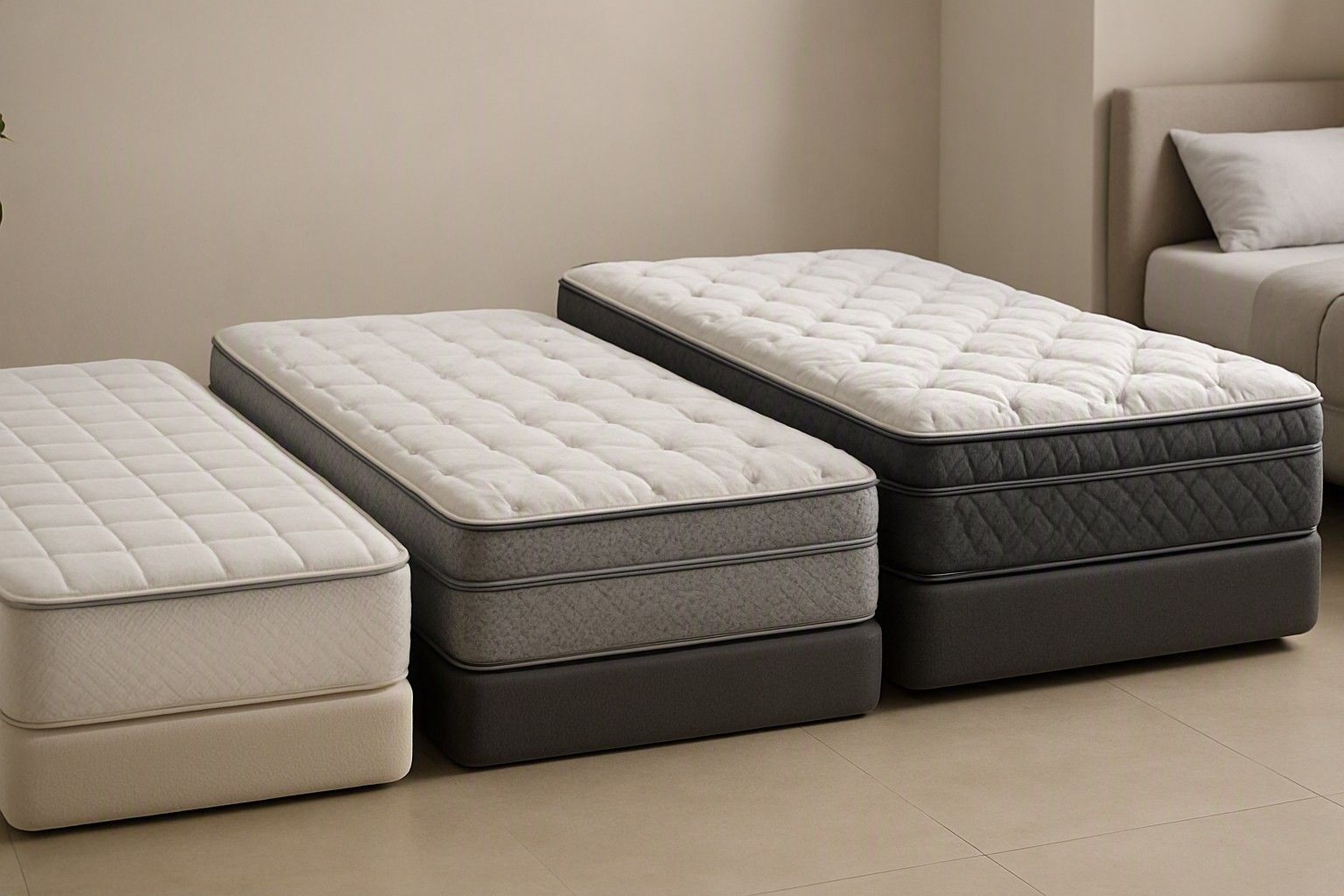
If you're staring at a mattress price tag and wondering whether it's a fair number or an inflated one, you're asking the right question at the right time. Mattress prices in India stretch from ₹2,500 to ₹85,000, with the average buyer landing around ₹12,000 — but that range hides real differences in what you're getting, not just markup. This guide breaks down what each price band buys you, so you can judge today's price on its merits instead of guessing.
What Mattresses Cost Across the Range
The Indian mattress market runs from ₹2,500 at the very bottom to ₹85,000 at the premium end, with most buyers settling closer to the average of ₹12,000. That's a wide spread for a single product category, and it exists because "mattress" covers everything from a thin foam slab meant for occasional use to a multi-layer, engineered sleep surface built to last a decade or more. Thickness, core material, layering, cover fabric, and firmness customization all add cost in stages, which is why the market doesn't cluster around one price — it spreads across distinct tiers.
Understanding this spread matters because a mattress isn't a one-time impulse buy you replace next season. Most households keep one for several years, so the price you pay upfront needs to be judged against how long it will actually perform, not just what's cheapest today. A mattress priced near ₹2,500 and one priced near ₹85,000 are not competing for the same use case, and comparing them directly rarely makes sense. Instead, the more useful approach is to figure out which tier matches your sleeping needs, room usage, and how long you expect the mattress to hold up, then evaluate prices within that tier. The sections below walk through what each band realistically delivers, so you can place your own budget against real expectations rather than a vague sense of "cheap" or "expensive."
Under ₹4,000: What You Realistically Get
Below ₹4,000, you're mostly looking at single-layer foam mattresses or thin coir options built for light, occasional use — a guest room, a child's bed, or a rarely-used cot. Construction at this level is basic: one density of foam or coir, minimal layering, and covers that are functional rather than durable. These mattresses aren't built to support a full-time adult sleeper night after night for years, and it shows in how quickly they compress or sag under regular use.
That doesn't make this tier a bad choice — it makes it a specific-purpose one. If you need a mattress for a spare bed that sees a few nights of use a month, or for a child who will outgrow the bed size before the mattress wears out, spending more here doesn't buy you much practical benefit. The mistake buyers make is expecting a sub-₹4,000 mattress to perform like a primary sleeping surface for a full-grown adult using it every night. It generally won't hold shape or support as well over time, and if that's your actual use case, you're better served moving into the next tier rather than stretching this one beyond what it's built for. Judge mattresses in this band by their intended job, not by comparing them to pricier alternatives.
The ₹12,000 Sweet Spot
The ₹12,000 band is where most Indian households end up buying, and for good reason — it's wide enough to cover genuinely different mattress types while still delivering construction meant for daily, long-term use. In this range you'll find multi-layer foam mattresses with a support base and a softer comfort layer on top, spring-based mattresses with reasonable coil counts, and better-built coir or hybrid options that combine coir's firmness with a foam comfort layer. The jump from the entry tier isn't just marketing — it typically shows up as thicker cores, more distinct layers, and covers that hold up to years of use and washing.
This is also the tier where firmness options start to matter and get communicated more clearly, since manufacturers assume you're buying for regular nightly sleep rather than occasional use. If you're outfitting a primary bedroom on a sensible budget, this band gives you the most meaningful choice per rupee spent — you're not paying for the highest-end materials, but you're also not settling for a mattress that won't last. Within this range, price differences usually track real differences in layer count, density, and cover quality rather than brand premium alone, which makes it easier to compare options on their actual construction rather than guessing at markup. For most buyers asking whether they're paying a fair price, this is the band where that comparison is most straightforward.
₹35,000 and Premium Mattresses
Moving into ₹35,000 and beyond, you're paying for engineering refinement rather than basic function — multiple foam or latex layers tuned for different support zones, higher-density materials that resist sagging for longer, breathable or temperature-regulating covers, and often some form of zoned support built into the core. Mattresses at the top of this range, approaching ₹85,000, are usually aimed at buyers with specific needs: chronic back pain, a strong preference for a particular firmness feel, or simply a long-term investment in sleep quality where cost is a secondary concern.
The honest way to evaluate this tier is to ask what specific problem the extra spend is solving for you. If you have no particular back or joint issue and no strong firmness preference, the jump from the ₹12,000 band to this one may deliver diminishing returns relative to what you pay. But if you've identified a real need — better pressure relief, motion isolation for a shared bed, or materials that stay cooler through the night — mattresses in this range are where those features are actually engineered in, not just marketed. This tier rewards buyers who know what they're solving for; it's less useful if you're shopping without a clear reason to spend beyond the mid-range.
Reading Today's Price Against the Historical Range
Once you know which tier fits your need, the next question is whether the specific price you're seeing today is reasonable within that tier — and that's a different exercise from just picking a budget band. Mattress prices in India move across a genuine range from ₹2,500 to ₹85,000, and a listed price sitting comfortably within the expected span for its tier and construction is a fair price to act on, not a signal to keep watching for something lower.
The more useful habit is comparing what's in front of you against the tier expectations laid out above rather than against some imagined lowest-ever number. If a mattress with multi-layer foam construction and a durable cover is priced within the ₹12,000 range, that's consistent with what that construction should cost — it doesn't need to match the ₹12,000 average exactly to be a good deal, since the average reflects the whole market, not your specific tier or need. Waiting indefinitely for a mattress to drop below its normal range usually means waiting past the point of usefulness, especially if your current mattress is already past its comfortable life. A price that matches its tier's realistic range, for a mattress that fits your actual sleep needs, is a decision-ready price — not one to defer.
How Type Choice Moves You Between Budget Bands
Price tier and mattress type are tightly linked, and understanding that connection explains a lot of the variation you'll see even within a single budget band. Foam, coir, spring, and hybrid constructions each carry different base material costs and manufacturing complexity, which is why two mattresses at a similar price point can feel completely different in firmness, support, and expected lifespan. A coir-based mattress can often be built more cheaply than a comparable spring or multi-layer foam one, which is part of why it dominates the lower end of the market, while spring and hybrid constructions tend to push prices toward the middle and upper tiers because of the added components and assembly involved.
If your budget is fixed and you're trying to get the most out of it, type choice is often the lever that matters more than shopping harder for a discount. Choosing a type that naturally fits your budget tier — rather than forcing a premium type down to a lower price and accepting thinner layers or lower density as a trade-off — usually gets you a better-performing mattress for the same money. For a full breakdown of which materials push the price up and which keep it affordable, it's worth understanding the construction differences in detail before you commit to a budget number, since the right type can make a mid-tier price feel like a premium mattress and the wrong type can make a premium price feel wasted.
Turning a Budget Into a Confident Purchase
Knowing the price tiers is one part of the decision, but a mattress purchase also depends on factors that price alone doesn't capture — firmness preference, sleeping position, body weight, any existing back issues, and how long you realistically expect the mattress to last before replacement. Two people with identical budgets can end up needing very different mattresses, and price is only useful as a filter once those personal factors are accounted for.
If you've settled on a tier from this guide and want to see how that budget fits into the complete buying decision — including type, firmness, and durability considerations together — it helps to connect your budget to the full set of buying factors rather than treating price as the only variable. A well-matched mattress at a sensible price within its tier will outperform an expensive mattress bought without regard to fit, every time.
You now have a working answer to what a good mattress should cost in India: a fair price is one that sits within the expected range for its tier and construction, not the lowest number you can find by waiting. Match the tier to your actual sleep need, check the price against that tier's realistic range rather than the market's overall average, and you can buy today knowing the number in front of you holds up.

Comments
Be the first to comment.