How Accurate Are Smart Weighing Scales and What Throws Readings Off
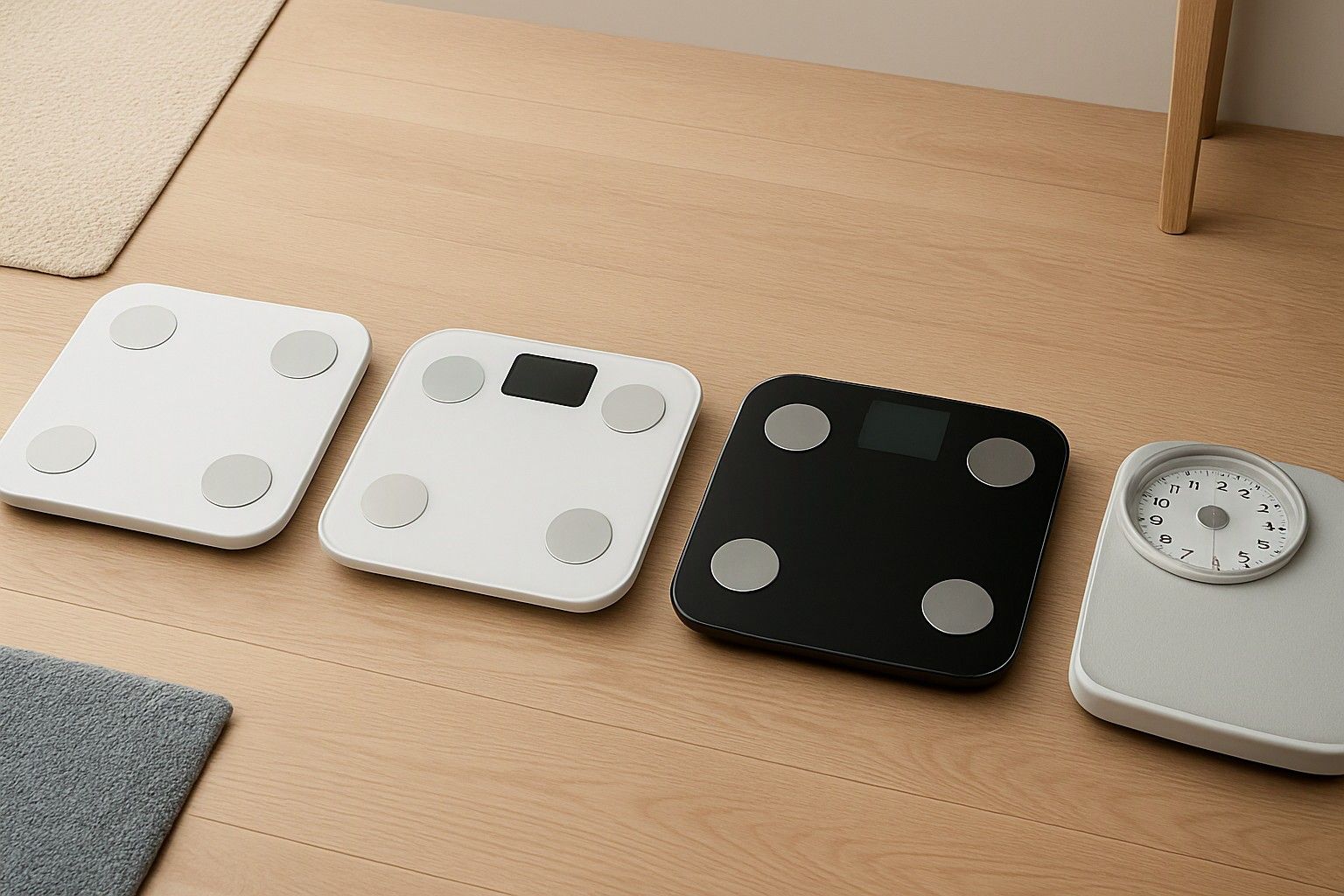
If you are wondering whether a smart scale's numbers can be trusted from one morning to the next, this article is for you. The short answer: weight readings are usually dependable on a decent scale, body-fat readings are rough estimates, and most of the "errors" people complain about come from how and where the scale is used. Below is what actually throws readings off in Indian homes and how to check a scale yourself.
Weight Accuracy vs Body-Fat Accuracy: Two Different Things
A smart scale does two very different jobs, and it does them with different levels of reliability. Weight is a direct physical measurement. Sensors under the platform flex slightly under your load and the scale converts that into a number. A well-built unit on a firm floor will give you a consistent figure, usually within a small margin of a reference scale.
Body fat is not measured at all. The scale passes a very weak electrical current through your feet and estimates composition from how easily it travels, then applies a formula based on your height, age and sex. Hydration, recent meals, exercise and even how damp your feet are change that resistance, so the number can move several points without any real change in your body.
The practical takeaway is to treat weight as a measurement and body fat as a trend indicator. A single body-fat reading tells you little; the direction over weeks tells you more. If you want to understand why body-fat estimates work the way they do, that is covered separately, but for accuracy purposes the rule is simple: judge a scale by how repeatable it is, not by whether its body-fat figure matches a clinic's machine.
Why Your Weight Fluctuates Between Readings
Your body weight is not a fixed number through the day, and a scale that shows this is not necessarily faulty. Water is the biggest factor. A salty dinner, a heavy meal, a glass of water before stepping on, or a hot, sweaty afternoon can shift the reading by a kilogram or more. Women may also notice swings linked to their menstrual cycle.
Time of day matters too. You are typically lightest first thing in the morning, after using the toilet and before eating or drinking. By evening, food, fluids and activity have added to the total. Clothing, a watch, a phone in your pocket or a wet towel all add weight as well.
Then there is the scale's own behaviour. Shifting your feet while it settles, stepping on and off several times, or standing off-centre can produce slightly different results. Some scales lock in a reading quickly while others keep adjusting for a second or two.
A useful rule: if readings taken minutes apart under identical conditions differ noticeably, suspect the scale or its placement. If they differ across days or hours, suspect your body's water balance first.
Flooring, Humidity and Placement Issues in Indian Homes
Where the scale sits changes what it reports. Many Indian homes have vitrified or ceramic tile with grout lines, and a scale whose feet rest partly on grout and partly on tile can rock slightly, which skews the sensors. Uneven bathroom floors that slope toward a drain add to the problem. Soft surfaces are worse still: a bath mat, rug or carpet absorbs part of the load and gives low or unsteady readings.
Humidity is the second issue. Bathrooms stay damp, especially in coastal cities and through the monsoon. Moisture can creep into the electronics and corrode battery contacts over time, and wet feet or a wet platform interfere with the body-fat electrodes. Hard water leaves mineral deposits on metal electrodes, which can make composition readings erratic.
Some simple habits help:
- Place the scale on a hard, flat, dry patch of floor and keep it in the same spot.
- Dry your feet before stepping on.
- Wipe the platform and electrodes with a dry or barely damp cloth.
- Store it in a dry bedroom or dressing area rather than a wet bathroom corner.
- Replace batteries promptly, since weak batteries commonly cause jumpy readings.
How to Test and Calibrate a New Scale
Most home smart weighing scales do not offer true user calibration, so the useful thing to do is test them in the first few days. Three simple checks cover most problems.
Repeatability test. Step on, note the reading, step off, and repeat three times. Good scales return the same figure or differ by a very small amount. Large swings point to a poor sensor or an unstable surface.
Known-weight test. Use an object whose weight you trust, such as gym weight plates or a dumbbell, rather than packaged groceries, which are rarely exact. Weigh it by holding it and subtract your own weight, or place it on the scale directly if it is heavy enough. The result should be close to the stated weight.
Position test. Stand with weight slightly toward each corner and the centre. A well-built platform should give nearly the same reading each time.
It also helps to compare against a second scale you trust, such as one at a clinic or gym, and note the difference. A small constant offset is fine because you are tracking changes. Do the body-fat check differently: measure at the same time on three mornings and judge consistency, not the absolute figure. If a scale has a reset or zeroing step in its instructions, do it on the surface where it will live.
Warning Signs of an Unreliable or Poorly-Built Scale
Some problems show up quickly if you know what to look for. The clearest warning is a scale that shows a non-zero figure with nothing on it, or one that drifts after you step off. Equally telling is a scale that gives noticeably different readings when you step on a second time within a minute, or one that takes a long time to settle.
Physical build offers clues as well. A platform that flexes or creaks underfoot, feet that wobble or are unevenly sized, electrodes that look thin, peel or tarnish quickly, and a display that flickers all suggest corners were cut. On the smart side, an app that keeps dropping the connection, assigns readings to the wrong profile or logs duplicate entries is a sign of weak software.
Body-fat numbers that leap by several points between back-to-back readings are another red flag, because even an estimate should be stable over a minute or two.
These problems tend to cluster at the low end, though price alone is not a guarantee either way. Scales sold from ₹500 to ₹10,000, with an average around ₹999, vary in build quality, and some cheaper units cut corners, so check what each price band offers before you decide. Whatever you buy, run the tests above in the first few days while you can still return it.
Getting the Most Consistent Reading Every Time
Consistency comes from controlling the conditions, since you cannot control your body's water balance. Build a short routine and stick to it:
- Same time, same state. Weigh first thing in the morning after using the toilet and before eating or drinking.
- Same clothing. Weigh in light clothing or none, with no watch, phone or belt.
- Same spot. Keep the scale on one hard, flat patch of floor. Moving it around changes the contact points.
- Dry feet, clean electrodes. Bare, dry feet placed squarely on the metal pads give steadier body-fat estimates.
- Stand still. Distribute your weight evenly and wait until the reading locks before stepping off.
- Check the batteries. Replace them as soon as the display dims or readings turn erratic.
Then look at weekly averages rather than single days. A scale that is repeatable and a routine that stays the same give you a trend line you can rely on, even if daily numbers wobble. For body fat, ignore single readings and watch the direction over several weeks.
So, can you trust a smart scale? Yes for weight, if it passes a basic repeatability test and sits on a firm, dry floor, and only as a trend guide for body fat. Test your scale in the first few days, keep your weighing routine the same, and you will know whether a change in the numbers is real or just noise.

Comments
Be the first to comment.