Smart Weighing Scale vs Regular Digital Scale: Is the Upgrade Worth It
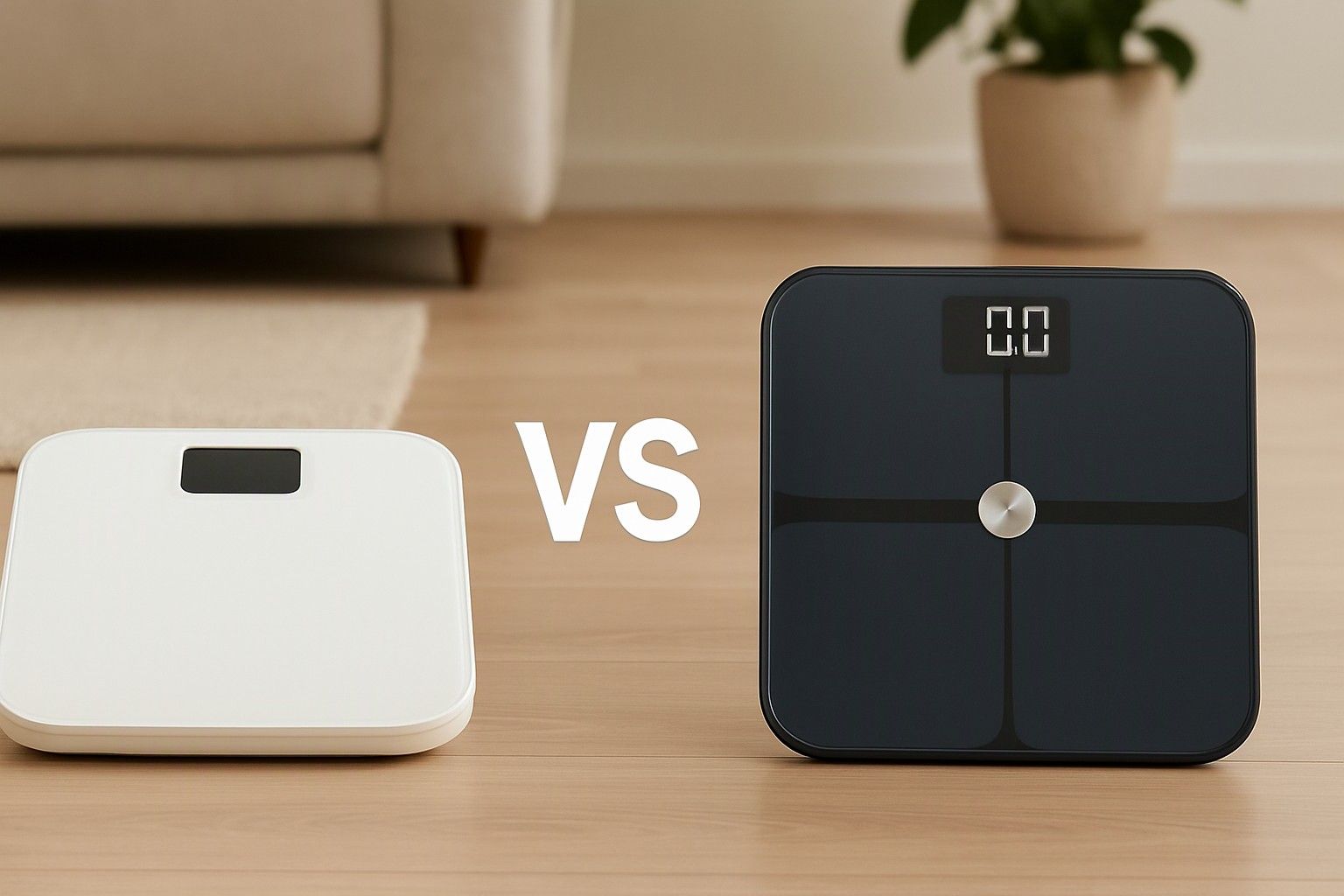
If you want to know whether a smart weighing scale is worth paying extra for, or whether a regular digital scale will do the job, this article is for you. The short version: both types measure body weight in much the same way, so the real question is whether you will actually use the tracking that the extra money buys. Read on to see where the upgrade pays off and where it just sits unused on your bathroom floor.
What a Regular Digital Scale Does and Doesn't Do
A regular digital scale does one job: it shows your weight on a display, instantly, with no setup. You step on, read the number, and step off. There is no phone to pair, no account to create and no software to keep updated. Most run on simple batteries and keep working for a long time without any fuss.
What it does not do is remember anything. Every reading disappears the moment the display switches off, so tracking progress means noting the number in a diary or a notes app yourself. It cannot tell one family member from another, and it will not show a trend line that helps you see whether a slow change over weeks is real or just daily fluctuation. It also generally will not estimate body composition such as body fat or muscle, although some plain models do offer a basic version of this.
For someone who only wants to check weight now and then, these gaps may never matter. For someone trying to manage weight over months, they are exactly the gaps a smart scale is built to close.
What You Gain by Going Smart: Tracking, Trends and Profiles
A smart scale connects to your phone, usually over Bluetooth, and logs every reading automatically. That one change is the whole upgrade. Your weight history builds up without effort, and you can look at a week, a month or several months on a chart instead of trusting memory.
Trends matter because body weight moves up and down through the day with water, food and salt. A single reading can mislead you, while a line drawn across weeks shows the real direction. Smart scales also support multiple user profiles, so each person in a family gets their own history rather than one shared jumble of numbers. Many models add estimates for body fat, muscle and similar markers, which are useful as relative signals over time.
The catch is that all of this lives inside software. A scale with a clumsy app, poor phone support or unreliable syncing loses most of its advantage, so much of that value depends on the companion app and compatibility. Check that before you assume the smart label guarantees a better experience.
The Price Gap Between the Two Types
Across this category, prices run from ₹500 to ₹10,000, with an average of about ₹999. Plain digital scales tend to sit toward the lower end of that spread, while smart scales with app tracking and body-composition estimates usually occupy the middle and upper parts of it.
The budget tiers help frame the decision. In the ₹600 tier, you are mostly looking at basic scales where the main question is build quality and a readable display. In the ₹1,000 tier, smart features begin to appear alongside sturdier construction. The ₹2,500 tier is where fuller tracking, richer metrics and better app support are more common.
The useful way to read the gap is as a price for convenience and history, not for a more accurate weight. If you will check the app regularly, the extra spend is spread across months of use and is easy to justify today. If you will not, you are paying for features that stay idle. To see how the two types fall across the price tiers, compare what each tier realistically includes before you settle on a budget.
When a Plain Digital Scale Is Genuinely the Smarter Buy
Plenty of households are better off with the simpler scale, and choosing one is not a compromise. If you weigh yourself occasionally, to check in rather than to chase a target, a smart scale's history will rarely get opened.
A plain scale also suits people who do not enjoy managing apps. Smart scales need a compatible phone, Bluetooth switched on, and a bit of patience when a sync fails. If you share the scale with older family members who just want a number on a display, a plain model removes every point of friction. It also works well as a second scale, for a guest room, a gym bag or a parent's home, where nobody will pair anything.
Privacy-minded buyers have a reason too. Smart scales store body data in an account, and not everyone is comfortable with that. A plain scale keeps nothing.
Finally, if your budget is tight, putting the money into a well-built plain scale beats a weak smart one with a poor app. A reliable basic scale is more useful than a smart scale you stop using after two weeks.
Accuracy: Are Smart Scales Actually More Precise?
Not in the way many buyers assume. For plain body weight, both types rely on the same basic idea of sensors under the platform that measure load. Being smart does not make that sensor better. A well-made plain scale and a well-made smart scale can give very similar weight readings, and a poorly made one of either kind can drift or vary between steps.
Where smart scales differ is the extra metrics. Body fat, muscle and similar figures are estimates calculated from a small electrical signal passing through the body, and they are affected by hydration, recent meals, exercise and even the time of day. Treat them as rough indicators to watch over time, not as clinical measurements. The trend is more trustworthy than any single number.
Practical habits improve results for both types: place the scale on a hard, flat floor, weigh at the same time of day, and avoid moving it between readings. For the truth about how accurate each type really is, look at build quality and consistency rather than the smart label.
Making the Call for Your Household
Start with how you will actually use the scale. If you want to track weight or body changes over months, share the scale across several people, or like seeing progress on your phone, a smart scale earns its higher price. If you want a quick number now and then, a regular digital scale gives you the same weight reading for less money and less hassle.
A few questions settle most cases. Will you open the app at least a few times a month? Does everyone who uses the scale have a phone it works with? Are you comfortable with body data being stored in an account? Three yeses point toward smart; any firm no points toward plain.
If you are still undecided, a mid-range smart scale with a dependable app is a sensible choice, because you can ignore the features you do not need but cannot add them later. To walk through the rest of the decision in the main buying guide, use it to compare sizes, power options and features before you buy.
So, is the upgrade worth it? Only if you will use the history, trends and profiles it brings. Weight accuracy is not what separates the two, so a plain digital scale remains a perfectly good buy for occasional use, and a smart scale makes sense when tracking is the point. Match the scale to your habits and you can buy with confidence today.

Comments
Be the first to comment.