Choosing a Stroller by Baby's Age: Newborn to Toddler
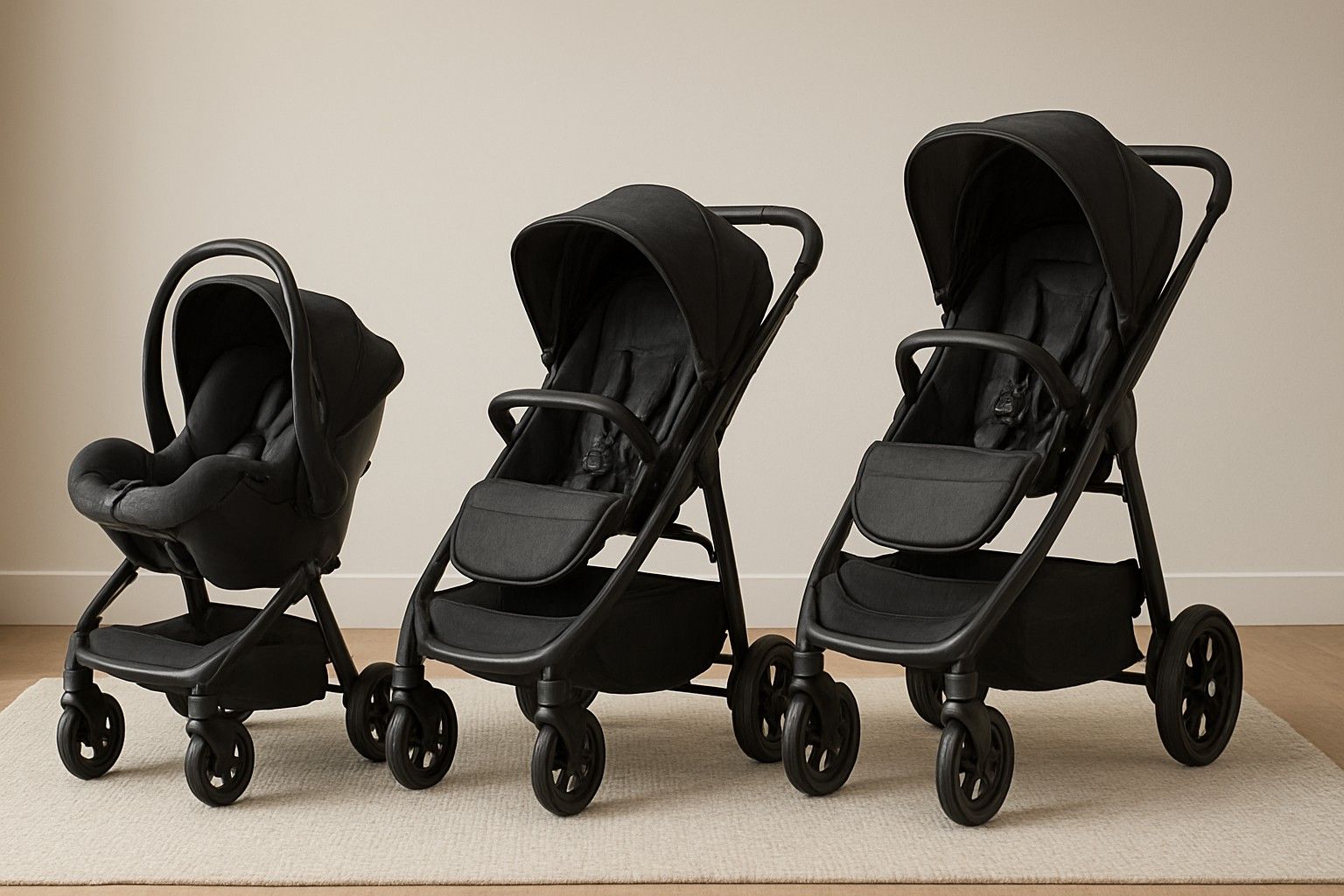
Not every stroller works at every age, and buying the wrong one for your baby's stage is the single most common regret parents report. Whether you have a newborn who can't hold up their own head yet, a 6-month-old who's just learning to sit, or a toddler who wants to see the world upright, the right stroller depends on what your child's body can actually do right now — and how much growing room you want to buy for later.
Why Newborns Need a Flat or Near-Flat Recline
A newborn's neck and spine aren't developed enough to sit upright, which is why paediatricians and stroller manufacturers alike insist on a flat or near-flat recline for the first several months. Until a baby has solid head and neck control — usually somewhere around three to four months, though every baby is different — being propped up at an angle in a stroller can put pressure on their airway and spine in a way that's uncomfortable at best and unsafe at worst. This is the same reasoning behind car seat design for infants, and it carries over directly to strollers.
In practical terms, this means you're looking for one of two things: a stroller with a seat that reclines almost fully flat (often described as a lay-flat or near-flat recline), or a travel system where an infant car seat or a bassinet-style carrycot attaches to the stroller frame instead of using the seat unit at all. Carrycot and travel-system setups tend to sit at the higher end of the price range because you're effectively getting two products in one, while stroller seats that recline flat on their own can be found across budgets. If you're shopping in the ₹2,999 or ₹4,499 range, check the recline angle specifically rather than assuming a cheaper stroller reclines far enough — many budget strollers only recline to a semi-upright position meant for older babies, not newborns.
Strollers for 6 Months and Sitting Babies
By around 6 months, most babies have enough core and neck strength to sit supported, which opens up a much wider range of strollers than you'd consider for a newborn. This is the stage where a multi-position recline — one that adjusts through two or three angles rather than just flat or fully upright — starts to matter more than a lay-flat seat. Babies at this age nap on the go but also want to sit up and watch what's happening around them, so a stroller that lets you switch between positions without waking them is genuinely useful day to day.
This is also when forward-facing seating becomes relevant. Some parents keep the seat parent-facing through this stage for reassurance and easier feeding on the move; others switch to forward-facing once the baby shows real interest in looking outward. If the stroller you're considering offers a reversible seat, that flexibility is worth having rather than a fixed direction, though it does tend to add to the price. A five-point harness becomes non-negotiable at this stage too, since a sitting baby who can also push up and lean is far more likely to shift position or attempt to stand than a newborn who can't move much at all. Footrests and calf support also matter more now, since a 6-month-old's legs dangle rather than staying folded up, and a stroller without proper leg support can leave those legs unsupported for long stretches. Most strollers built for this stage, and not just for newborns, sit comfortably in the ₹4,499 band.
Toddler and Growing-Child Considerations
Toddlers bring a different set of demands entirely. By the time a child is walking and asserting opinions about where they want to go, the stroller's job shifts from support to convenience — for both the child and the parent. Upright seating becomes the default, since a toddler wants to see forward and doesn't need the recline support a younger baby does, though a partial recline for naps on longer outings is still worth having.
At this stage, the practical questions change: how easily does the stroller fold when a toddler wants to walk part of the way and be carried the rest? How sturdy is the frame against a child who leans, kicks, or tries to climb out? Does the canopy still shade a taller child sitting more upright, since toddlers sit higher in the seat than younger babies do? A toddler is also heavier and more active, so wheel quality and suspension start to matter more for a smooth ride over Indian pavements and uneven footpaths. Buckle and harness durability matters too, since toddlers actively test how buckles work and will attempt to unclip themselves given the chance. Weight capacity becomes the deciding factor here more than recline angle, since most toddlers have long outgrown the need for a flat seat but haven't outgrown the stroller's actual load limit. Lightweight umbrella-style strollers, often in the ₹2,999 to ₹4,499 range, work well for this stage precisely because portability matters more than recline flexibility once a child is upright most of the time.
Weight Limits and How Long a Stroller Lasts
Every stroller has a maximum weight limit set by the manufacturer, and this number — not your child's birthday — is the real answer to "how long will this stroller last us." Budget strollers, particularly those under ₹2,999, often carry lower weight limits designed to cover roughly the first couple of years, while strollers built for extended use, generally priced from ₹4,499 upward, are engineered with reinforced frames and higher weight limits to comfortably carry a heavier toddler.
It's worth checking this figure against your child's likely growth rather than their current weight, since Indian children's growth curves vary and a stroller bought for a 6-month-old can be outgrown well before you expected if you only checked the newborn-stage specs. Weight limit also isn't just about the child snapping the frame — a stroller pushed past its rated limit handles worse, brakes less reliably, and wears out faster at the wheels and suspension. Given that prices across this category run from ₹2,399 up to ₹25,990, with the average sitting around ₹5,000, spending slightly more upfront for a higher weight limit and a longer usable stretch is often the more economical choice over buying twice — once for the newborn stage and again for the toddler stage.
Convertible and Long-Use Strollers
If you'd rather buy one stroller and use it from the newborn stage through toddlerhood, convertible and modular strollers are built for exactly that. These typically combine a near-flat recline option for early months with a sturdier frame and higher weight limit meant to last through the toddler years, often supported by accessories like a compatible carrycot or car seat adapter early on and a standard seat unit later. The trade-off is upfront cost: these strollers sit toward the higher end of the price range, frequently above ₹14,999, because you're paying for the engineering that makes one frame work safely across very different stages of a child's development.
Whether this is worth it depends on how you weigh convenience against cash flow. Buying one convertible stroller upfront avoids the hassle and expense of buying twice, but it does mean a larger single purchase rather than spreading the cost across two smaller ones bought at different stages. If you want a clearer sense of which stroller categories — travel systems, prams, umbrella strollers, jogging strollers, and convertibles among them — are actually built to grow with a child versus which are meant for a single stage, it helps to see which stroller types grow with your child before deciding which route suits your budget and how many children you're likely to use it for.
Matching Age to the Right Stroller
The right stroller for your family comes down to matching your child's current stage to the seat's recline range and the frame's weight limit, then deciding honestly whether you want a stage-specific stroller now and another one later, or a single convertible stroller that spans both. Neither approach is wrong — it depends on budget, storage space, and how many years or children you expect to get out of the purchase. What matters is checking recline angle and weight limit against your baby's actual stage rather than going by age alone, since babies vary in when they hit each milestone.
Once you know which stage you're buying for, it's worth comparing that against the fuller set of factors — frame type, wheel size, fold mechanism, and price tier — covered across the category. If you haven't already narrowed down the type of stroller you need, head back to the buying guide to finalise your pick and use age suitability as one filter among the rest rather than the only one.
Whichever stage you're buying for — newborn, sitting baby, or toddler — the decision really comes down to recline range and weight limit matching your child's actual development, not a generic age label on a product page. Get that match right and the rest of the stroller shopping, from frame type to price tier, becomes a much simpler decision.

Comments
Be the first to comment.