Strollers for Indian Heat, Monsoon and Frequent Travel
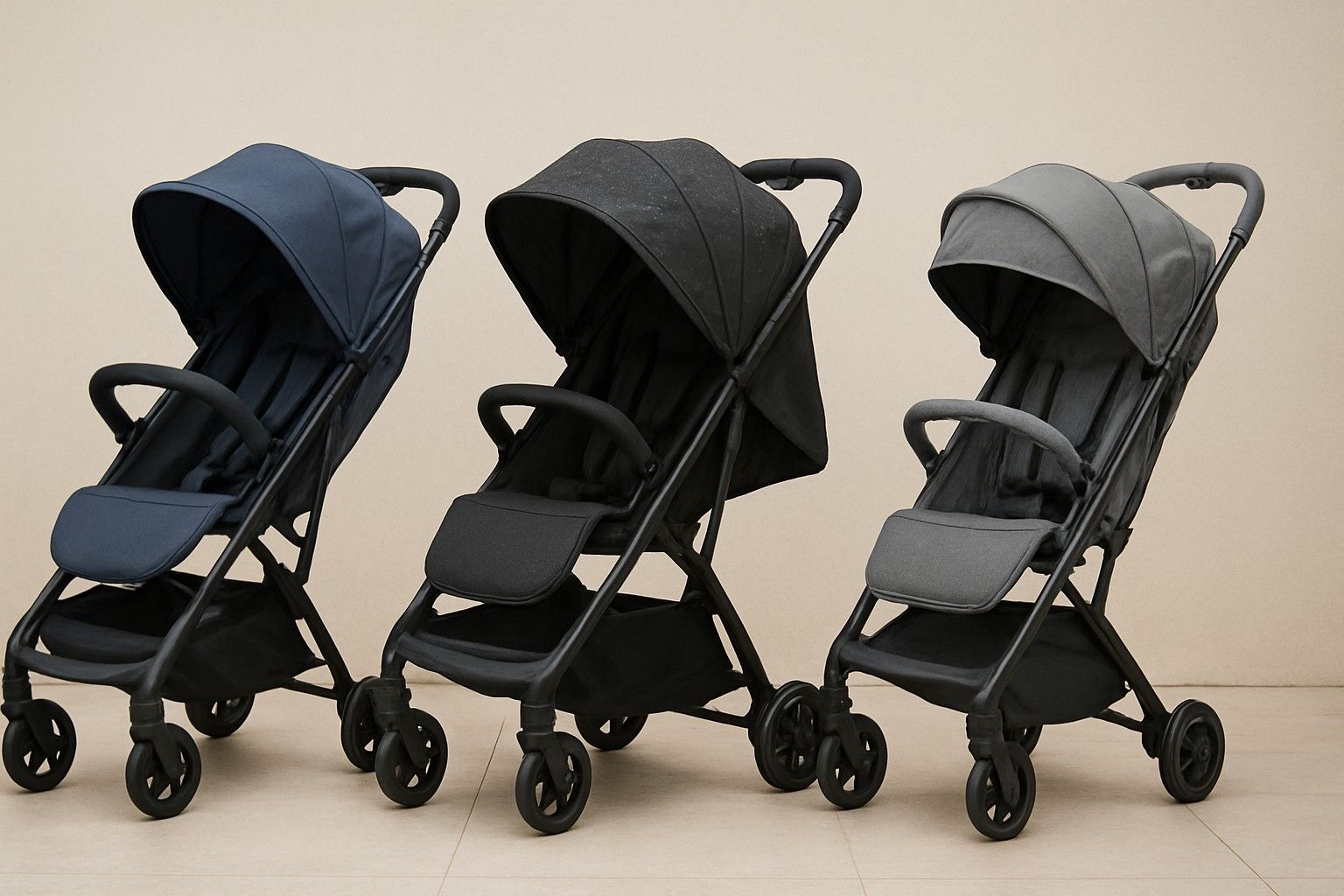
If you're weighing a stroller purchase against the reality of Delhi summers, Mumbai monsoons, or a flight-train-flight routine with a toddler in tow, the standard "which stroller is best" advice doesn't really apply to you. What matters here is canopy coverage, how it copes with rain and dust, and whether it folds down fast enough to survive an airport gate-check or a crowded platform. If you want to settle that last point before you fly, use our stroller flight and cabin-size compatibility checking tool to check your stroller's folded dimensions and weight against your airline's rules. This guide works through each of those trade-offs so you can match a stroller to how you actually live, not to a generic checklist.
Canopy Coverage and Breathability for Indian Heat
Indian summers put real demands on a stroller's canopy that most product descriptions gloss over. A canopy that only extends halfway is fine in cooler climates but leaves a child's legs and feet exposed to direct sun for a large part of the day, which matters on anything longer than a quick walk. Look for a canopy that extends low enough to shade the entire seat, ideally with a peekaboo mesh window so you can check on the child without lifting the fabric and losing the shade.
Breathability matters just as much as coverage. A stroller with a solid, unventilated seat back traps heat against a child's body, especially during the hotter months when even shaded air feels heavy. Mesh side panels or a breathable seat liner let air move through, which keeps the child noticeably cooler than a fully padded seat. Darker canopy fabrics absorb more heat, so a lighter shade with good UV-blocking backing often works better in practice than a heavier, darker one that looks more premium.
This is one area where spending more genuinely buys comfort. Strollers in the ₹14,999 range more often include adjustable multi-panel canopies and ventilated seats, while options nearer ₹2,999 tend to have a single-position canopy with no mesh. If your daily routine involves midday outings, this is worth prioritising over other features.
Rain Covers and Monsoon Readiness
Monsoon season changes what you need from a stroller in ways that are easy to underestimate before the rains actually start. A bundled rain cover is a genuine convenience, but check that it fully encloses the front and sides rather than just draping over the canopy, since a partial cover still lets driving rain in from the sides during a proper downpour. Not every stroller in the lower price bands includes one, so factor in the cost of buying a separate rain cover if it's missing.
Beyond the cover itself, the frame and fabric need to handle repeated wet-dry cycles without degrading. A stroller with a plastic or powder-coated frame resists rust far better than one with exposed untreated metal joints, which is worth checking closely if you'll be storing it somewhere with high humidity between uses. Fabric seats with a water-resistant coating dry faster and don't develop the musty smell that untreated cotton blends tend to pick up after a few wet trips.
Wheels deserve attention too, since waterlogged streets are a monsoon reality in most Indian cities. Larger wheels with some tread cope with wet, uneven surfaces better than small hard plastic castors, which tend to skid or get stuck in slush. If monsoon use is a major part of your year, treat the rain cover and wheel quality as non-negotiable rather than nice-to-have extras, even if that pushes you toward the ₹4,499 or ₹14,999 range instead of the cheapest option available.
Cabin-Friendly and Travel-Ready Folds
Frequent flyers and train travellers are looking for something different from a stroller than someone who mostly uses it around the neighbourhood. The fold mechanism becomes the single most important feature, because airport gate-checking and squeezing a pram into a train vestibule both reward a stroller that collapses in one motion, ideally with one hand while you're holding a child in the other arm. A stroller that needs two hands and a knee to fold is a genuine problem when you're also managing boarding passes and luggage.
Weight matters just as much as the fold itself. A lighter stroller is easier to lift into an overhead bin, hoist up a train's steps, or carry when a foldable cabin-sized model is required instead of checking it as luggage. This is exactly why matching the fold and weight to your travel pattern deserves its own close look, and you can review the fold and weight features that make travel easy to understand which specs actually predict good real-world folding behaviour rather than just reading well on a spec sheet.
A compact folded size also decides whether the stroller fits in a car boot alongside luggage, or in the overhead storage on a train without blocking the aisle. If travel is a frequent part of your life rather than an occasional trip, this single factor should probably outweigh canopy design or seat padding when you're deciding between two otherwise similar options.
Durability Against Dust and Rough Handling
Indian roads and pavements are harder on stroller wheels and frames than the smooth, even surfaces these products are often designed around. Dust works its way into wheel axles and folding joints over time, and if those parts aren't sealed or easy to access for cleaning, movement gets stiff and squeaky within a few months of regular outdoor use. Look for wheels with a simple removable design or an accessible axle, since this makes a real difference to how long smooth rolling lasts.
Rough handling is also a factor beyond just the road surface. Autos, cabs, and being lifted in and out of car boots multiple times a day put stress on the frame's joints and locking mechanisms. A stroller with a reinforced frame at the fold points holds up better than one where the frame flexes or rattles after repeated folding and unfolding. This is less about the price tag and more about build quality, though it's fair to say that strollers priced well below the ₹5,000 mark sometimes cut corners here to hit a lower price point.
Brakes and locks matter more in Indian conditions than they might elsewhere, since uneven pavements and sloped driveways are common. A stroller with a firm, reliable wheel lock prevents rolling on the kind of gentle inclines you'll find outside most Indian homes and shops, which is a small feature that becomes important the first time it's missing.
Cleaning and Maintaining a Stroller in Indian Conditions
Dust, humidity, and the occasional monsoon soaking mean a stroller bought in India needs more regular upkeep than one used in a drier, cleaner climate. A seat fabric that's removable and machine washable saves considerable effort compared to one that requires spot cleaning by hand, especially after a season of dusty outdoor walks or a muddy monsoon outing. Checking this before buying is worth the extra minute, since not all listings make it clear whether the seat cover detaches fully.
Wheel and axle maintenance matters just as much as fabric care. Wiping down wheels after outdoor use and occasionally applying a drop of lubricant to the axle keeps rolling smooth and prevents the grinding sound that dust buildup tends to cause over time. Letting the stroller air-dry fully after any rain exposure, rather than folding it away damp, prevents mildew from developing in the fabric or frame joints, which is a bigger risk in humid coastal cities than in drier inland ones.
Storing the stroller somewhere shaded and dry between uses, rather than leaving it out on a balcony exposed to sun and rain, extends the life of both the fabric and the frame's finish. None of this is complicated, but it's the difference between a stroller that still folds and rolls smoothly after a year of Indian conditions and one that starts showing wear within a few months of neglect.
Picking the Right Stroller for Your Lifestyle
The right stroller for a family that mostly steps out for short evening walks in a gated colony looks different from the right one for a family that flies twice a month or navigates monsoon streets on foot every day. If heat is your main concern, prioritise canopy coverage and breathable seating over a compact fold. If monsoon exposure is unavoidable, a proper rain cover and rust-resistant frame matter more than how light the stroller feels. If travel is frequent, the fold mechanism and folded dimensions should lead your decision over almost everything else.
Price alone won't tell you which stroller fits your situation, since options across ₹2,399 to ₹25,990 solve different problems rather than simply offering more or less of the same thing. A stroller near ₹2,999 can serve a family with mild weather exposure and infrequent travel perfectly well, while a family dealing with all three factors — heat, monsoon, and travel — will get more consistent value from something in the ₹14,999 range that doesn't force a compromise on any single feature.
Once you've weighed these climate and travel factors against your own routine, it helps to go back to the main guide to match this with other decisions like budget, child age, and seating style, so the stroller you choose works as a complete package rather than excelling at one thing while falling short elsewhere.
Matching a stroller to Indian heat, monsoon, and travel isn't about finding one perfect product — it's about being honest with yourself about which of those three pressures you'll actually face most often, and buying accordingly. Whichever combination applies to your household, the answer to which stroller handles it best now comes down to specific features you can check for, not guesswork.
Comments
Be the first to comment.