Which Strollers Fits Your Lifestyle: Lightweight, Travel System and Jogger
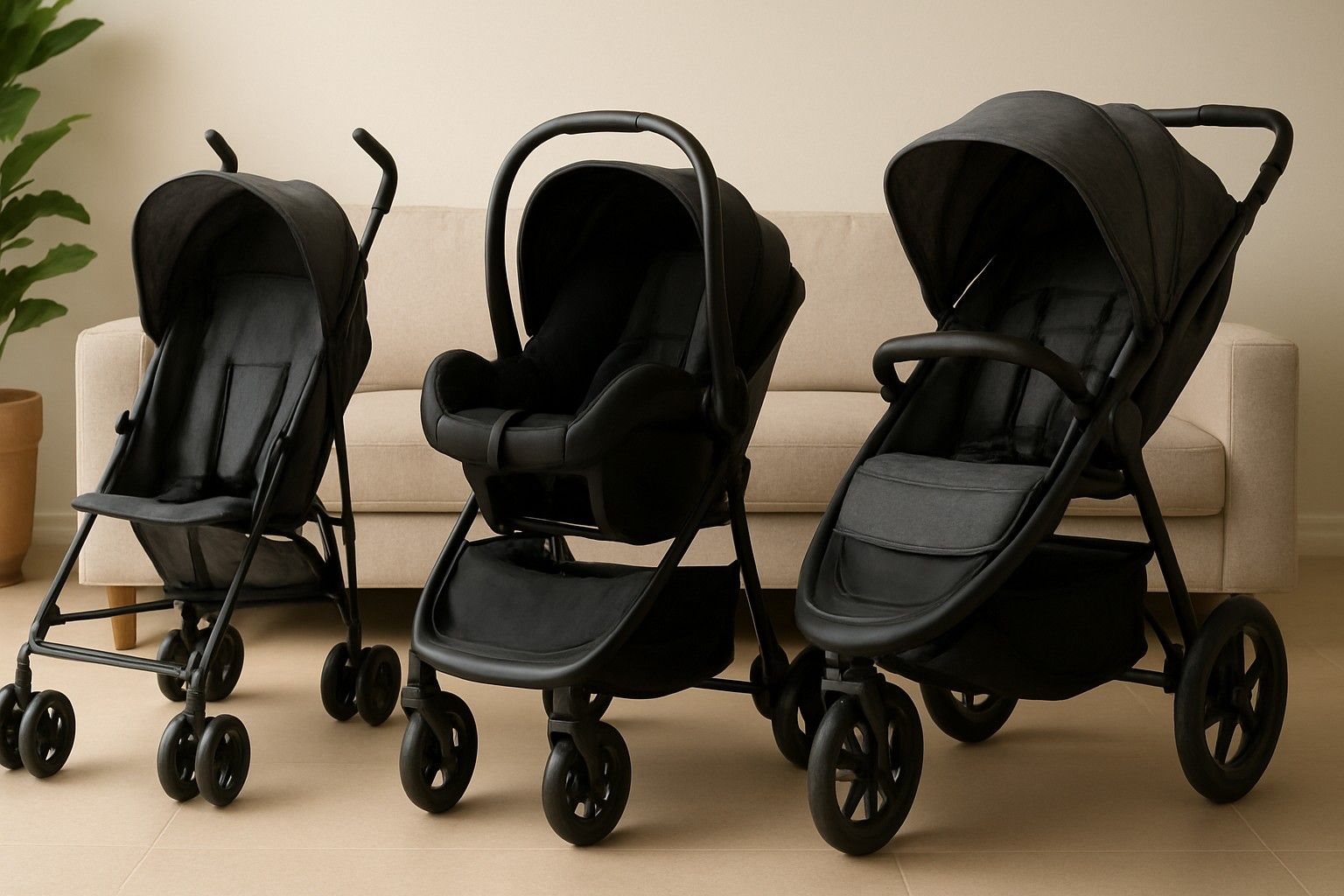
Not all strollers do the same job, and that's usually where the confusion starts before you even get to comparing specs or prices. A stroller built for quick trips to the park handles very differently from one meant for air travel or for jogging on uneven ground, so the real first decision is picking the type, not the model. This guide walks through each major stroller type sold in India, what it's actually good for, and where it falls apart.
Lightweight and Umbrella Strollers
Lightweight and umbrella strollers are built around one priority: making the stroller disappear when you're not using it. Named for their thin, umbrella-like folded shape, these strollers typically use a basic aluminium or steel frame with minimal padding, a simple canopy, and a fold that takes one hand and a couple of seconds. They're the type most parents in Indian cities end up buying as a second stroller, or as their only one if they live in an apartment with limited storage or need something that fits in a car boot alongside luggage and groceries.
The trade-offs are real, though. Most lightweight strollers have smaller wheels with little to no suspension, so they struggle on broken pavements, gravel, or anything beyond a smooth mall floor or society pathway. Recline options are usually limited to two or three positions rather than a full flat lie, which makes them less suited to newborns who need to sleep flat. Storage baskets underneath tend to be small, and the seat itself often isn't padded enough for daily long outings.
In terms of price, this is where the bulk of budget stroller options sit, often in the under ₹2,999 and ₹4,499 bands, though sturdier lightweight models with better wheels and recline can run higher. If your daily reality is quick outings, elevators, and narrow doorways rather than long walks or uneven terrain, a lightweight stroller earns its keep fast.
3-in-1 Travel Systems with Car Seat and Carrycot
A 3-in-1 travel system bundles three things that would otherwise be separate purchases: a stroller frame, an infant car seat that clicks onto that frame, and a carrycot or bassinet attachment for newborns who aren't ready to sit upright. The idea is that one purchase covers you from birth through toddlerhood, and you can move a sleeping baby from car to stroller to home without waking them, since the car seat detaches and reattaches directly onto the chassis.
This versatility comes at a real cost in both money and bulk. Travel systems are heavier and larger than lightweight strollers, with wider folded dimensions that need more boot space and more storage at home. They also tend to sit at the upper end of the price range, frequently crossing into the ₹14,999 band and beyond, since you're effectively paying for three products engineered to work together rather than one standalone frame. The car seat component itself needs to meet basic safety standards for infant use, so this isn't a category to shop purely on frame features — crash-test ratings, weight limits and installation type vary a lot between models, and the bundled seat that comes with a travel system isn't always the strongest option in its own category. Choosing a car seat that's genuinely safe comes down to factors separate from how well it clicks onto a stroller frame.
Where this type genuinely justifies its price is for families who drive frequently with a newborn, want fewer transfers that disturb sleep, and plan to use the system for an extended stretch as the child grows through different attachments. If your usage is mostly walks and outings without much car travel, you may be paying for capability you won't use.
Jogger and All-Terrain Strollers
Jogger and all-terrain strollers are built for movement over surfaces that would rattle a standard stroller apart. They use three large wheels, or four large wheels with a wider wheelbase, deeper suspension travel, and pneumatic or foam-filled tyres that absorb shocks the way a lightweight stroller's small hard wheels cannot. The front wheel on true jogging models is often lockable in a fixed-forward position for stability at speed, while all-terrain (non-jogging) versions usually keep a swivel front wheel for everyday manoeuvrability with the option to lock it when needed.
The distinction between the two matters: a dedicated jogger is meant for actual running and isn't designed to be pushed with a swivel wheel at pace, while an all-terrain stroller is meant for uneven ground at walking speed, such as unpaved lanes, construction-heavy stretches, or society compounds with poor paving, without necessarily being run behind. Both types are bulkier and heavier than lightweight strollers, and that weight is part of why they handle rough ground better in the first place. To understand why these terrain-handling features matter, it helps to understand why terrain-handling features matter here, since wheel size and suspension quality vary a lot between models sold at similar prices.
These strollers span a wide price range depending on build quality, and buyers who actually run or regularly cross rough terrain get clear value from the upgrade. If your walks are mostly on paved footpaths or mall floors, the extra weight and price may not translate into a noticeably better experience.
Twin and Tandem Strollers
Twin and tandem strollers exist for one specific need: moving two children at once, and the two designs solve it differently. A side-by-side twin stroller places both seats next to each other, giving both children equal visibility and easy access, but the width can be a real problem for narrow doorways, lift entrances, and tight aisles common in Indian homes and shops. A tandem stroller stacks the seats front and back instead, keeping the width close to a single stroller, but adding significant length, which then becomes the constraint in small car boots or cramped balconies used for storage.
Both designs weigh more and cost more than single strollers, since you're essentially getting two seating positions, two canopies, and a reinforced frame to carry the combined weight without tipping or flexing. Folding mechanisms tend to be less convenient too, often requiring two hands and more space to manoeuvre than a single umbrella fold. For parents of twins or children close in age, though, there often isn't a practical single-stroller alternative, since carrying one child while pushing another isn't sustainable for daily outings.
If you're considering this type, measure your actual doorways, lift dimensions, and car boot space before deciding between side-by-side and tandem, since the layout that fits your home matters more here than any feature comparison.
Which Type Fits Indian Usage Best?
Indian usage patterns tend to push the decision in a specific direction, even though the "right" type still depends on your household. Apartment living with lifts and narrow stairwells rewards strollers that fold small and weigh little, which is why lightweight and umbrella strollers remain the most commonly bought type in Indian cities. Broken or unpaved patches of road, common even in well-maintained residential areas, mean that all-terrain features aren't a luxury reserved for outdoor enthusiasts, they're often genuinely useful for ordinary daily walks.
Families who drive their own car regularly, particularly for hospital visits, doctor appointments, or frequent travel with a newborn, get more real use out of a 3-in-1 travel system than families who mostly walk or use the same stroller only within a housing society. Joint families with more storage space and helping hands can absorb the bulk of a heavier travel system or twin stroller more easily than a nuclear family working with a single small car and a compact flat.
To actually match the type to Indian roads and small homes, it helps to think about three things together: how many flights of stairs or lift trips the stroller needs to survive daily, how rough the pavement is on your usual walking route, and how much storage space you genuinely have at home once the stroller is folded. Very few Indian buyers need every feature every type offers, so this filtering step usually narrows things down faster than comparing individual models.
Choosing Between the Types
There isn't a single correct type, only a correct type for your specific routine, home layout, and how you move your child through the day. A lightweight stroller solves for convenience and cost, typically landing in the ₹2,999 to ₹4,499 range, a travel system solves for newborn car travel at a higher price often into ₹14,999 and beyond, a jogger or all-terrain stroller solves for rough ground or actual running, and twin or tandem strollers solve for two children at once, each with its own width or length trade-off.
Across the full market, prices run from ₹2,399 at the most basic end to ₹25,990 for fully loaded systems, with the average sitting around ₹5,000, and that spread exists precisely because these are different products solving different problems, not just cheaper and pricier versions of the same stroller. Knowing where a given price sits against that full range tells you more about what you're getting than the number alone, since a high price on a travel system reflects three components bundled together, while the same price on a lightweight stroller would be unusually high for what it offers.
Once you've settled on the type that matches your daily reality, the remaining decision is about build quality and features within that type rather than second-guessing the category itself. You can go back to the main buying guide to weigh your options if you want to see how this type decision connects to the rest of the buying process, including budget and feature checks.
The type of stroller you need was never really about brand or price first, it was about matching the stroller's design to your building, your roads, and how you actually get your child from home to car to outside. With the distinctions between lightweight, travel system, jogger, and twin strollers laid out, you're in a position to pick a category with confidence rather than comparing unrelated models against each other.

Comments
Be the first to comment.