Stroller Safety Checks and Buying Mistakes to Avoid
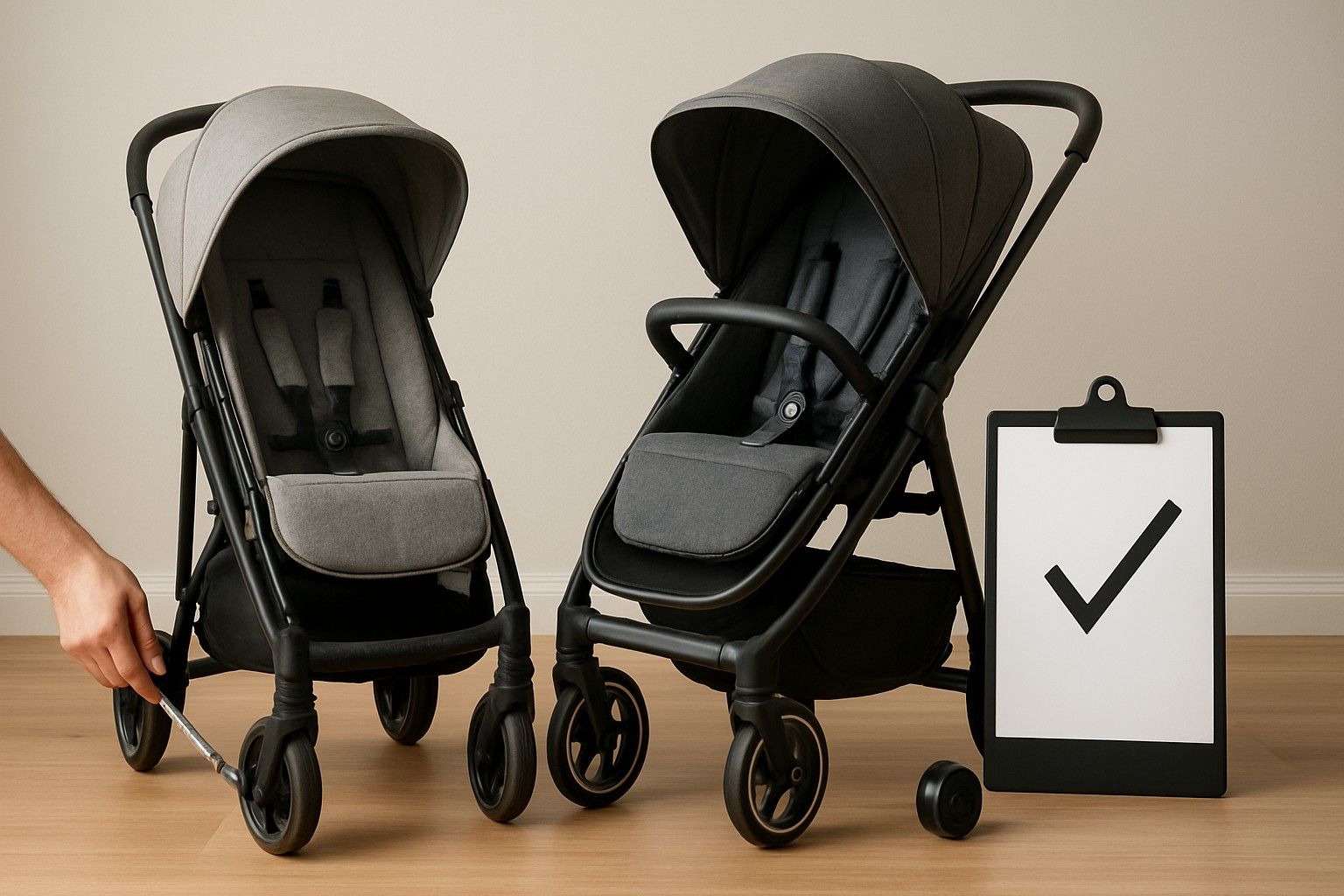
If you're about to buy a stroller and want to know it will actually keep your child secure, this is the checklist to run before you pay — not after. Price and features matter, but a stroller that fails on harness, brakes, or stability creates a problem no amount of styling fixes. Here's exactly what to inspect, what certifications mean, and where first-time buyers in India commonly get it wrong.
5-Point Harness and Locking Brakes
The harness is the single most important safety feature on a stroller, and it's also the one buyers glance at rather than actually test. A proper 5-point harness secures the child at both shoulders, both hips, and between the legs — this fifth strap through the crotch is what stops a wriggling toddler from sliding down and out through the leg openings, which a simple 3-point (waist-only) harness cannot prevent. Before buying, physically check that the shoulder straps adjust to at least two or three height positions so the harness grows with the child, and that the buckle needs a genuine two-step or squeeze-and-pull action to open — a buckle a curious toddler can pop open with one hand is a real risk, not a minor annoyance.
Locking brakes deserve equal attention. Every stroller should have a brake that locks at least one, ideally both, rear wheels simultaneously with a single foot-press, and you should be able to hear or feel a distinct click when it engages. Test it on a slight slope in the shop if you can — push the stroller gently with the brake on and confirm it doesn't creep forward. A brake that only slows the stroller instead of fully locking the wheel is not doing its job. Across the ₹2,399 to ₹25,990 range, harness and brake quality vary more by build than by price tag alone, so don't assume a pricier stroller automatically has a better locking mechanism — check it yourself.
Stability and Tip-Over Checks
Tip-over is the risk parents underestimate most, especially with strollers that have a high seat, a large under-seat basket, or a narrow wheelbase. Before buying, check the stroller's wheelbase width relative to its height — a wider stance at the wheels generally resists tipping better than a tall, narrow frame. If the model has a reclining seat, test it at full recline with some weight in the seat (even a bag) and see whether the front end lifts or the stroller feels front-heavy when you lower the handle to push.
The under-seat basket matters more than most buyers realise: a stroller with no rated maximum load, or a shallow basket that encourages parents to hang bags off the handles instead, is a tip-over risk in disguise since handle-hung weight shifts the centre of gravity backward and can flip the stroller when the child leans forward. Also check the recline mechanism itself — it should lock firmly at each angle rather than sagging under the child's weight over time. Fold-and-stand strollers should be tested for whether they actually stand stable when folded, since a stroller that tips over even folded and empty in your hallway suggests a base that isn't well balanced. None of this shows up in a spec sheet, which is exactly why it needs a hands-on check before purchase, not after.
Safety Certifications and Standards to Look For
A stroller doesn't need to carry a dozen certification logos to be safe, but it should carry at least one recognised safety standard mark relevant to juvenile products, and the seller should be able to tell you which one and what it actually covers. In practice, this means asking whether the frame, harness, and brake system have been tested against a recognised juvenile product safety standard rather than just a general quality mark — the two are not the same thing, and a general BIS mark on packaging doesn't automatically confirm the harness or brake was stress-tested.
Beyond the certification itself, look for physical build indicators that suggest the manufacturer took safety seriously: no sharp edges or exposed hinges within the child's reach, a fabric that doesn't have a strong chemical smell (a sign of poor-quality dyes or flame retardants), and wheel locks that don't have visible play or looseness even on a showroom floor model. If you're buying online without handling the stroller first, look specifically for certification details in the product description or ask the seller directly — a listing that only talks about colour options and storage space without mentioning any safety testing is a listing worth being cautious about, regardless of the strollers price range around ₹5,000.
Common Mistakes First-Time Buyers Make
The most common mistake is buying on looks and folding convenience while treating harness and brake quality as an afterthought — parents test how easily a stroller folds into a car boot far more often than they test whether the buckle is genuinely toddler-proof. A close second is assuming a higher price automatically means better safety engineering; that's not reliably true, and it's exactly why it helps to avoid overpaying by understanding fair price tiers rather than assuming the ₹14,999 bracket is inherently safer than the ₹4,499 one.
Another frequent error is buying a stroller sized for a newborn without checking whether it converts or adjusts as the child grows, leading to a second purchase within a year — an avoidable cost if the recline angles and harness height are checked upfront. Buyers also tend to skip testing the stroller with the actual child before the return window closes, relying instead on showroom demonstration with an empty seat, which hides fit and comfort issues. Finally, many buyers in the ₹2,999 bracket assume basic means unsafe, when in fact a well-built entry-level stroller with a genuine 5-point harness and working brake lock is safer than a feature-heavy one with a weak buckle — features and safety are not the same axis, and conflating them is how buyers end up paying more without actually buying more protection.
Warranty, Spares and After-Sales Support
A stroller's safety doesn't end at the point of sale — wheels wear down, harness stitching loosens, and brake cables stretch over months of daily use, so what happens when something fails matters almost as much as the initial build. Before buying, check the warranty period in writing, not just what the salesperson says verbally, and confirm what it actually covers: frame and brake mechanism warranties are common, but fabric, harness webbing, and wheels are often excluded or covered for a shorter period.
Equally important is spare parts availability. Ask specifically whether replacement wheels, harness buckles, and brake components are sold separately by the brand, because a stroller that can't be repaired becomes a safety liability the day something breaks — parents often keep using a stroller with a failing brake or frayed harness simply because replacing the whole unit feels wasteful. Brands and sellers who stock spares and offer a clear service process are worth prioritising over one that seems similar on paper but leaves you stranded if a wheel cracks six months in. This is particularly relevant at the lower end of the ₹2,399 to ₹25,990 range, where after-sales support tends to vary the most between sellers even for similarly priced products.
Final Pre-Purchase Checklist
Before you finalise a stroller, run through this in order: confirm the 5-point harness has a genuine two-step buckle and multiple height adjustments; test the brake for a full lock on both rear wheels, not just a slowdown; check the wheelbase and basket load for tip-over resistance, especially at full recline; verify at least one recognised juvenile safety certification and ask what it covers; and get the warranty terms and spare parts policy in writing rather than relying on a verbal promise. Skipping any one of these to save time is how avoidable safety issues make it home.
If you're still weighing which type or price bracket fits your situation before running this checklist, it may help to head back to the buying guide before you decide and confirm the broader category basics first. Once you know the stroller type you want, this checklist is what separates a genuinely safe purchase from one that merely looks safe on a showroom floor.
You now have a concrete way to separate genuine stroller safety from marketing polish — a harness that locks properly, brakes that fully engage, a stable base, a real certification, and after-sales support that won't leave you stranded. Run through the checks in order, and you can commit to a stroller today with confidence rather than second-guessing the decision later.
Comments
Be the first to comment.