Stroller Price Guide: What You Get from ₹2,999 to ₹14,999
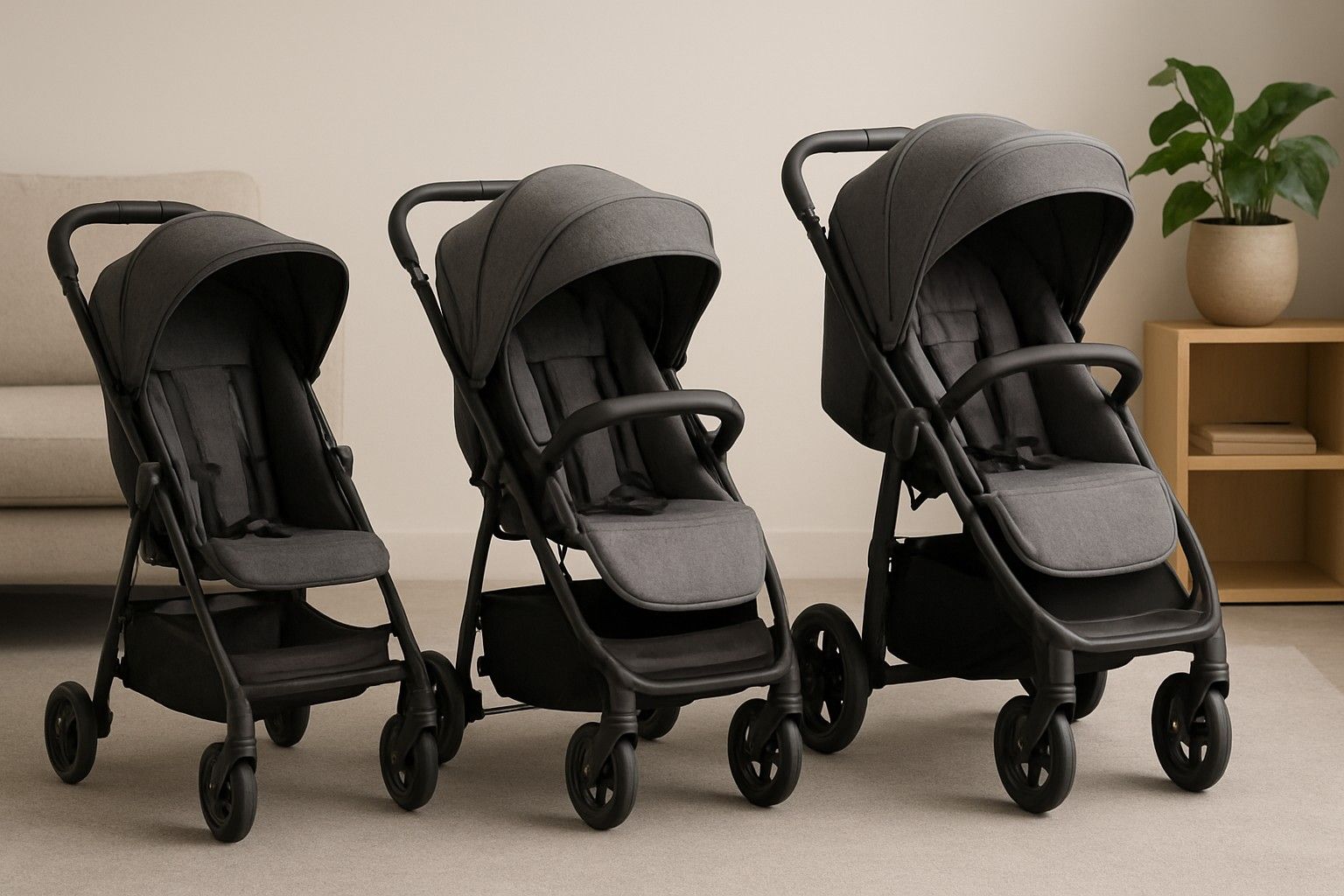
If you've been scrolling through stroller listings wondering why one costs a fraction of another, the honest answer is that price in this category tracks real differences in build, frame material, and how long the stroller lasts under daily use. This guide breaks down exactly what you get from ₹2,999 up to ₹14,999 and beyond, so you can pick a tier based on what you actually need rather than guessing.
What Strollers Cost in India: ₹2,399 to ₹25,990
Stroller prices in the Indian market span a wide range, from ₹2,399 at the absolute entry point to ₹25,990 for the most feature-loaded options, with the overall average sitting at ₹5,000. That spread isn't random pricing noise — it reflects genuine differences in frame material (steel versus aluminium), wheel type (basic plastic casters versus suspension-equipped wheels), fold mechanisms, seat recline range, and how much weight and stress testing has gone into the build.
Most buyers don't need to understand every engineering detail, but it helps to know that the market naturally clusters into three usable bands: strollers under ₹2,999 built for occasional, short-duration use; a large mid-range stretching through the ₹4,499 band that covers most daily-use needs; and a premium tier extending into ₹14,999 and beyond for buyers who want a stroller to last through multiple years and multiple children if needed. Understanding which band a listing falls into tells you immediately what compromises, if any, you're likely to hit. The rest of this guide walks through each tier in detail so you know exactly what changes as the price climbs, and whether the jump is worth it for your situation.
Entry-Level Strollers Under ₹2,999
Anything priced under ₹2,999 is built to a strict cost target, and it shows in a few predictable places. Frames are typically lighter-gauge steel or basic alloy, wheels are usually fixed rather than swivel, and recline positions are limited to two or three fixed angles rather than a smooth continuous adjustment. Canopies tend to be smaller, storage baskets shallower, and the overall stroller lighter but less stable on uneven surfaces like broken pavements or gravel paths, which matters a lot in Indian residential colonies and markets where footpaths are inconsistent.
This tier makes sense for very specific situations: a second, lightweight stroller kept at the grandparents' house, a travel-only stroller used for short airport transfers, or a stopgap purchase for a baby who will outgrow the need for a stroller within a few months. What you're trading away is durability under daily wear — hinges and wheel joints in this range are the first components to loosen or squeak after a few months of regular folding and unfolding. If you're looking for a primary, everyday stroller that a caregiver will use multiple times a day for a year or more, this tier will likely frustrate you sooner than you'd like, even though the upfront saving looks attractive.
Mid-Range Strollers in the ₹4,499 Band
The ₹4,499 band is where most genuinely usable everyday strollers sit, and it's also the widest tier by price spread, which means quality varies more here than in the entry tier. At the lower end of this band you start seeing swivel front wheels, a one-hand fold mechanism, and a proper multi-position recline. Moving toward the upper end of this range, you'll find sturdier frame welds, larger under-seat storage, adjustable handlebar heights (useful when both parents share stroller duty and differ in height), and canopies with better UV coverage.
This is also the tier where five-point harnesses become standard rather than optional, which matters for safety compliance as your child grows more mobile and starts pushing against restraints. Suspension — even basic spring suspension on the rear wheels — starts appearing here too, and it meaningfully changes the ride quality on Indian roads with speed bumps, uneven tiles, and mixed pavement. For most first-time parents buying a stroller they intend to use daily for a year or two, this band offers the clearest balance between cost and real-world durability. The main thing to watch for within this range is inconsistent quality control at the lower end of the band — read enough listings and reviews to confirm the specific model holds up before committing, since not every product in this price zone is equally well built despite similar listed prices.
Premium Strollers in the ₹14,999 Range
Once you move into the ₹14,999 range and beyond, the improvements shift from basic functionality to convenience and longevity. Expect reversible seats that let the child face the caregiver or face outward, near-flat recline suitable for newborns, better shock absorption tuned for longer walks, and compact one-hand folds that collapse small enough to fit in a hatchback boot without a struggle. Fabric quality improves too — better breathability, more washable and stain-resistant covers, and padding that holds its shape for longer instead of flattening within months.
A lot of what separates this tier from the mid-range isn't visible in a spec sheet; it's how the stroller behaves after a year of daily folding, loading, and rough handling. Frame joints hold tighter, wheel bearings resist the wobble that develops in cheaper units, and brakes stay reliable instead of needing frequent adjustment. This tier also tends to include stroller systems designed to convert or extend as your child grows, which can offset the higher upfront cost over a longer usable life. If you want a clearer sense of exactly which of these features are worth paying extra for versus which are marketing add-ons, see which premium features are worth paying for before finalizing a purchase in this range.
Is the Average Price of ₹5,000 Worth It?
The market average of ₹5,000 sits comfortably inside the ₹4,499 band, which tells you something useful: most Indian buyers are landing on a stroller with swivel wheels, proper recline, and a one-hand fold rather than settling for the bare minimum or splurging on the premium tier. That's a reasonable default for a household buying one stroller for one child's early years, since it covers daily use without paying for durability features you may not need if the stroller's total lifespan is only twelve to eighteen months of heavy use.
Whether ₹5,000 is "worth it" for you specifically depends on how long and how hard the stroller will be used. If you'll be taking it out daily for walks, errands, and travel, a price near or slightly above the average buys real, tangible durability compared to the entry tier. If usage will be occasional — weekend outings, visits to relatives, short trips — you may not need to spend up to the average at all, and a well-chosen strolller from the lower half of the ₹4,499 band could serve just as well. The average is a useful anchor for comparison, not a target you need to hit.
Using Price History to Judge Today's Deal
Once you've decided on a tier, the next useful step is checking where today's listed price sits against that specific stroller's historical price range rather than judging it in isolation. A stroller listed near ₹2,399 might look like an unbeatable deal on the surface, but if its typical price has always hovered around that mark, there's nothing unusual happening — it's simply an entry-tier product priced where entry-tier products sit. Conversely, a stroller in the ₹14,999 range that's currently priced below where it has historically sat is a genuinely stronger signal that you're buying at a fair or better-than-usual point.
The value of this approach is that it removes guesswork from timing. Rather than wondering whether to wait for a hypothetical future discount, you can look at where a specific listing falls relative to its own price history and make a confident call today. A price sitting at or below its historical average, within the tier that matches your actual usage needs, is a reasonable basis to proceed — there's no reliable way to predict whether a lower price will appear later, and a stroller that fits your needs now has value now, not just at some future discounted moment.
Choosing the Right Tier for Your Needs
The right tier comes down to three honest questions: how often will the stroller actually be used, how many years or children it needs to serve, and what terrain it will face most days. A stroller used daily on uneven Indian streets for two or three years justifies spending toward the upper half of the ₹4,499 band or into ₹14,999, since the wear-and-tear savings compound month after month. A stroller needed only occasionally, or for a short window before the child outgrows it, doesn't need those durability investments, and spending under ₹2,999 or in the lower ₹4,499 range is a sound, deliberate choice rather than a compromise.
What matters most is matching the tier to your actual pattern of use rather than defaulting to the most expensive option available or chasing the lowest sticker price without checking what you're giving up. If you haven't yet nailed down your specific requirements — terrain, frequency of use, storage space at home, whether it needs to fold into a small car boot — it's worth taking a step back to return to the buying guide to align budget with your requirements before locking in a price tier.
Between the entry, mid-range, and premium tiers, the real question was never which stroller is objectively "better" — it's which set of trade-offs matches how you'll actually use it day to day. With the price bands, what changes at each level, and how to read today's price against a stroller's own history now laid out, you have what you need to pick a tier and buy with confidence rather than second-guessing the number on the listing.

Comments
Be the first to comment.