Is This Treadmill Price a Good Deal? Reading the Price History
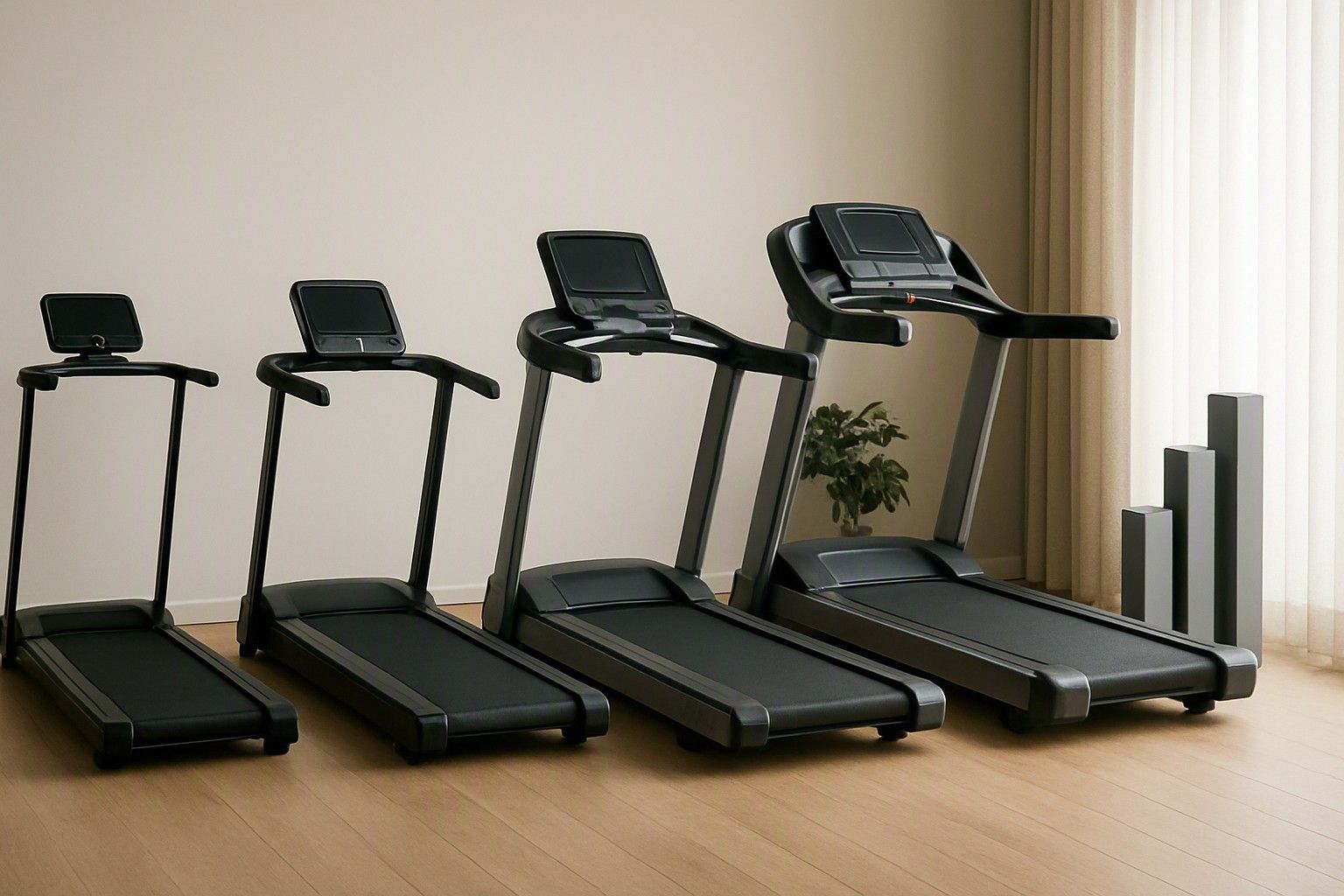
You've found a treadmill you like, and the page is showing a price with some kind of discount stamped on it — but is that number actually good, or just good-looking? The only honest way to answer that is to look at how the price has actually moved over time, not at the percentage-off badge sitting next to it. This article walks through how to read that movement so you can decide today with confidence, without needing to wait or guess.
How Treadmill Prices Move Through the Year
Treadmill prices in India rarely move in a straight line. Across the ₹8,000–₹2,00,000 range that these machines span, you'll typically see a few sharp dips a year — around the big festive sale periods, end-of-financial-year clearance windows, and sometimes a smaller dip around New Year when fitness intent spikes. Outside those windows, prices tend to sit at a steadier baseline, with small upward or downward drifts driven by input costs, currency movement (a lot of motors and electronics are imported components), and how much inventory a seller is sitting on.
What this means practically is that a single snapshot of a price tells you very little. A treadmill listed at a price close to the ₹35,000 average could be sitting at its lowest point of the year, or it could be temporarily inflated before a sale event so the eventual 'discount' looks bigger. The only way to tell the difference is to look at the trend over several months, not the number on the day you happen to be browsing.
This is exactly why judging a treadmill purely by today's listed price is unreliable. Two treadmills with identical specifications can show very different pricing patterns depending on how aggressively the seller marks up before sale events, which is the core problem a price-history view is built to solve.
Reading a Price-History Chart Before You Buy
A price-history chart is simply a line showing what a listing has actually sold or been priced at over time, rather than what a seller claims it's worth. When you look at one for a treadmill, there are three things worth checking before you trust the current price.
First, look at the range of the line itself — has it genuinely dipped to or near today's price before, or is today's price actually higher than several points in the last few months? A price that looks like a bargain against an inflated 'original' price but sits above its own recent history isn't really a deal at all.
Second, check how long the price has held at its current level. A price that's been stable for several weeks is a more trustworthy signal than one that changed yesterday, since short-lived drops are often tied to a 24-hour sale event rather than a genuine repricing.
Third, look at the shape of the dips — are they sharp and brief (typical of festive sales) or gradual (typical of a model being phased out or a seller adjusting to demand)? A gradual decline usually means the price will keep drifting down slowly rather than jumping back up, while a sharp dip tends to snap back once the sale window closes. Reading these three things together tells you whether the number you're looking at right now is close to the floor this treadmill has actually reached, or whether it's a manufactured discount sitting well above its real historical low.
Spotting Inflated "Discount" Claims
The most common trick in treadmill pricing isn't a fake product — it's a fake baseline. A seller lists an inflated "original price" that the treadmill may have only briefly touched, sometimes never, and then shows a large percentage off against that number. The discounted price you see might be perfectly reasonable, or it might just be the treadmill's normal price with a misleading strike-through above it.
A few patterns are worth watching for specifically in this category. Treadmills that show a very high original price relative to their features — say, a basic motorised treadmill priced as if it belongs near the ₹2,00,000 end of the market before a steep markdown — are a common red flag, since genuine pricing at that tier usually comes with commercial-grade motors, larger running decks, or advanced console features to match. Another pattern is a discount that appears identical across many unrelated listings and time periods, which usually signals a fixed markup baked into the listing rather than a real event-driven price cut.
The fix is straightforward: ignore the percentage-off number entirely and compare the actual current price against the historical price line for that specific listing. If the current price sits meaningfully below where the line has genuinely spent most of its time, that's a real discount. If it's just below an inflated peak the line barely touched, the "deal" is mostly presentation.
Judging Today's Price Against the ₹8,000–₹2,00,000 Range
Once you've confirmed a price is genuine rather than inflated, the next question is whether it's actually fair for what you're buying — and that depends on where it falls within the ₹8,000–₹2,00,000 spread the category covers. A price near the ₹35,000 average isn't automatically "good" or "expensive" on its own; it only means something once you weigh it against what treadmills at that level typically include.
Treadmills under ₹12,000 are usually basic manual or entry motorised units with limited motor power and shorter warranties, so a price near the top of that band should still come with reasonable build quality for the category, not just a low number. Machines in the ₹12,000–₹30,000 band typically step up to steadier motorised performance and slightly better cushioning, so a price sitting comfortably within that range is reasonable as long as the motor and deck specifications match what that tier usually offers. The ₹30,000–₹80,000 band is where you'd expect stronger motors, larger running surfaces, and better long-term durability, so a price near the lower end of that band with those features is a genuinely strong position, not just a coincidence of timing.
Rather than guessing what's normal for each of these bands, it's worth taking the time to compare the price against what each budget tier normally offers, since the same rupee figure can represent very different value depending on which tier it actually belongs to.
When to Buy Now Instead of Waiting
If the price history shows the current price sitting at or near the genuine low point for that specific listing, and it fits sensibly within its budget tier's usual range, there's little practical reason to keep waiting. Treadmill prices don't follow a predictable countdown to some future rock-bottom number — they move with sale calendars, inventory, and currency shifts that are impossible to time precisely from the buyer's side. Holding off in the hope of an even lower number often just means paying roughly the same price a few months later, minus the weeks of actual use you gave up in between.
The cases where waiting does make sense are narrow: if the current price is clearly above its recent historical range with no sale event nearby, or if you've checked the specifications against the budget tier and found the machine underpowered for what it costs. Outside of those two situations, a price that matches its own history and its tier is a legitimate basis for a decision, not a signal to hold out for something better.
Before you actually check out, it's worth taking a moment to revisit the full buying guide before you confirm the purchase, just to make sure the model's motor rating, running deck size, and warranty terms line up with how you actually plan to use it — price history tells you the deal is fair, but it doesn't tell you the treadmill is the right fit.
Reading price history isn't about finding the absolute lowest number a treadmill will ever hit — it's about knowing whether the price in front of you right now is honest, given where it's genuinely sat over recent months and where it falls within its own budget tier. If the current number holds up against both of those checks, you're not looking at a guess anymore; you're looking at a fair price you can act on.
Comments
Be the first to comment.