Treadmill Warranty, Servicing and Maintenance Costs in India
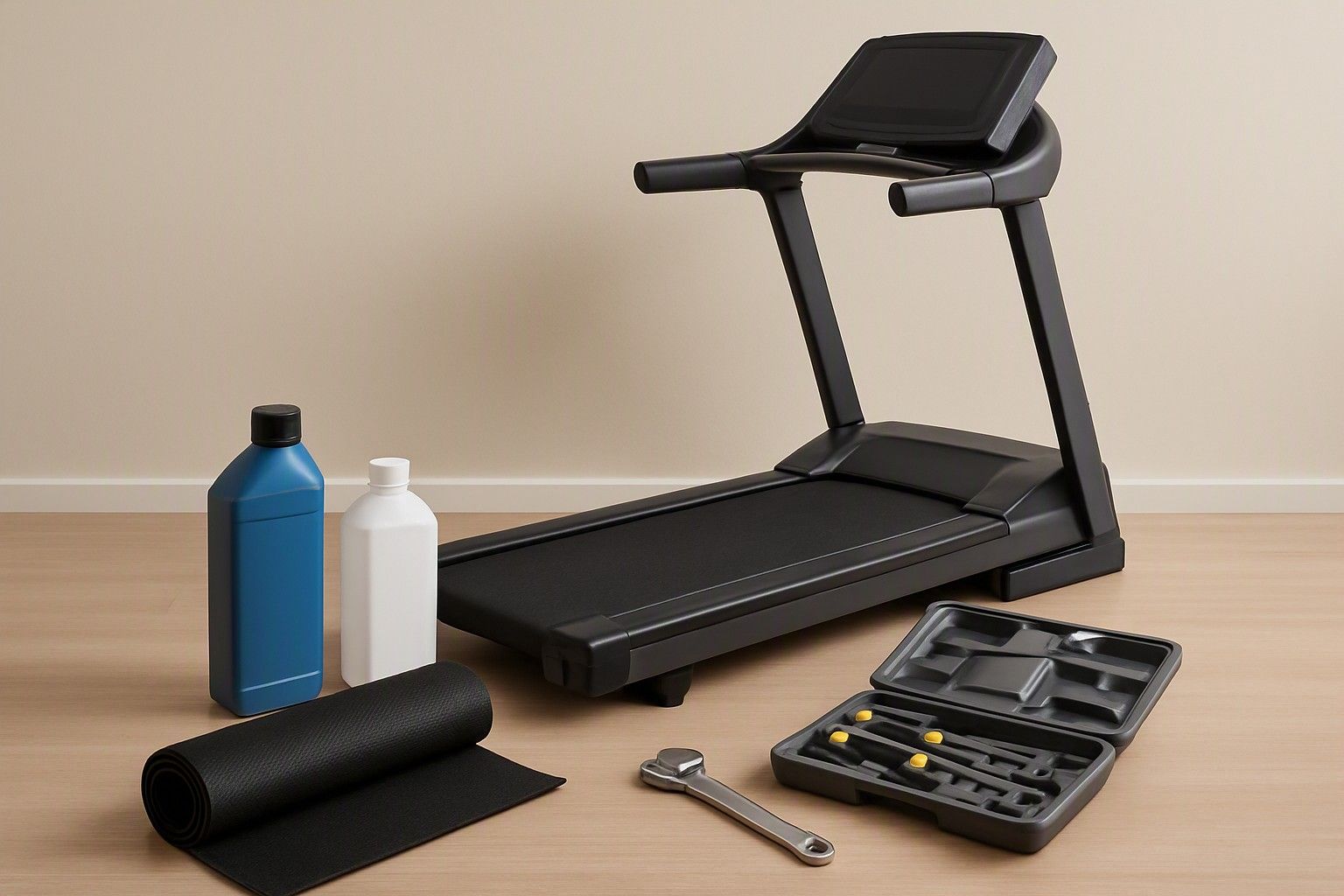
Buying a treadmill is only half the decision — the other half is what it costs to keep running once the festive-season shine wears off. Warranty terms, spare-part access, and basic upkeep vary enough between brands and price bands that they change what a treadmill actually costs you over five years, not just what it costs on day one. If you're trying to figure out what servicing will realistically demand of your time and wallet, this is the page for that.
What Treadmill Warranties Actually Cover (Motor vs Parts vs Labour)
Most treadmill warranties in India are split into two or three separate clocks, and reading only the headline number on the box is how buyers get caught out. The motor — usually the most expensive single component — typically carries the longest cover, often stretching well beyond the rest of the machine, sometimes years longer. Frame and deck cover is usually shorter, and covers structural issues like a cracked deck or a bent frame rather than wear items. Then there's the part that trips people up: labour and standard parts (belts, rollers, display boards, wiring) are frequently covered for a much shorter window, sometimes just the first year, after which you pay for the technician's visit even if the part itself is still under warranty.
This three-way split matters more as you go up in price. A machine near ₹8,000 may bundle everything into one short warranty, while something closer to ₹2,00,000 usually itemises motor, frame, and parts/labour separately with meaningfully longer motor cover. Before buying, ask specifically: how many years on the motor, how many on the frame, and how many on labour — not just "what's the warranty," which brands answer with whichever number sounds best. Also confirm whether the warranty requires the treadmill to be run through a stabiliser or dedicated socket, since several brands quietly make this a condition rather than a suggestion.
Belt Lubrication and Routine Maintenance at Home
The single biggest driver of avoidable repair cost on a home treadmill is a dry belt, and it's entirely preventable with a five-minute habit. Most motorised belts need silicone lubricant applied under the belt every 3-6 months depending on usage — more often if you run daily in a humid or dusty Indian household, less if it's an occasional-use machine. Skipping this doesn't just wear the belt faster; it forces the motor to work harder against friction, which is the more expensive failure down the line. Many mid-range and higher machines near ₹80,000 now ship with a small bottle of belt lube and clear markings for where to apply it, but budget models around ₹12,000 often leave you to source generic silicone lubricant yourself, which works fine as long as it's silicone-based and not a random household oil.
Beyond lubrication, routine upkeep is mostly common sense: wipe down the deck and motor housing after use to keep dust out of the vents, check the belt alignment monthly (it should sit centred, not drifting to one side), and keep the area under the treadmill clear so airflow to the motor isn't blocked. Vacuuming under the deck cover every few months prevents dust building up around the motor and control board, which in Indian conditions — especially near windows or on ground floors — happens faster than most buyers expect. None of this needs a technician; all of it meaningfully extends the gap between paid service visits.
Common Repairs and Their Typical Costs
Once a treadmill is a year or two old, a handful of repairs account for most service calls, and knowing which are cheap and which aren't helps you budget realistically rather than being surprised. Belt replacement is the most common wear repair — belts stretch and fray with use and eventually need swapping, and this is typically the least expensive of the major repairs since it's a part replacement rather than a motor or electronics job. Motor-related repairs sit at the other end: a motor that's overheating, making grinding noises, or failing to hold speed is usually the costliest fix on any treadmill, and on machines toward the lower end of the price range, a major motor repair can approach a meaningful fraction of what the machine cost new — which is worth weighing against simply buying a more capable unit in the first place.
In between, you've got smaller but still real costs: display or console board replacement when buttons stop responding or the screen goes blank, incline motor faults on models with auto-incline, and control board issues that show up as erratic speed changes or the machine tripping the circuit. Labour charges for a home visit are typically separate from the part cost and apply per visit regardless of what's fixed, which is why bundling multiple small issues into a single service call — rather than calling someone out repeatedly — is the more economical approach. None of these costs are fixed nationally; they depend on brand, city, and whether the part is stocked locally or has to be ordered.
Brand Service Networks and Spare-Part Availability in India
A warranty is only as useful as the technician who can actually action it, and this is where treadmill ownership in India diverges sharply by city tier. In metros, most established brands have authorised service centres or empanelled local technicians who can usually reach you within a few days and carry common spares like belts and lubricant on hand. In smaller towns, the same brand might route your complaint through a regional partner, and a part that's routine in Mumbai or Bengaluru can take a week or more to arrive if it has to be shipped from a central warehouse. This isn't unique to any one price band — even machines priced near ₹2,00,000 can leave you waiting if you're outside a service hub, while some brands strong in tier-2 and tier-3 markets have built denser local networks specifically to cover that gap.
Before buying, it's worth checking — not assuming — whether the brand has a service point in your city or nearby, and how it handles spare parts for machines out of the one-year window when labour typically stops being free. Reading recent buyer reviews for complaints about service delays is more reliable than the brand's own claims, since every brand states good intentions on paper. If you live outside a major city, this single factor can matter more to your total ownership experience than the exact spec sheet of the machine you choose.
Protecting the Motor From Power Issues
Indian power supply is rarely as clean as a treadmill motor wants, and voltage fluctuations or sudden outages are behind a large share of the motor failures that get blamed on "bad build quality" instead. A voltage spike during a power cut recovery, or sustained under-voltage during peak evening load, stresses the motor controller in ways that add up over time even if the treadmill seems fine after each incident. This is exactly the kind of damage that many warranties explicitly exclude, since it's classified as an external electrical fault rather than a manufacturing defect — meaning you can be left paying full repair cost on a machine that's technically still under warranty.
The fix is straightforward and inexpensive relative to the repair bill it avoids: run the treadmill through a dedicated stabiliser or surge protector rated for its motor size, and avoid extension boards shared with other high-draw appliances. For a fuller breakdown of how to handle the voltage and power-cut risks that void many warranties, including what stabiliser rating to look for and how different motor types respond to unstable power, it's worth reading that alongside this page — because a warranty claim rejected for a power-related fault is one of the more common and avoidable disputes buyers run into after their first year of ownership.
Factoring Upkeep Into Your Buying Decision
Everything above points to one practical conclusion: the sticker price of a treadmill is not the full cost of owning one, and ignoring servicing at the time of purchase just moves that cost to a less convenient moment later. A machine at ₹12,000 that needs a motor repair in year two can end up costing more overall than a sturdier option nearer ₹30,000 or ₹80,000 that runs cleanly for five years with nothing beyond routine belt lubrication. The average price paid across Indian buyers sits around ₹35,000, and at that level it's reasonable to expect a motor warranty of several years, a documented service network, and parts that don't need to be special-ordered — features worth confirming rather than assuming.
None of this means chasing the most expensive machine on the shelf; it means treating warranty length, labour cover, and local service access as decision factors alongside price and features, not an afterthought you deal with only when something breaks. If you're still weighing which price band and feature set makes sense for your household before you even get to servicing, it helps to bring ownership costs back into your overall choice using the full buying guide, so the machine you pick is one you're not fighting with a year in.
Warranty fine print, a five-minute lubrication habit, and knowing which repairs are cheap versus which are expensive — together these answer what treadmill ownership actually costs in India beyond the price tag. Get those three right and the machine you buy today, whether near ₹8,000 or ₹2,00,000, stays a reliable part of your routine rather than a recurring service call.
Comments
Be the first to comment.