Treadmill Price Tiers in India: What Each Budget Band Gets You
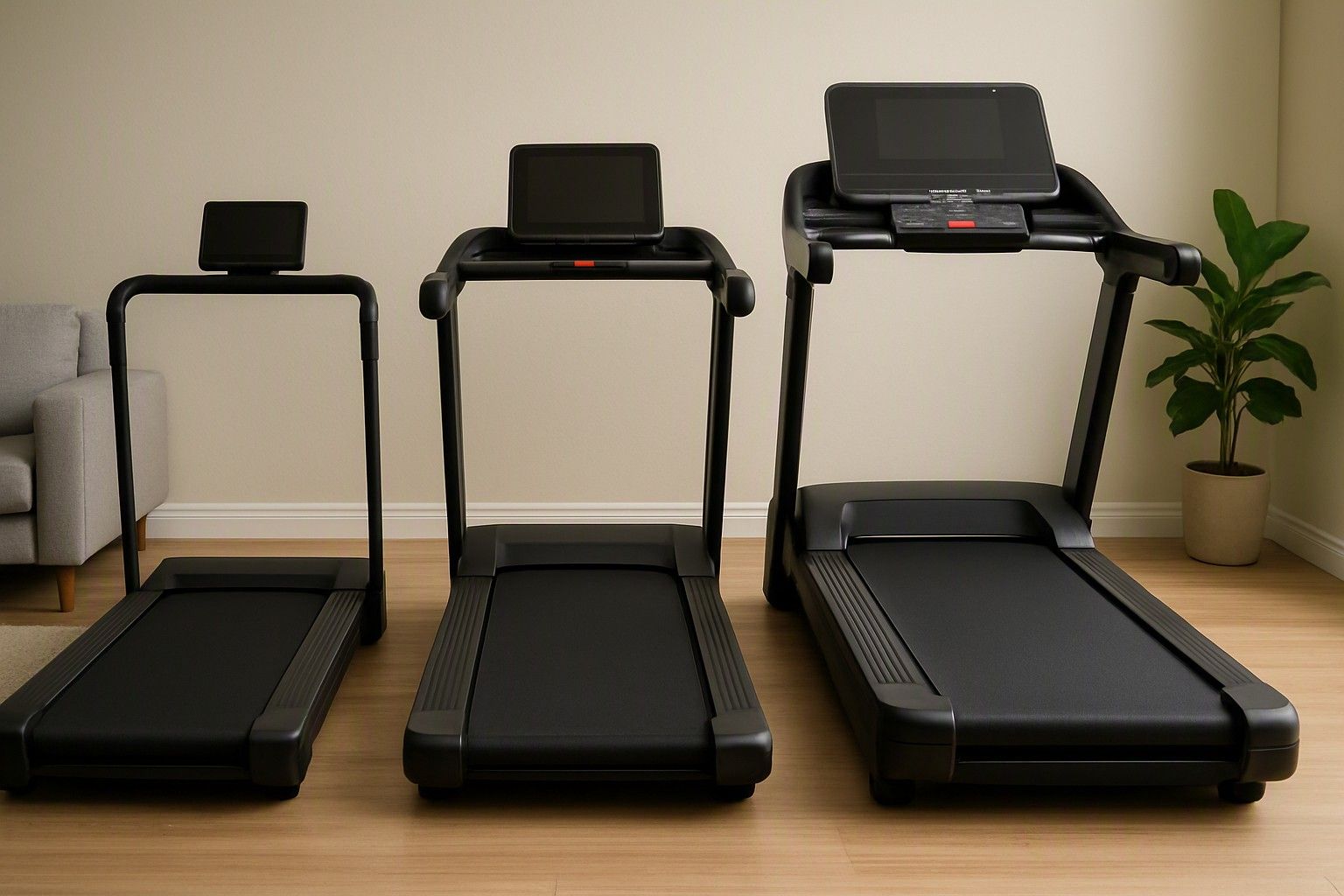
If you're wondering what a treadmill in your price range will actually feel like to use, this is the article that answers it. Indian treadmill prices run from ₹8,000 to ₹2,00,000, and the difference between those two ends isn't just cosmetic — motor quality, belt size, and how long the machine lasts under regular use all shift with the tier. Read on to see which band matches your actual needs, not just what you're comfortable spending.
Entry-Level Treadmills Under ₹12,000
At this end of the market, close to ₹8,000, you're mostly looking at manual or basic motorised treadmills built for light, occasional walking rather than serious training. Motors here tend to be modest, meant for walking speeds rather than sustained jogging, and the running belts are usually shorter and narrower — fine for a shorter stride but restrictive if you're taller or plan to run rather than walk. Build quality is the real trade-off: frames are lighter, cushioning under the belt is minimal, and folding mechanisms can feel less sturdy over time. That doesn't make these machines bad; it makes them purpose-specific. If your realistic use case is a 20-30 minute daily walk, some light incline work, or a shared household machine that won't see heavy mileage, a treadmill under ₹12,000 does the job without you overspending on capacity you won't use. Where this tier struggles is with anyone over roughly 85-90 kg body weight running regularly, or households where multiple people will use it for actual running — the motor and belt simply weren't built for that load, and you'll feel the machine straining, sometimes within the first year. Buy in this band with a clear, honest sense of how hard you'll actually push it.
Mid-Range Treadmills in the ₹30,000 Band
The ₹30,000 band is where treadmills start behaving like proper fitness equipment rather than a walking accessory. Motors are rated for continuous jogging and light running, not just brisk walking, and you'll typically get a longer, wider belt that accommodates a natural running stride without you feeling boxed in. Cushioning improves noticeably here too — decks are better designed to absorb impact, which matters if knees or joints are a consideration. This tier also tends to introduce more reliable folding hinges, sturdier side rails, and consoles with a wider spread of pre-set programs and incline options, though nothing exotic. For most Indian households buying a treadmill for genuine cardio use — not occasional walking, not marathon training, but regular 30-45 minute sessions three to five times a week — this band is where the specs actually match the intent. It's also the range where you start seeing meaningful gaps between models at the lower end (₹12,000-ish) versus the upper end (closer to ₹80,000's starting point), so it pays to check the actual motor rating and belt dimensions rather than assuming everything in this bracket performs the same. This is also the band the average Indian buyer lands in, which the next section unpacks.
Premium Treadmills in the ₹80,000 Range
Once you're spending in the ₹80,000 range, you're paying for headroom — in the motor, the belt, and how long the machine holds up under real running loads. These treadmills are typically built for sustained running, not just jogging, with motors rated to handle higher speeds and heavier users without the strain you'd see in a cheaper machine. Belts are longer and wider still, decks often have better shock absorption engineering, and frames are noticeably heavier and more stable at speed. Consoles in this range usually offer more detailed tracking, wider incline ranges, and sometimes app or Bluetooth connectivity, though the core value isn't the screen — it's the mechanical durability underneath it. This tier makes sense if you're training seriously (structured runs, higher weekly mileage, multiple heavy users in the same household) or if you simply want a machine that won't need replacing or repairing within a couple of years of daily use. It's a poor fit if your actual usage is light walking a few times a week — you'd be paying for motor capacity and belt length you'll never stress-test. The honest way to think about this band is durability and headroom bought upfront, not extra features for their own sake.
Why the Average Buyer Spends Around ₹35,000
Most Indian buyers end up spending close to ₹35,000, and that's not a coincidence — it sits right inside the ₹30,000 band, which is the point where a treadmill stops being a compromise and starts being genuinely usable for regular cardio without tipping into premium pricing you don't need. Below this, buyers often report the belt feeling short or the motor struggling once running (not walking) becomes the norm. Above it, into ₹80,000 territory, the gains are real but increasingly specific to heavier or more serious use. The ₹35,000 mark reflects what a household actually needs most of the time: a motor that can handle jogging and some running, a belt long enough for a normal stride, and a frame that won't feel flimsy after six months of regular use. It's worth treating this average as a sanity check rather than a target — if your genuine use case is light walking, spending less makes sense; if you're training seriously, spending more does too. But if you're unsure which camp you fall into, ₹35,000 is a reasonable anchor because it's where the largest number of buyers land after actually using their treadmill for a few months, not just after buying it. Price isn't the only running cost worth knowing, though — use our Treadmill Electricity Cost Calculator to see exactly what your treadmill adds to your energy bill each month, based on its type, your weight, and how often your household actually runs it.
Where Spending More Actually Pays Off
Not every rupee spent above the entry level buys you something meaningful, so it helps to know exactly where the money goes to work. The two components that matter most as price rises are the motor and the belt — a stronger, higher-rated motor handles sustained running without overheating or losing power, and a longer, wider belt lets you run with a natural stride instead of clipping the edges. Console features, extra programs, and app connectivity are nice additions, but they don't affect how the machine performs under real physical load, and they're the first things people stop using after the first month. If you want to understand exactly which motor ratings and belt dimensions justify a jump from one tier to the next, it helps to connect budget to the motor and belt specs you should prioritise, since that's where the actual performance difference between price bands becomes concrete. As a general rule: spend more when your use case involves running (not just walking), when more than one person in the house will use it, or when you want the machine to last well past the two-year mark without belt or motor issues.
Deciding Your Realistic Budget
The honest way to fix your budget is to work backward from how you'll actually use the treadmill, not from what looks impressive on a spec sheet. If daily use means brisk walking or occasional light jogging by one or two people, staying under ₹12,000 or within the ₹30,000 band covers you without waste. If running is the real goal, or the household is heavier-usage than average, the ₹80,000 range is where the motor and belt stop being a limiting factor. Current prices across this range, from ₹8,000 to ₹2,00,000, reflect a stable market rather than one where waiting will meaningfully change what you get for your money — so there's no real advantage in delaying a decision once you know your tier. What matters more is matching the machine's built-in capacity to your actual routine, since overspending on unused headroom is just as much a misstep as underspending on a motor that can't keep up. For the full picture on comparing models within your chosen tier, it's worth going back to the overall guide to finalise your shortlist, where the budget decision connects to everything else you'll need to check before buying.
With the tiers laid out this way, you should now have a clear answer to what your budget actually buys — whether that's a light-use walker under ₹12,000, a genuinely capable cardio machine in the ₹30,000 band where most buyers land, or the durability and running headroom that comes with the ₹80,000 range. The next step is matching that tier to the specific motor and belt specs that determine how well the machine holds up to your routine.

Comments
Be the first to comment.