Fake Speakers, Inflated Specs and Warranty Traps: What to Check Before You Pay
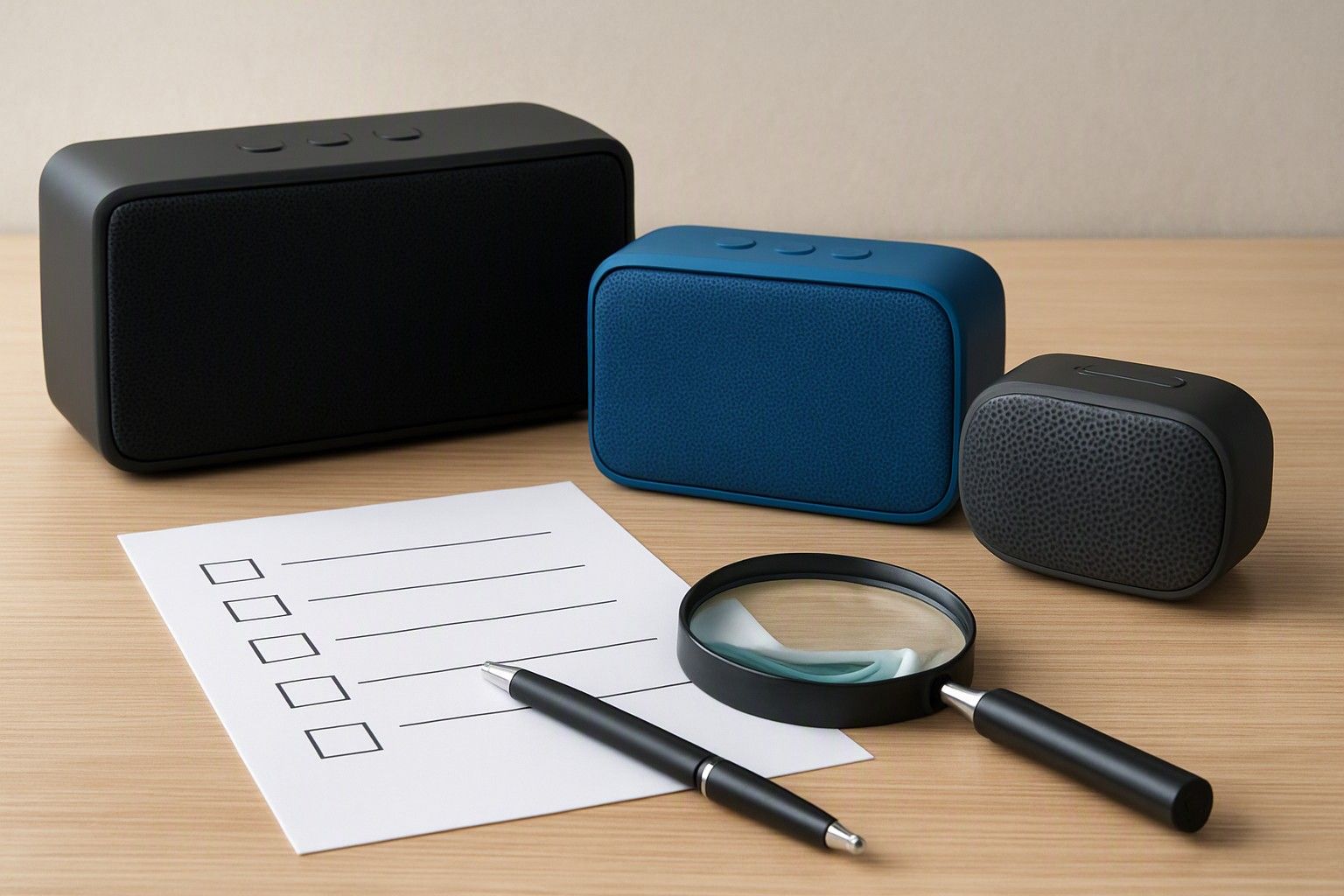
If you are about to pay for a Bluetooth speaker and want to be sure it is genuine, honestly specified and backed by a warranty someone will actually honour, this article is for you. Counterfeits, exaggerated spec sheets and thin service networks are real risks in India, from marketplace listings to local electronics markets. Below are the checks to run before the money leaves your account.
Fake Branded Speakers on Marketplaces and Local Markets
Counterfeits are most common where a recognisable brand name meets a price that looks too friendly. Speakers in this category run from ₹699 to ₹29,999, with an average around ₹4,499. A well-known name priced close to ₹699, with a feature list that belongs near ₹29,999, deserves suspicion no matter how many stars the listing shows.
On marketplaces, buy from the brand's own official store or a clearly authorised seller. A third-party seller with a handful of ratings and no brand authorisation is where lookalikes tend to turn up. Read the negative reviews first: phrases like "different from picture", "sound is hollow" or "battery dies fast" are the usual signs of a swap.
In a local market, you can inspect the box properly. Look for blurry printing, spelling mistakes, a missing or photocopy-style manual, and no batch or serial number. Legitimate packaged goods in India carry the manufacturer or importer name and address, MRP, and customer-care details, so a box with none of these is a warning. A speaker that feels unusually light for its size often has a smaller battery or a weaker driver than a genuine unit.
Whatever the channel, power it on in front of the seller or on the day it arrives, pair it, play something familiar at high volume, and check for distortion. If something feels off, use the return window immediately.
Inflated Specs: PMPO, Battery Hours and Waterproof Claims
Three claims are inflated more often than any others: power, battery life and water protection.
Power. PMPO is a peak figure a speaker cannot sustain, and it has no standard test behind it. A small speaker advertised with a very large PMPO number tells you nothing about real loudness. Continuous output is what counts, and why RMS rating is the number to trust explains how to read it against the size of your room. If a listing shows only PMPO and no RMS, treat that as a reason to look at another listing.
Battery hours. Claimed playtime is normally measured at moderate volume, often with lights and extra features off. At loud volume, with bass-heavy music or lighting effects switched on, expect noticeably less. Compare the stated hours with the battery capacity listed. A very long claim paired with a tiny or unlisted capacity does not add up.
Waterproof claims. The word "waterproof" on its own is marketing. A genuine claim comes with a specific IP rating, such as an IPX or IP code, printed in the specifications. "Splash-proof" or "rain-ready" with no code means no tested standard behind it, so do not take that speaker near a pool or a bathroom.
Battery Safety: Swelling, Cheap Chargers and BIS Marking
The battery is the one part of a speaker that can turn from a nuisance into a hazard. Poorly made cells and unregulated charging are the usual causes.
Swelling. If the body bulges, seams open up, the speaker gets hot while charging, or it gives off a chemical smell, stop using it and do not charge it again. Do not press on it or try to open it. Take it to a service centre or dispose of it through proper e-waste channels.
Chargers. Many cheap speakers arrive with, or get paired with, unbranded adapters that have no reliable output control. Use the cable that came in the box with a decent adapter from a known maker, and avoid charging on a bed or sofa, or leaving it plugged in unattended overnight.
BIS marking. Check the box and the speaker label for the BIS mark with a registration number, and verify that number on BIS's official portal or app instead of trusting a printed logo. Where a mark is not present, the minimum to expect is a model number, the manufacturer or importer details and a customer-care contact. Labels deserve the same scepticism as battery claims, and what genuine water-resistance certification means is worth reading before you rely on any rating printed on a box.
Warranty Terms, Water-Damage Exclusions and Invoices
A warranty is only as good as the paper behind it. Before paying, ask four things: how long it runs, whether the battery is covered for the same period as the speaker, whether it means repair or replacement, and who honours it, the brand or only the seller.
Read the exclusions closely. Nearly every warranty excludes physical damage, burn marks, opened or tampered units and liquid damage. That last one matters because many speakers are sold as water-resistant. Water-resistance and water-damage cover are separate things: a speaker with a tested IP rating can still be refused service if the brand's terms treat liquid ingress as misuse. Look for any line that says water damage is covered, or does not exclude it, and be cautious if the water-resistance claim is not supported by the warranty text.
The invoice is your proof. Insist on a proper GST invoice showing the model, serial number and date, and check that the serial matches the one on the speaker and box. On marketplaces, download the invoice as soon as the order is delivered. At a local shop, a handwritten slip or a missing bill leaves you with almost no claim. Photograph the box label, serial number and bill together, and keep them in your phone.
Service Network Beyond Metro Cities
A warranty promise matters less than whether anyone can act on it where you live. Many brands list service centres only in metros, and outside them the practical route is often courier-based: you ship the speaker, wait, and hope it comes back working.
Before buying, check three things. First, look up the brand's service-centre list for your own pin code and see whether it is a walk-in centre or a collection point. Second, call or message customer care with a plain question about how a warranty claim works for your city, and note how quickly and clearly they answer. Third, ask about the turnaround time and whether a replacement is offered when a repair takes too long.
If you live in a smaller town, buying through a marketplace with a clear return or replacement window can be safer than relying on local repair, since a defect that shows up in the first days is settled by a return, not a service queue.
Price matters here too. In the ₹1,500 range, repair costs and courier time can approach the value of the speaker, so the return window is worth more than the warranty. In the ₹4,000 and ₹10,000 price range of premium bluetooth speakers, a working service network is worth confirming before you commit.
Final Pre-Purchase Checklist
Run through this list before you pay, and you will have covered the main risks in this category.
- Seller: the brand's official store, or a clearly authorised seller. Not an unknown listing with a suspiciously low price for the name.
- Packaging and labels: sharp printing, model and serial number, manufacturer or importer address, MRP, customer-care details and a verifiable BIS registration number where one is shown.
- Power claim: an RMS figure is stated, not just PMPO.
- Battery claim: hours are matched by a listed capacity, and you expect less at high volume.
- Water claim: a specific IP rating, not "waterproof" or "splash-proof" alone.
- Charger: a proper adapter and the supplied cable, with no unbranded substitute.
- Warranty: duration, battery cover, repair or replacement, and the water-damage clause have all been read.
- Invoice: GST invoice with matching serial number, saved digitally.
- Service: a centre or reliable pickup option confirmed for your pin code.
- On arrival: test the speaker the same day and know the return deadline.
These checks work best alongside the basics. If you have not yet settled the size, type and budget, every earlier step of choosing a speaker, from type to budget is laid out in the main buying guide, so you can then verify the specific speaker you have chosen.
A genuine speaker with an honoured warranty comes down to a few checkable things: a trustworthy seller, honest specs, a verifiable label, a clear warranty and a proper invoice. If those hold for the speaker in your cart, you can pay with confidence today. If one fails, you now know exactly which question to put to the seller before you buy.
Comments
Be the first to comment.