RMS vs PMPO: How Many Watts Does Your Bluetooth Speaker Really Need?
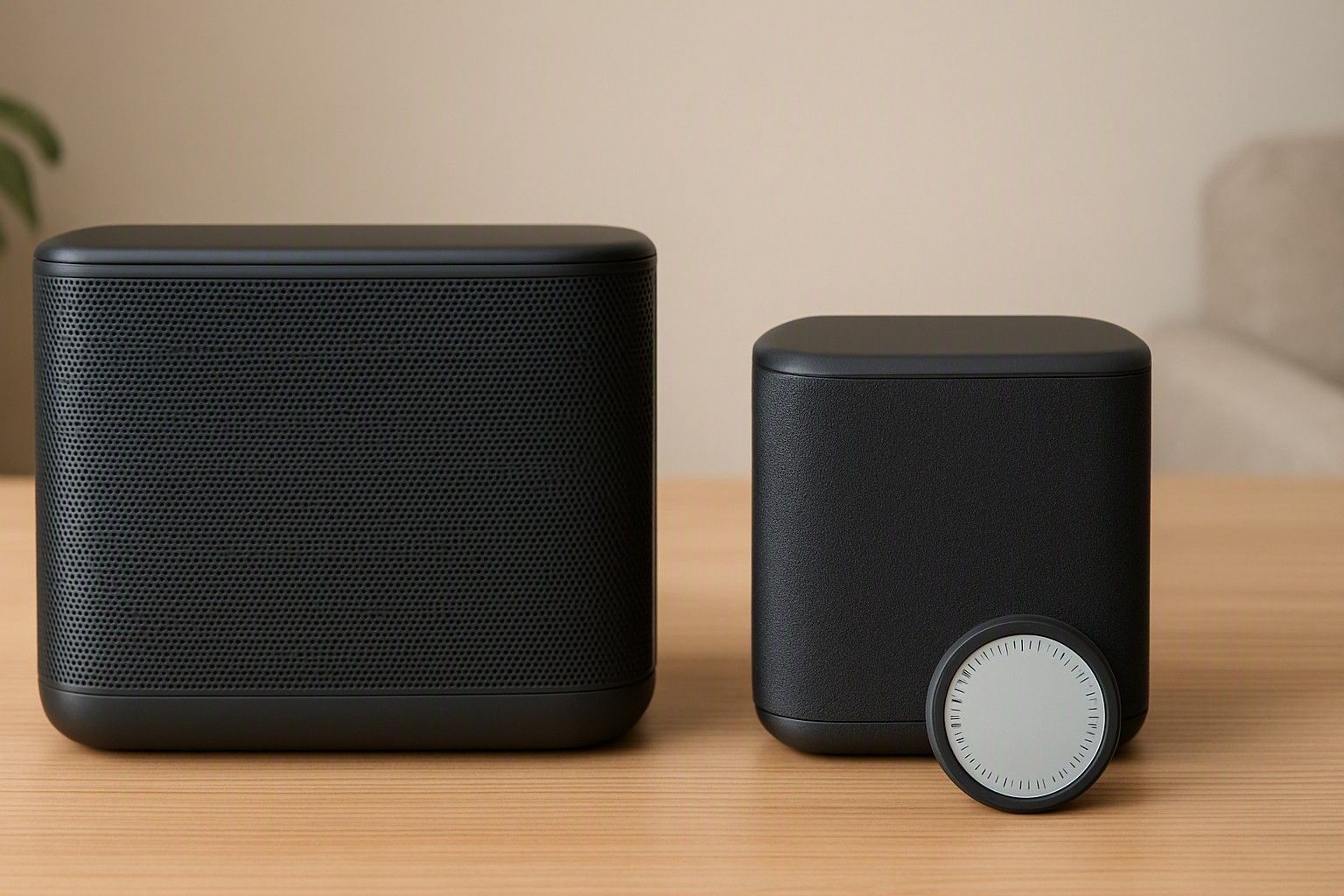
If you are trying to work out how many watts a Bluetooth speaker needs for your room, and whether the big PMPO number on the listing means anything, this article is for you. The short answer: ignore PMPO, look for RMS, and match it to your space and how you listen. The sections below turn that into specific numbers for a bedroom, a hall and a rooftop.
RMS vs PMPO: Why Box Wattage Numbers Mislead
RMS (root mean square) wattage is the power a speaker can deliver continuously without distorting or overheating. It is the figure that tells you how loud the speaker will be during an actual song. PMPO (peak music power output) is a momentary peak figure. It has no common testing standard, so a manufacturer can measure it however it likes and print a large number on the box.
This is why Indian listings often show a speaker as several hundred or even thousands of watts PMPO when the same speaker delivers only a handful of watts RMS. The PMPO figure is typically many times the RMS figure, so it tells you almost nothing about loudness. Two speakers with very different PMPO numbers can sound the same, and a speaker with a modest PMPO can outperform one with a huge claim.
So the first step is to find the RMS rating in the specifications. If a listing shows only PMPO and hides RMS, treat that as a warning in itself. Mismatched power claims are one of several other signs a listing is overstating its specs. From here on, every watt figure in this article means RMS.
Watts You Need for a Bedroom, Hall or Rooftop
Treat these as practical starting points, not hard rules, because wall materials, furnishings and how far you sit from the speaker all matter.
- Desk, bedroom or small room (up to roughly 120 sq ft): around 5–15 W RMS is enough for comfortable listening, including music that feels full at a moderate volume.
- Living room or hall (roughly 150–300 sq ft): aim for about 20–40 W RMS. Hard floors and high ceilings, common in Indian homes, bounce sound around and make a small speaker sound thin.
- Rooftop, balcony, terrace or garden: open air has no walls to reinforce sound, so you need more, typically 40 W RMS and above, if you want to be heard across a gathering.
A useful fact to keep in mind: doubling the wattage raises volume only by about 3 dB, a change most people barely notice. Sounding twice as loud takes roughly ten times the power. That is why jumping from a 10 W to a 20 W speaker feels modest, while moving from 10 W to 40 W feels like a different class.
If you mostly listen alone at normal volume, buying a high-wattage speaker adds cost and weight without a benefit you will hear. Size for the loudest regular use, not the occasional party.
Driver Size, Passive Radiators and Bass
Wattage tells you how much power goes in. The drivers decide how that power becomes sound. The driver is the cone that moves air, and a larger one generally moves more air at low frequencies, which is what you feel as bass. Many portable speakers use small full-range drivers, which can sound clear in the mids and vocals but run out of depth quickly.
A passive radiator is an unpowered diaphragm that vibrates in sympathy with the main driver inside the enclosure. It extends bass without needing a bigger driver or a bulky port, so compact speakers with passive radiators usually sound fuller than similar-sized ones without. Check the specifications or product images for them. Some listings mention only the number of drivers, which is not enough on its own.
A dedicated woofer or subwoofer-style driver goes further and suits larger speakers meant for halls and open spaces. Be careful with "extra bass" buttons and labels. They often boost low frequencies electronically, which can sound boomy and push the speaker into distortion sooner. For a bedroom, a well-built compact speaker with a passive radiator will usually satisfy you more than a higher-wattage speaker with weak drivers.
Stereo, Mono and 360-Degree Sound
A mono speaker plays a single combined channel from one direction. In a small room or at a desk, that is perfectly fine, and most budget and compact models work this way. The trade-off is that the sound feels flat and fixed, with no sense of left and right.
A stereo speaker has at least two drivers positioned to produce separate left and right channels. On a small portable body the speakers sit close together, so the stereo effect is limited, but music still feels wider and more detailed than from a single driver. Some speakers can be paired with a second identical unit, which creates real stereo separation across a room.
360-degree speakers spread sound in every direction, usually with drivers facing outward or upward. They suit the middle of a room, a dining table or a terrace gathering where listeners sit all around the speaker. Against a wall or on a shelf, half of that output is wasted.
For wattage, this matters because the same RMS figure feels different depending on how it is distributed. A 360-degree speaker spreads power over a wider area, so it can seem less loud at one spot than a forward-facing speaker of equal power. Choose by where the speaker will sit and where people will listen.
Loudness vs Distortion at Full Volume
A speaker that reaches maximum volume is not necessarily one that sounds good there. Distortion is the harsh, crackling or fuzzy quality you hear when the amplifier or driver is pushed beyond what it handles cleanly. Inflated-spec speakers often show this problem. They can get loud, but vocals turn rough and bass starts to rattle the enclosure.
A practical test is to play a familiar song with strong bass and clear vocals, and raise the volume in steps. Note the point where the sound stops improving and starts to get messy. A good speaker stays clean until close to its maximum. A poor one breaks down at around 70 percent. If you are buying online, look for reviews that mention volume behaviour, and keep the return window in mind in case the speaker disappoints at higher levels.
This is also an argument for buying a little more power than you need. A speaker rated for more RMS than your room demands will play at your usual volume with plenty of headroom, so it stays clean. A speaker that is always near its limit will sound strained even in a small space. Aim for comfortable headroom, not the highest number you can find.
When Higher Wattage Means a Party Speaker
Once RMS output climbs well above the figures for a hall, speakers change in character. They get larger and heavier, often with multiple woofers, lighting effects, microphone and guitar inputs, and sometimes wheels and a handle. Their main purpose shifts from personal listening to filling a large space with sound, such as a terrace party, a function or a gathering outdoors.
These speakers can deliver impressive volume and bass, but they come with trade-offs. They are harder to carry, they drain their batteries faster at high volume, and they are too much for a flat or a bedroom, where loud playback can bother neighbours. If your highest regular need is a hall or a rooftop with a few friends, a mid-range portable speaker is usually the better fit.
To check whether you have crossed into trolley-speaker territory, look at size, weight, input options and the intended use described in the listing. If you will rarely need that much sound, a party speaker is a poor use of money and space. If you regularly host events outdoors, it is the category that suits you.
Balancing Power Against Everything Else
Wattage is only one part of a good purchase, and it is easy to over-prioritise because it is the number printed largest. Higher RMS output usually means a bigger body, a larger battery or shorter playtime at high volume, and a higher price. Listings span from ₹699 to ₹29,999, with an average around ₹4,499, and power is one of the things that moves a speaker up that range.
As a rough guide, speakers in the ₹1,500 bracket generally suit desks and small rooms, so check that the RMS rating is stated honestly. In the ₹4,000 bracket you can expect better drivers and often stronger bass for a bedroom or a small hall. The ₹10,000 bracket is where larger output, better build and more features begin to appear for bigger spaces. These are guides to what this category typically costs, not fixed rules.
Once you have matched RMS to your room, the remaining decisions are playtime, connectivity, durability and warranty. For a view of how output fits alongside battery, inputs and price in the overall checklist, use the main buying guide. Decide on the power you actually need and then compare everything else among speakers that meet it.
You can now answer the question you came with. PMPO is not a reliable measure, so read the RMS rating. Roughly 5–15 W RMS suits a bedroom, 20–40 W a hall, and 40 W or more an open rooftop. Add drivers, passive radiators and clean volume headroom to that, and you can pick a speaker confidently today without paying for a number that only looks impressive on a listing.

Comments
Be the first to comment.