Bluetooth Speaker vs Soundbar: Which Should You Buy for TV and Music?
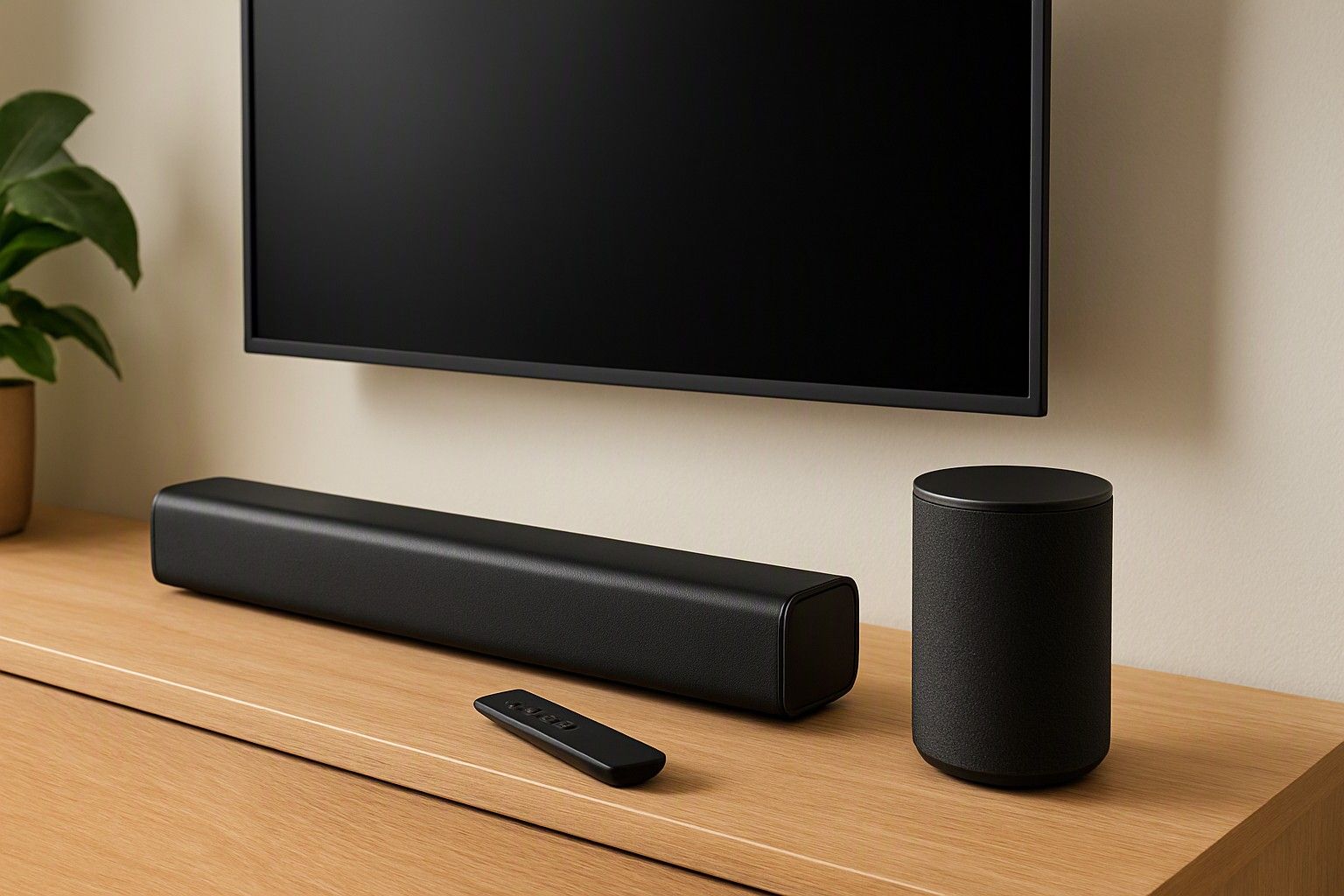
If most of what you play is TV (serials, news, cricket) and the music is secondary, a soundbar is usually the better fit. If music, portability or a tight budget matters more, a Bluetooth speaker can handle both jobs with a few compromises. This article goes through where each device wins and where it falls short, so you can decide on one device or two.
What Each Device Is Built For
A soundbar is designed around the television. It is a long, narrow box that sits under the screen and plugs into the TV through a cable. It runs on mains power and is usually controlled with the TV remote or its own. Many come with a separate subwoofer for bass. Its whole purpose is to make TV audio fuller and clearer than the thin speakers built into the set.
Any branded Bluetooth speaker is designed around your phone. It is compact and battery-powered, and it pairs wirelessly with whatever is in your pocket. Its tuning leans towards music: a strong low end, a pleasant overall sound and enough volume to fill a room. TV duty is something you can add on, but it is not the reason the product exists.
That difference explains most of what follows. A soundbar is a fixed home-theatre upgrade, while a speaker is a flexible music device that can also work with the TV. Your decision comes down to which job you do more often.
Dialogue Clarity for TV Serials, News and Cricket
Most of what Indian households watch is speech: serial dialogue, news anchors, studio debates and match commentary. This is the section where a soundbar has its clearest advantage.
A soundbar is wide and sits just below the screen, so voices seem to come from the picture. Many soundbars also have a dialogue or voice mode that lifts the speech range, and a night mode that keeps loud moments from jumping out. These modes help with a quiet late-night news bulletin or a serial with soft-spoken scenes.
A music-tuned Bluetooth speaker is a different story. Its bass emphasis can make male voices sound boomy, and its compact single driver array puts everything in one spot. Commentary stays understandable, but it can sound thick, and the crowd noise during a cricket match comes out flat instead of spread across the room. A speaker placed to one side of the TV also pulls voices away from the screen.
If you often catch yourself asking family members to repeat a line, or you keep raising the volume on dialogue-heavy shows, choose a soundbar.
Connecting to Your TV: Bluetooth Lag, Optical and HDMI ARC
The connection is where many speaker-for-TV plans run into trouble. Sending TV audio over Bluetooth adds a small delay. Often you can notice it as lips and voices drifting out of sync, which is irritating during news and dialogue-heavy shows and distracting during cricket, where the commentator's call lands after the bat meets the ball. Some TVs also lack Bluetooth output altogether, which rules out the wireless route. If you want to understand why Bluetooth audio can drift out of sync and which inputs fix it, the linked guide covers it in detail.
Soundbars avoid this problem by using wired inputs. Optical (a square digital port) and HDMI ARC (a port on the TV usually labelled ARC) both carry audio with no noticeable delay. HDMI ARC has the added benefit of letting the TV remote control the volume.
A Bluetooth speaker can avoid lag as well if it has a wired input, such as a 3.5 mm AUX port, and your TV has a matching headphone or audio output. Check the back and side of your TV for the ports before you buy either device. If the TV offers only Bluetooth and the speaker offers only Bluetooth, expect some lag.
Portability: Moving Between Rooms and Taking It Outdoors
Here the speaker wins easily. A battery-powered speaker can sit on the dining table in the afternoon, move to the bedroom at night, and go to the terrace or balcony for an evening with friends. Many models also carry a water-resistance rating, which is worth checking if you plan to use one near a pool, in the garden or on a trip. It also keeps playing music during a power cut, when the TV and soundbar have gone quiet.
A soundbar is not meant to move. It needs a power socket and a cable to the TV, and it sits in the same spot day after day. You could carry it to another room, but you would be unplugging cables and resetting connections each time, and without a battery it would not work outdoors at all.
So ask yourself how much of your listening happens away from the TV. If you want music in the kitchen, on the terrace or at a get-together, a soundbar cannot help there. If nearly all your listening happens on the sofa facing the television, portability gives you nothing.
Space on a TV Unit in Smaller Indian Flats
TV units in many Indian flats are narrow, and wall space around the set is limited. A soundbar roughly matches the TV's width and needs a clear shelf under the screen or a wall mount. Measure the gap between the TV's lower edge and the shelf before buying. A bar that is too tall can block the lower part of the picture or the TV's remote sensor. If the model comes with a separate subwoofer, that needs floor space and a power socket nearby, which is awkward in a compact living room.
A Bluetooth speaker takes up very little room. It can sit beside the TV, on a side table or on a shelf, and it disappears into a cupboard when not needed. That is a real advantage in a rented flat, a studio or a bedroom with a wall-mounted TV and no ledge.
The catch is placement. A speaker set to one side of the Smart TV produces lopsided sound, which weakens the dialogue benefit discussed earlier. If you do go with a speaker, keep it close to the screen and roughly centred.
Cost of One Device Versus Both
Bluetooth speakers in this category run from ₹699 to ₹29,999, with an average of ₹4,499. They fall into three practical bands: under ₹1,500, ₹4,000 and ₹10,000. For a closer look at what speakers in each price band deliver, the linked guide breaks down what you get at each level.
The cost question is really about whether you need two devices. If you want a proper TV upgrade and also music around the house, buying a soundbar and a speaker means paying for both. A single speaker in the middle of the range can cover music and occasional TV, though it will not match a soundbar for dialogue. A single soundbar covers TV well but leaves you without a portable music option.
Decide on how you actually listen rather than on the lowest outlay. If TV is your daily use, a soundbar's cost is justified by hours of clearer dialogue. If TV audio is secondary, spending the same money on one good speaker gives you more flexibility. The current price range is a steady basis for choosing now, since the figures above reflect what the category normally costs.
If a Speaker Wins for Your Home
A speaker is the right choice if music matters more than TV, if you watch TV in short sessions, if your living room cannot fit a soundbar, or if you want one device that moves around the house. It is also sensible if you already have a decent speaker and only need occasional TV sound for a late-night match.
For TV use, a few features matter more than they would for music alone:
- A wired input. A 3.5 mm AUX port, or a similar wired connection, removes Bluetooth lag if your TV has an audio output.
- Playing while charging. This lets you leave the speaker plugged in during long viewing sessions.
- Enough volume headroom. A weak speaker strains at higher volumes and makes dialogue worse.
- A balanced sound profile. Heavy bass makes voices muddy, so look for one that stays clear in the mid-range.
For a fuller walkthrough of picking a portable speaker that also handles occasional TV duty, the main buying guide covers the full feature checklist.
If TV is your main use and you can fit a bar under the screen, a soundbar is the clearer choice. If music, portability or limited space come first, a Bluetooth speaker with a wired input will do the job without much compromise. Match the device to the hours you spend on each and you can buy with confidence today.
Comments
Be the first to comment.