CCTV Buying Mistakes, Privacy Risks and a Pre-Purchase Checklist
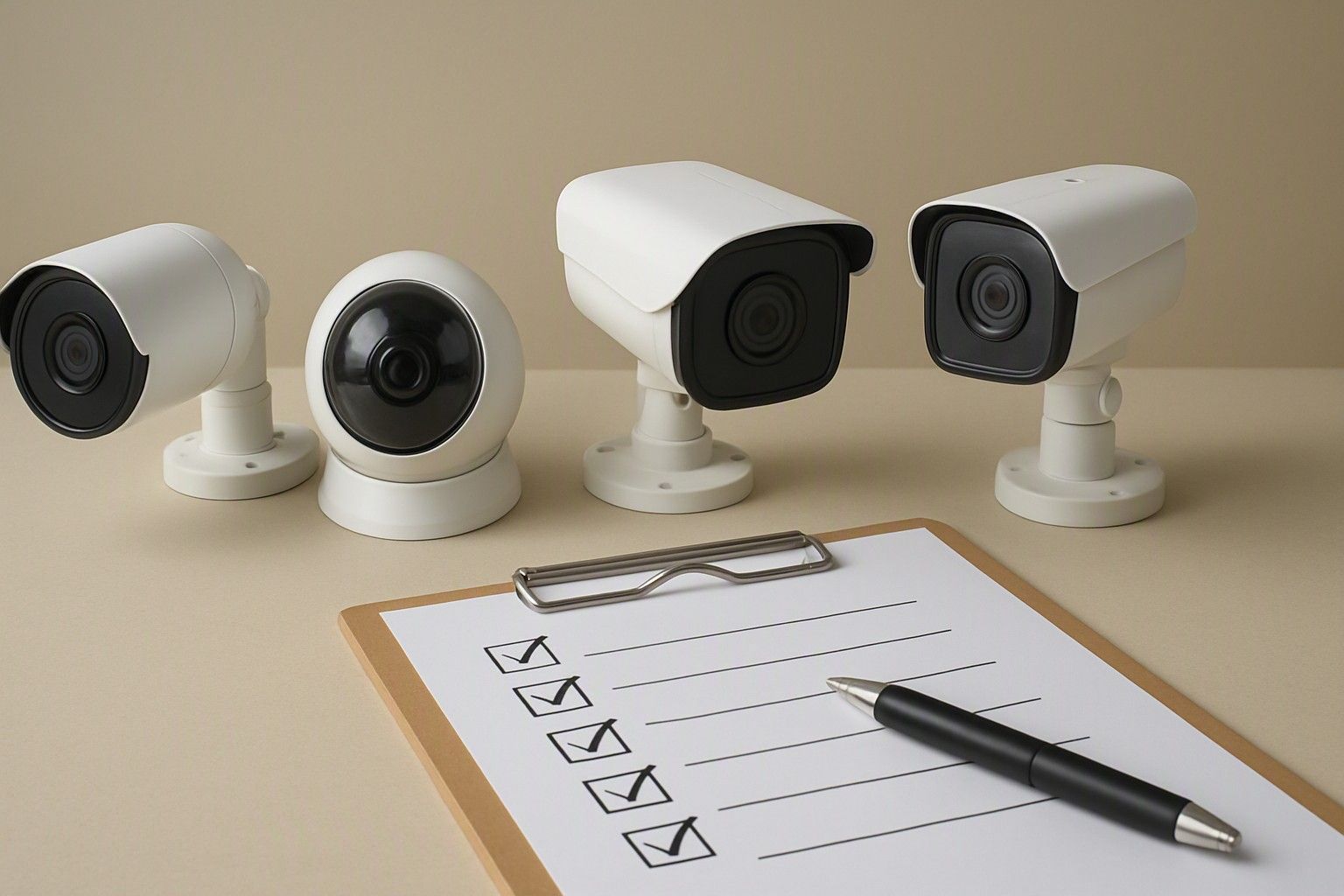
You've narrowed down features, budget and brand — but before you actually pay for a CCTV camera, it's worth pausing on what goes wrong after the sale: weak passwords, fake resolution claims, and warranty terms nobody reads. This article is for anyone at the final step, about to click buy, who wants a last check against the mistakes that turn a good purchase into a regret. If you've already compared specs and prices and just need the red flags and a final checklist, read on.
Common Mistakes First-Time CCTV Buyers Make
The most common mistake is buying on camera count instead of coverage. Someone decides they need "4 cameras" before ever mapping which corners of the house or shop actually need watching, and ends up with overlapping views on a gate and a blind spot at the back door. Fix this by walking your property first and deciding entry points and blind spots, then choosing camera count around that.
The second mistake is chasing the lowest price in the ₹1,200 range without checking what's missing at that tier — often weatherproofing, night vision range, or even basic app support. A camera priced near ₹800 can be perfectly fine for a covered indoor corridor, but the same price outdoors, exposed to Indian monsoon humidity and dust, is a false economy if it fails in eight months.
A third mistake is ignoring storage before buying. Buyers pick a camera, get it installed, and only then discover they need a separate SD card or NVR subscription, adding unplanned cost on top of the camera price itself. And a fourth: assuming Wi-Fi cameras will work reliably on a household router without checking upload speed, then blaming the camera for a lag that's actually a network issue. None of these mistakes are expensive to avoid — they just require deciding on placement, environment and storage before opening a shopping app, not after.
Camera Hacking, Passwords and Data Privacy Risks
A CCTV camera that streams to your phone is a small networked computer, and like any networked device, it can be accessed by someone other than you if left on default settings. The single biggest privacy risk in home CCTV isn't a sophisticated hack — it's a factory-default password that was never changed after setup. Search engines exist specifically to find unsecured camera feeds online, and Indian households are not exempt from being indexed on them.
Before you buy, check whether the camera forces a password change on first setup rather than letting you skip it — this single feature separates a reasonably secure device from a genuinely risky one. Also check where footage is stored: cameras that only offer cloud storage tied to a subscription mean your footage lives on a third-party server, governed by that company's data policy, which matters if the camera watches a bedroom, a shop till, or an entrance where visitors' faces are recorded regularly.
A few habits matter more than any single spec. Change the default password immediately, enable two-factor login if the app offers it, keep the camera's firmware updated rather than ignoring update prompts, and avoid enabling remote access features you don't actually need. If a camera is priced far below the ₹3,000 average with no clear password-security feature mentioned anywhere in its listing, treat that as a real gap, not a bargain — the money saved upfront isn't worth footage of your home being viewable by a stranger.
Fake Specs and Misleading Megapixel Claims to Watch For
Megapixel numbers on CCTV listings in India are inflated more often than most buyers expect. A camera advertised at a high megapixel count may still produce a blurry, low-detail image at night, because the sensor and processing behind that number matter more than the number itself. Similarly, "night vision up to 30 metres" claims are frequently measured in ideal lab conditions with zero ambient light interference — real driveways and streets rarely match that.
The way to protect yourself here isn't to memorise sensor specs, but to look for actual sample footage or real user review photos rather than the manufacturer's marketing images, and to be suspicious of round, high numbers with no supporting detail. A listing that says "1080p" with a sample night image showing genuine detail is more trustworthy than one claiming "4K" with no image proof at all.
This is exactly the kind of claim that's easy to fake and hard to verify from a listing alone, which is why it deserves its own detailed breakdown — for a step-by-step way to check what a camera's resolution and night-vision numbers actually mean in practice, how to verify real resolution and night-vision claims walks through exactly what to look for before you trust a spec sheet. Treat that check as mandatory before finalising any camera in the ₹3,500 or ₹8,000 range, since this is where inflated claims are used most often to justify a higher price.
Warranty, Brand Support and Genuine Product Red Flags
A CCTV camera is a long-term purchase, not a one-time gadget, and the warranty terms attached to it matter almost as much as the hardware itself. A common red flag is a listing that states a warranty period but gives no clear service centre or support contact for an Indian buyer — meaning that if the camera fails in month four, you're negotiating directly with a seller rather than a manufacturer with an actual support structure.
Check specifically whether the warranty covers the camera unit only or also the accessories — power adapter, mounting bracket, cabling — since these fail just as often and are usually the cheaper, less-advertised parts of the box. Also check whether support is offered through a phone number, an app-based ticketing system, or only email, because response time on a broken camera directly affects how many days your property goes unmonitored.
Genuine product concerns show up in patterns, not single reviews: repeated complaints about a camera disconnecting from the app after a few months, or many buyers mentioning the same fault, are worth taking seriously regardless of the price tier. Since warranty support is really a cost decision disguised as a paperwork detail, it's worth pausing here to check service and warranty terms against ownership costs — a camera near ₹800 with poor support can cost more over two years than one closer to ₹18,000 with reliable service.
Your Final Pre-Purchase Checklist
Before you complete the purchase, run through this list once. Confirm the camera's coverage matches the specific entry points and blind spots you identified on your property, not just a generic room count. Confirm you know where footage will be stored — local SD card, NVR, or cloud — and what that costs beyond the camera's own price, which anywhere between ₹800 and ₹18,000 across the market. Confirm the camera forces a password change on setup and offers firmware updates, since this is your main defence against unauthorised access. Confirm any resolution or night-vision claim is backed by real sample footage rather than a marketing number alone. Confirm the warranty includes accessories and has a real, reachable Indian support channel, not just a stated duration on the listing page.
Finally, check where the current price sits against the category's typical range — ₹800 to ₹18,000, averaging ₹3,000 — so you know whether what you're about to pay is reasonable for the tier of camera you've chosen, whether that's the ₹1,200 entry tier, the ₹3,500 mid tier, or the ₹8,000 tier built for more demanding coverage. If every point on this list checks out, there's no reason to hold off — you've already done the harder work. For anyone who wants to see all of this laid out as one sequential decision process rather than a final checklist, it helps to run through the complete decision framework one last time before placing the order.
The mistakes that hurt CCTV buyers aren't usually about picking the wrong camera on paper — they're about skipping the setup and verification steps that turn a working device into a secure one. Change the default password, confirm the specs against real footage rather than marketing numbers, and check that the warranty actually protects you before you need it. Do that, and the question you started with — what to avoid before buying — has a clear, practical answer, and you're ready to buy with confidence rather than hope.
Comments
Be the first to comment.