CCTV Camera Specs That Matter: Resolution, Night Vision and Storage
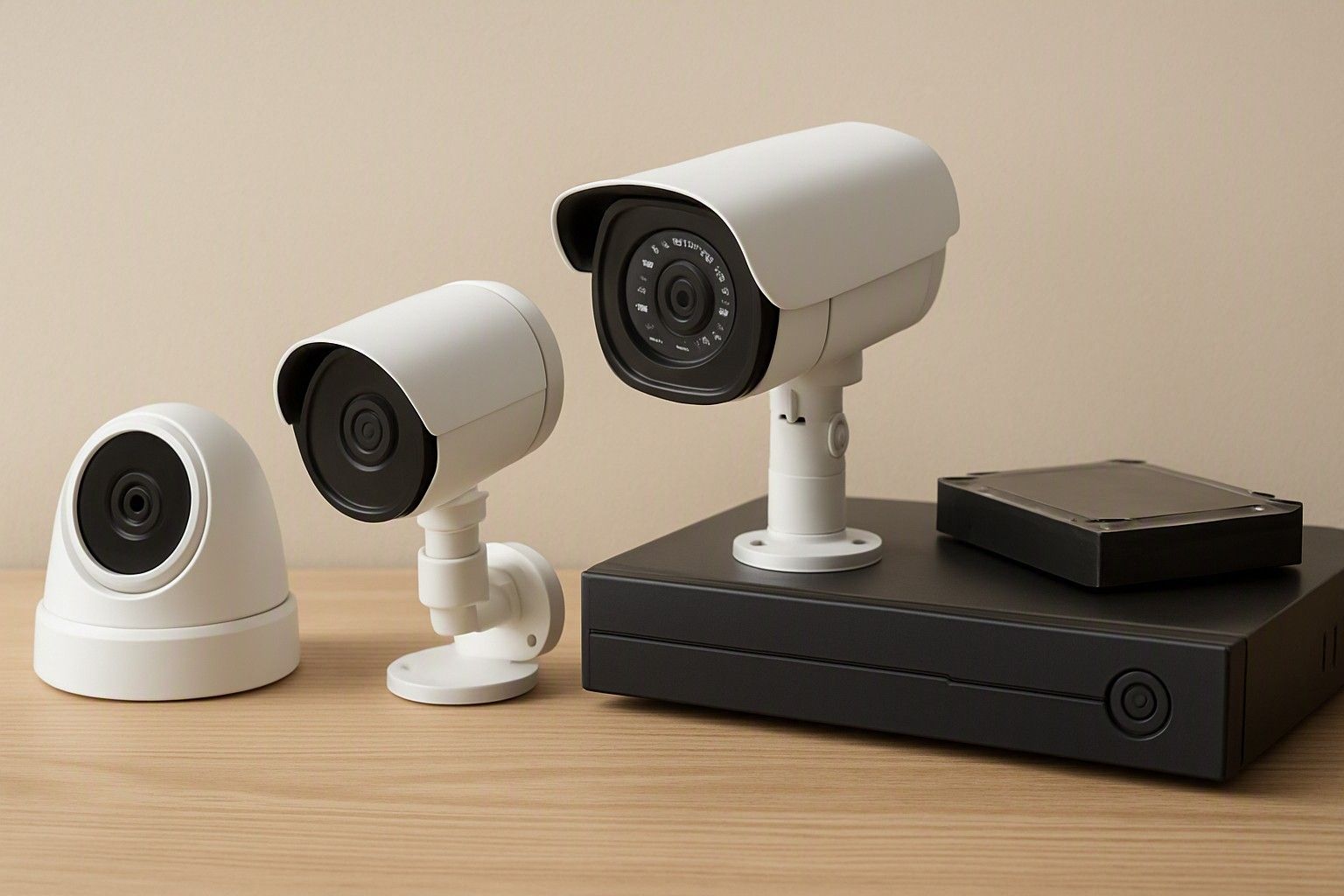
Every CCTV listing throws megapixel counts, "night vision range" and storage claims at you as if bigger always means better. It doesn't — and paying for specs you'll never use is as costly a mistake as buying too little. This article breaks down exactly how much resolution, night vision capability and storage you actually need, based on where and how the camera will be used.
Resolution: Do You Really Need 2MP, 3MP or 4K?
Resolution decides how much usable detail you get when you zoom into recorded footage — not how sharp the live view looks on a small phone screen, where most differences disappear anyway. A 2MP (1080p) camera is genuinely enough for most homes: it identifies faces at a gate, reads number plates at close range, and covers a room or porch clearly. This is the resolution you'll find dominating the ₹1,200 and ₹3,500 price bands, and for a large share of Indian households, it's the right stopping point rather than a compromise.
3MP and higher steps in when you need to identify detail from a distance — a car's number plate across a parking area, or a face at the far end of a long compound wall. The extra pixels give you room to crop and zoom digitally without the image turning into a blur of squares. This is where you start moving into the ₹8,000 band and beyond.
4K (8MP) cameras exist mainly for large open areas — commercial plots, warehouses, or long driveways — where one camera has to cover a wide area and still leave enough detail after zooming. For a typical flat, independent house or small shop, 4K is rarely necessary; you end up paying a premium (cameras at this level push toward the ₹18,000 end of the range) for detail you'll never actually use, since indoor distances are short and outdoor coverage is usually broken into multiple cameras anyway. Match resolution to distance, not marketing copy.
Night Vision, Low Light and Colour Night Modes
Nearly every camera on the market claims "night vision," but the quality varies enormously, and this is one of the most commonly misjudged specs. Standard infrared (IR) night vision switches to black-and-white footage in darkness, using built-in IR LEDs to illuminate the scene up to a stated range — typically enough for a gate, balcony or narrow gully, but IR range claims are measured in ideal lab conditions and shrink noticeably in real outdoor darkness with obstructions or fog.
Colour night vision (sometimes marketed as "full-colour night mode" or built around a more light-sensitive sensor) keeps footage in colour even in low light, which matters a great deal for identification — a colour image of clothing or a vehicle is far more useful to police or a housing society than a grainy black-and-white silhouette. This capability used to be reserved for premium models, but it's now appearing in cameras well within the ₹3,500 band, so it's worth checking for specifically rather than assuming you need to spend near ₹3,000 or above to get it.
A related but separate spec is low-light sensor performance — how usable the footage looks at dusk or under a single dim bulb, before full IR kicks in. Cameras with a poor sensor produce washed-out or noisy footage in this in-between lighting, which is exactly when a lot of real-world incidents happen. If your camera will cover an entrance that's dim but not fully dark for part of the evening, prioritise this over headline IR range.
Field of View and Motion Detection Features
Field of view (FOV) and motion detection decide whether the camera actually captures the moment that matters, rather than a technically sharp recording of an empty frame taken a second too late. A wider FOV means fewer blind spots but slightly less detail at the edges of the frame; a narrower FOV gives more detail on a specific point — a door or till counter — but misses anything just outside it. This is exactly why how camera type affects the angle you can cover matters as much as any resolution number: a fixed camera's FOV is baked in at installation, while a PTZ (pan-tilt-zoom) unit can be adjusted or programmed to sweep a wider area over time.
Motion detection quality varies just as much as night vision does. Basic PIR or pixel-change detection triggers recordings and alerts on any movement, including passing traffic, blowing branches or a neighbour's cat — which quickly floods you with irrelevant notifications and, if you're on cloud storage, eats into your data allowance. Smarter detection — human/vehicle shape recognition, or zone-based detection that ignores movement outside a defined area — cuts down false alerts considerably and is increasingly common even in mid-range cameras. If the camera will face a street, a zone or shape-based filter is worth prioritising over a marginally wider lens, since it directly affects how much of your footage is actually worth reviewing.
SD Card vs Cloud Storage and Recording Costs
Storage is where the sticker price stops telling the whole story. A local SD card (or a connected DVR/NVR with a hard disk) is a one-time cost bundled into or added to the camera price, with footage overwritten in a loop once the card fills up — usually anywhere from a few days to a couple of weeks of continuous recording, depending on card size and video quality settings. There's no recurring bill, but if the card or DVR is damaged, stolen, or simply not checked in time, that footage is gone for good.
Cloud storage shifts the model entirely: footage is uploaded and held on a provider's servers, accessible from anywhere, and safe even if the camera itself is tampered with or stolen. But it almost always comes with a subscription — monthly or annual — and that recurring cost can, over a couple of years, add up to more than the camera itself did. This is the detail that catches a lot of buyers off guard, since the camera's shelf price looks reasonable while the real cost sits in the fine print; it's worth understanding what cloud subscriptions and storage add to long-term cost before you commit to a cloud-only model.
Many cameras across the ₹1,200 to ₹8,000 range now support both — local storage as the default, with cloud as an optional paid add-on. That hybrid approach is generally the more practical choice for home use: local recording for everyday coverage, with cloud reserved for anything you genuinely can't risk losing.
Which Specs Are Worth Paying For
Not every spec bump is worth the money, and this is really the crux of the primary question: resolution, night vision and storage don't need to be maxed out together — they need to match how and where the camera is actually used. For a typical home entrance or living space, a solid 2MP camera with colour night vision and zone-based motion detection, paired with generous local SD storage, will outperform a 4K camera with basic IR and no smart detection, at a fraction of the cost. The jump to 3MP-plus and true 4K only pays off when distance or coverage area genuinely demands it — a large compound, a commercial unit, or a spot where number-plate-level detail matters.
Across the full ₹800 to ₹18,000 range, the pattern holds: the biggest jump in real-world usefulness happens in the lower-to-middle bands, where colour night vision and smart motion detection have become standard rather than premium. Spending well above ₹3,000 mostly buys you incremental resolution and coverage area, not a fundamentally better security outcome for a typical home. Once you're clear on which of these specs your space actually needs, it's worth stepping back and looking at these specs alongside every other buying factor — placement, camera type and installation all interact with the choices made here.
Resolution, night vision and storage aren't separate boxes to tick at the highest number available — they're three settings you tune to match your entrance, your compound and your budget. A camera bought with that match in mind, whether it sits near ₹800 or closer to ₹18,000, will serve you better than one bought on megapixel count alone.

Comments
Be the first to comment.