Choosing Weatherproof Outdoor CCTV Cameras for Indian Conditions
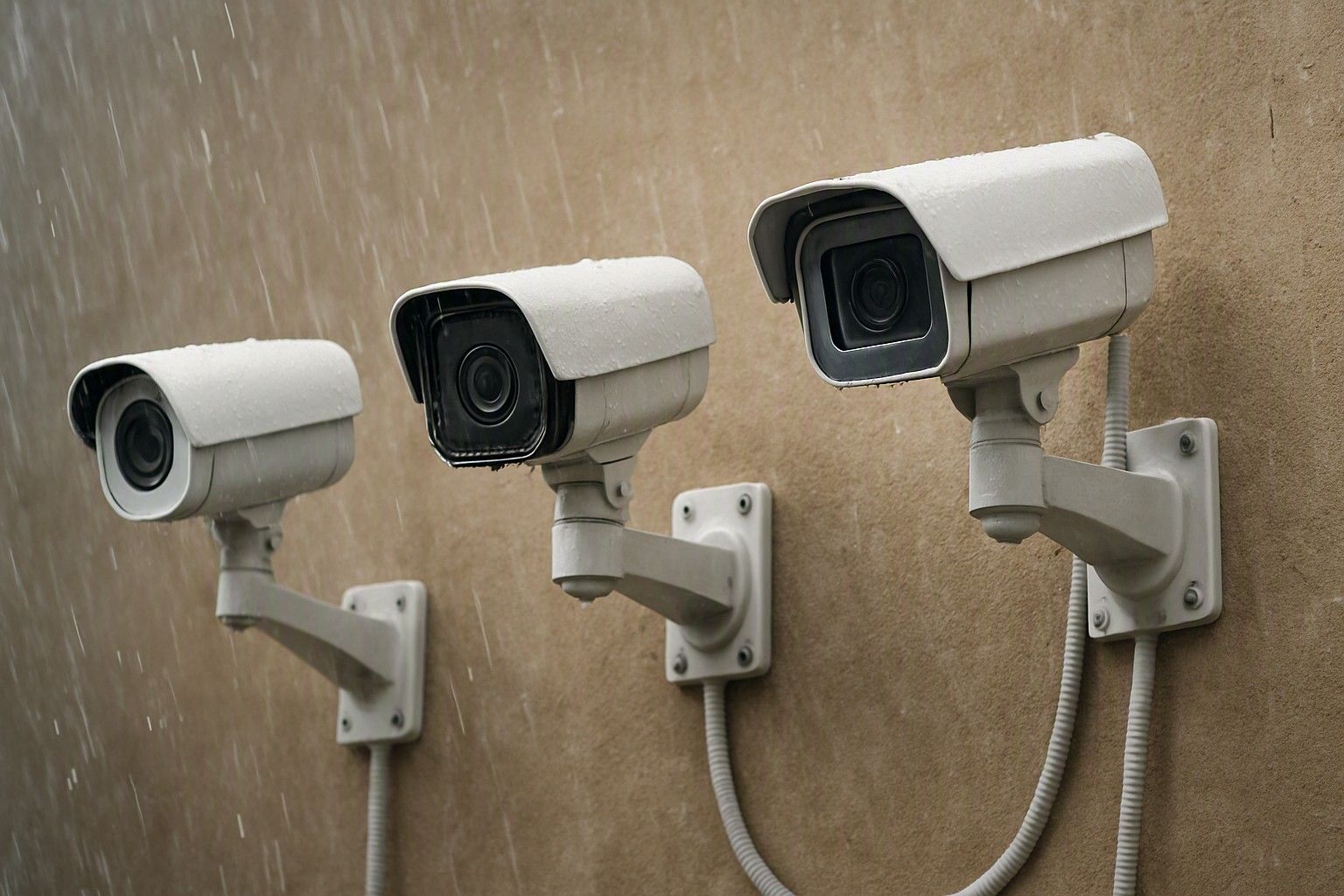
If you're mounting a camera outside an Indian home, the question isn't just whether it records well — it's whether it survives the next monsoon, the summer heat, and the dust that settles on everything between May and October. Not every camera sold as "outdoor" is built for this, and the difference shows up as fogged lenses, dead units, and false alerts within a year. This guide walks through what actually matters when you're buying a camera meant to live outside, not just be labelled for it.
IP Ratings and What Weatherproof Really Means
An IP rating is the only real proof that an outdoor camera can handle weather — everything else on the box is marketing. The rating is written as IP followed by two digits, like IP66 or IP67. The first digit covers protection against solid particles such as dust; the second covers water. For Indian outdoor use, you want at least a 6 in the first digit, meaning the unit is fully dust-tight, and a 5 or 6 in the second, meaning it can handle heavy rain and jets of water, not just light drizzle. A camera rated only IP54 or IP55 is technically weather-resistant but is really meant for a sheltered spot like under an awning, not a boundary wall exposed to driving monsoon rain.
Be careful with the word "weatherproof" on its own — sellers use it loosely, and it appears on cameras from ₹800 all the way up to ₹18,000, with no guarantee the rating matches the claim. Always check the actual IP number in the specification sheet rather than trusting the listing title. In the ₹1,200 range you'll often find IP65 or IP66 units that are genuinely fine for a covered porch or gate overhang, while cctv cameras in price budget of ₹3,500 and ₹8,000 bands more consistently carry IP66 or IP67 with better-sealed cable entries, which matters more once the camera sits fully exposed to open sky and pooling water.
Handling Monsoon Rain, Dust and Summer Heat
Monsoon is the harshest test an outdoor camera faces in India, and it's not just the rain itself — it's wind-driven water hitting the lens sideways, humidity creeping into housing seams, and standing water near the mount if drainage is poor. A camera with a proper IP66 or IP67 rating keeps water out, but the housing design matters too: look for a small overhanging visor or hood above the lens, which most dome and bullet-style outdoor cameras include, so rain doesn't streak directly across the glass and blur every clip during a downpour.
Dust is the quieter problem. Through the dry months, fine dust settles on the lens and housing vents, and in industrial or roadside areas it builds up fast enough to dull image quality within weeks if nobody wipes it down. A fully dust-tight housing (the "6" in the IP rating) stops dust from getting inside and affecting the electronics, but the lens surface still needs occasional manual cleaning regardless of rating — no camera cleans its own glass.
Summer heat adds a third stress: Indian rooftops and boundary walls can push surface temperatures well past what indoor-rated electronics tolerate. Outdoor cameras are built with a wider operating temperature range and better internal heat dissipation, but placing one under direct, unshaded afternoon sun for years still shortens its working life faster than one tucked under an eave. Where possible, mount away from the harshest west-facing sun even if the spec sheet claims a high temperature tolerance.
Gate, Boundary Wall and Parking Camera Placement
Where you mount an outdoor camera decides how well any given weatherproofing actually performs, because the same IP66 unit behaves differently bolted under a gate overhang versus sitting fully exposed on top of a boundary wall. Gates and main entrances usually have some structural overhang, so a camera there gets partial shelter from direct rain even before you factor in its rating — this is a forgiving spot for mid-range weatherproofing. Boundary walls and open parking areas offer no such shelter; a camera here takes the full force of monsoon wind and rain plus constant sun, so it needs both a strong IP rating and a housing shape that sheds water rather than collecting it.
This is exactly where body shape becomes a practical decision and not just an aesthetic one. A camera with a flatter profile and a built-in hood tends to shed rain and resist glare better in an exposed spot, while a rounder housing may suit a sheltered gate position just fine. Rather than guessing, it's worth understanding which body shapes work best for outdoor mounting before you finalise a spot, since the wrong shape in an exposed location can undercut even a good IP rating.
For parking areas specifically, also consider mounting height and angle — cameras placed too low get splashed by vehicle spray during rain, and those angled steeply upward toward the sky pick up more glare and rain streaks than ones angled slightly downward across the parking surface.
Power Backup and Connectivity for Outdoor Cameras
Outdoor cameras fail for reasons that have nothing to do with their IP rating far more often than people expect — a snapped cable, a waterlogged junction box, or a WiFi signal that can't reach through an external wall. Power is the bigger risk outdoors because cabling runs longer distances, often through conduit exposed to the elements, and any water ingress at a joint can trip the whole system during heavy rain. A wired camera with a properly sealed, weatherproofed power connection is generally more dependable outdoors than one relying purely on a battery or a loose extension cable strung along a wall.
Connectivity matters just as much. A WiFi camera mounted on an outer boundary wall is often one or two rooms away from the router, and thick exterior walls plus monsoon humidity can weaken signal strength enough to cause dropped recordings exactly when you need footage most. This is a bigger deal outdoors than indoors, which is why it's worth reading up on why WiFi and power reliability matter more outdoors before deciding between a wired and wireless setup for a gate, wall, or parking camera specifically.
Where mains power is unreliable — common during monsoon storms when outages spike — a camera with a battery backup or a separate small UPS keeps recording through a cut, which matters more for an outdoor unit covering an entrance than an indoor one covering a hallway.
Picking a Camera Built for Your Climate
There's no single "right" IP rating or price point for every Indian home — a flat with a covered balcony in a moderate climate has very different needs than a farmhouse gate in a high-rainfall coastal region. What matters is matching the rating and mounting position to your actual exposure: sheltered spots can work with lighter-rated cameras near the ₹1,200 end, while fully exposed walls and gates justify spending into the ₹3,500 or ₹8,000 range for better sealing and hood design. Across the market, prices span ₹800 to ₹18,000, with ₹3,000 as a reasonable midpoint — that range reflects genuine differences in build quality and weatherproofing, not just brand markup, so it's worth spending based on where the camera will actually sit rather than defaulting to the cheapest option.
Once you've settled on the IP rating, body shape, and power setup that fit your specific mounting spot, it helps to step back and fit outdoor durability into your overall camera shortlist alongside resolution, storage, and other factors that matter for the system as a whole. Weatherproofing is one filter among several, and getting it right outdoors means the rest of your setup — indoors and out — actually holds up through a full year of Indian weather.
Getting an outdoor camera to survive Indian conditions comes down to matching the IP rating and mounting position to actual weather exposure, not chasing the highest number on a spec sheet. A well-sealed, properly placed camera with reliable power will outlast a pricier one mounted carelessly in direct monsoon rain or unshaded summer sun — so once you've checked the rating, the mounting spot, and the power setup against what your gate, wall, or parking area actually faces, you're set to buy with confidence rather than guesswork.
Comments
Be the first to comment.