CCTV Camera Price Guide and Budget Tiers in India
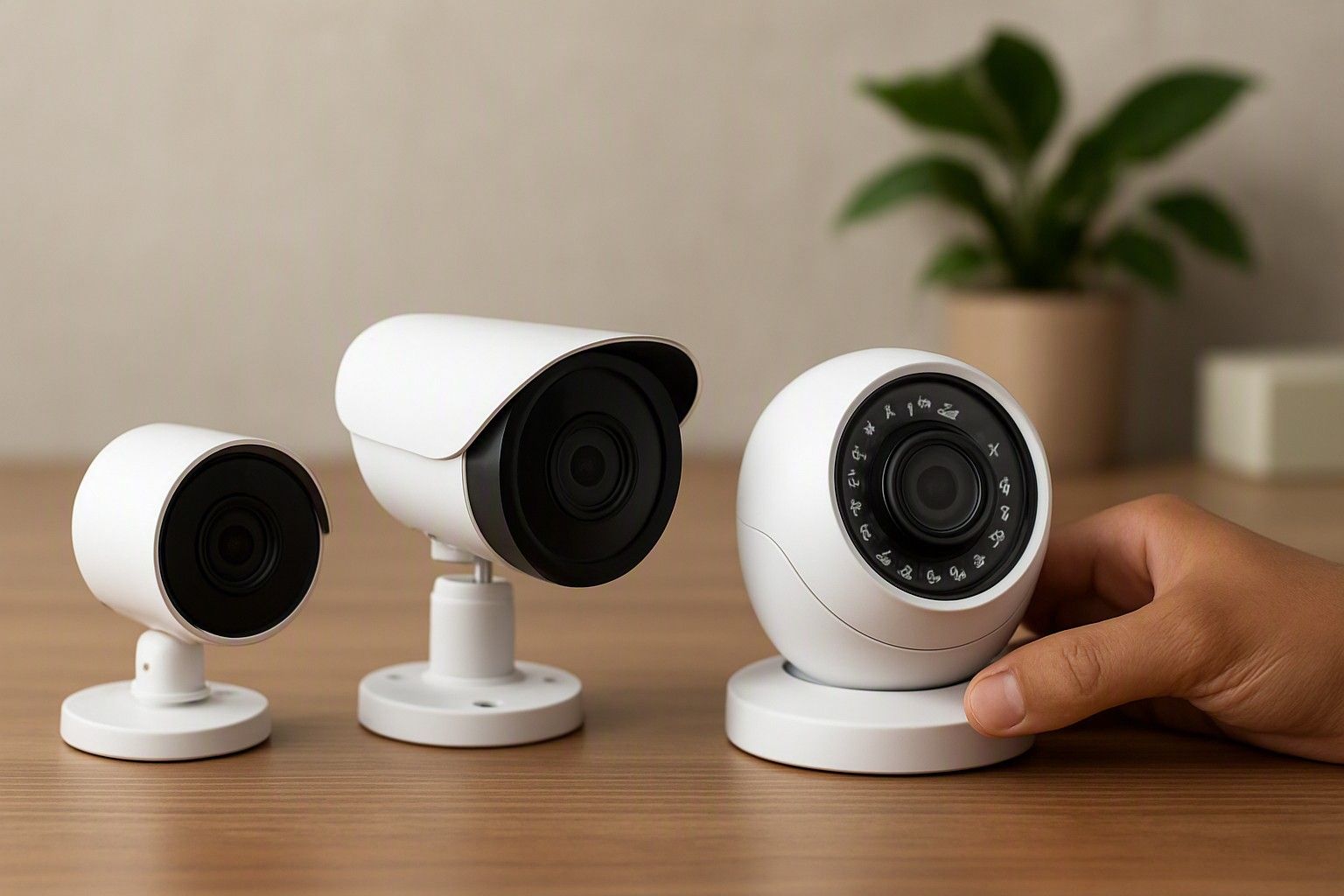
If you're staring at a CCTV camera listing and wondering whether the number on screen is a fair price or a markup, you're in the right place. CCTV camera prices in India span a wide range depending on resolution, night vision, connectivity and build, and the same-looking camera can be priced very differently across sellers. This guide breaks down what each budget band actually gets you and how to check if today's price is one you should act on.
What You Get Across ₹800 to ₹18,000
CCTV cameras sold in India run from ₹800 at the bottom to ₹18,000 at the top, and that spread isn't random — it maps almost directly to what the camera can technically do. At the lower end, you're typically looking at wired, indoor-only cameras with basic resolution, limited or no night vision, and no app connectivity — fine for someone who just wants a visible deterrent and local recording. As CCTV security camera price climbs, you start picking up higher resolution sensors, better low-light performance, weatherproofing for outdoor use, two-way audio, motion-triggered alerts, and cloud or app-based remote viewing. Near the top of the range, you're paying for combinations of features rather than any single one — a camera that's simultaneously high-resolution, outdoor-rated, has strong night vision, and supports smart integrations tends to sit closest to ₹18,000.
The practical takeaway is that price in this category is a reasonably honest signal of capability, not just branding. A camera priced well below ₹800-adjacent territory almost certainly cuts a corner you'll notice within months — usually resolution or durability. One priced near the top is rarely overpriced for what it includes; you're paying for genuine hardware and software differences. Knowing this range upfront means you can look at any single listing and immediately place it — is this a basic unit, a mid-range one, or a feature-loaded one — before you even check the spec sheet in detail.
Budget Tiers: ₹1,200, ₹3,500 and ₹8,000
Splitting the full price range into three tiers makes the decision much more manageable. The ₹1,200 tier is the entry band — cameras here are almost always wired, single-purpose units meant for indoor monitoring with basic day-time footage quality. Night vision, if present, is weak, and you won't find app-based remote access as standard. This tier suits a small shop counter or a single room where you mainly want a record of who came and went, not crisp identification in the dark.
Move into the ₹3,500 mid-budget range CCTV and the picture changes meaningfully. This is where most Indian households and small businesses end up buying, because it's the first band where decent resolution, usable night vision, and basic smart features (motion alerts, app viewing) become common rather than rare. It's the sweet spot for a home with two or three cameras covering entry points and a compound gate.
The ₹8,000 tier is where outdoor-rated, weatherproof cameras with stronger night vision, higher resolution, and more reliable cloud or hybrid storage options live. If you're covering an open compound, a shop exterior, or need footage that holds up as usable evidence, this tier is where the hardware actually supports that ask. For a closer look at exactly which specs separate these bands, how spec differences justify each price band is worth reading before you commit to a tier.
Is the Average Price of ₹3,000 Right for You?
An average of ₹3,000 sits inside the ₹3,500 band, which tells you something useful: most buyers in India are landing on cameras with real night vision and basic smart features, not the cheapest possible unit and not a premium outdoor rig. That average is a starting reference point, not a target you should aim for regardless of your situation.
Whether ₹3,000 is right for you depends on what you're actually protecting. If you need one camera for a single indoor space with good lighting, spending at the average is likely more than you need — a ₹1,200 camera would do the job and the extra spend buys features you won't use. If you're covering an outdoor gate, a shop front, or a spot with poor lighting after dark, ₹3,000 may actually undershoot what you need, and stretching into ₹8,000 gets you weatherproofing and night vision that won't disappoint you six months in.
The honest way to use the average is as a sanity check, not a rule. If a listing near ₹3,000 promises outdoor-grade weatherproofing and strong night vision together, treat that as an outlier worth scrutinising rather than a bargain worth celebrating — at that price point, one of those claims is usually softer than advertised. Match the spend to the specific location and risk you're covering, and the average becomes a useful anchor rather than a default choice.
Reading Price History to Judge Today's Deal
Once you know the overall range runs from ₹800 to ₹18,000, the next question is whether a specific listing's current price is actually reasonable or just looks that way next to an inflated original price. This is where looking at a camera's price history over time is far more useful than trusting a single "% off" badge. A camera that has genuinely held a stable price across months, sitting consistently within its expected tier, is a more trustworthy buy than one that shows a sharp temporary dip from an unusually high listed price.
The way to read this practically: check where the current price falls relative to the ₹800–₹18,000 range and the specific tier the camera's specs suggest it belongs to. If a camera with ₹3,500-level features is priced within that band consistently, that's a fair, buyable price regardless of whether a sale banner is attached. If it's priced well below what its stated specs would normally command, that's worth a second look at the actual spec sheet rather than treating it as a lucky find.
This approach also means you don't need to wait around hoping for a lower number to appear. A price that sits within its historically normal range for that tier is a legitimate price to act on today — the goal of checking history is to confirm fairness, not to chase a future discount that may or may not arrive.
Total Cost Beyond the Camera Sticker Price
The number on the camera's listing is rarely the full amount you'll spend to get a working setup. Wiring, mounting, and professional installation add to the bill, especially for outdoor cameras or multi-camera setups where cable runs are longer and mounting is more involved. If you're going the DIY route with a single indoor Wi-Fi camera, this cost stays minimal, but most households end up paying for at least basic installation help.
Storage is the other line item buyers underestimate. A camera that records locally needs an SD card or DVR/NVR storage sized to how many days of footage you want retained, and higher resolution cameras eat through storage faster. Cameras that rely on cloud storage instead often carry a subscription cost that isn't reflected anywhere in the camera's own price tag, and skipping this step means discovering the recurring cost only after the camera's already mounted on your wall.
Before you finalise a budget based purely on the camera price, it's worth working through these add-ons properly — you can add installation and storage before finalising your budget to get a realistic total rather than being surprised later. A camera at ₹1,200 that needs professional wiring and a recurring cloud plan can end up costing more over its first year than a slightly pricier ₹3,500 camera that's simpler to install and stores footage locally.
Setting a Sensible Budget for Your Setup
Bringing this together, the number you should budget for depends less on picking a single "right" price and more on matching a tier to your actual coverage need. A single indoor camera for a small space rarely needs to go past ₹1,200. A typical home covering an entrance, a gate, and maybe one indoor room usually lands comfortably in ₹3,500, which is also where the ₹3,000 average sits — not a coincidence, since it's the tier that covers the most common Indian household use case. Outdoor-heavy setups, shops, or anyone who genuinely needs footage to hold up as evidence should plan around ₹8,000 and budget installation costs alongside it.
The price itself, once you've placed it correctly within ₹800 to ₹18,000 and checked it against historical trends for that tier, stops being the hard part of this decision. What matters more is whether the tier you're buying into actually matches your property, your lighting conditions, and how many cameras you need working together. Price is one input among several — resolution, night vision, number of cameras, and installation all interact with each other, and it's worth stepping back to weigh your budget against every other buying decision before you finalise anything.
You now have a way to answer both halves of the question you started with: what a fair CCTV camera price looks like in India, and how to tell if a specific listing's price is one worth acting on today. Match the tier to your actual coverage need, check the price against its historical range rather than a discount badge, and factor in installation and storage before you call the budget final.

Comments
Be the first to comment.