Real-Time, Flash or Professional CGM: How the Three Sensor Types Differ
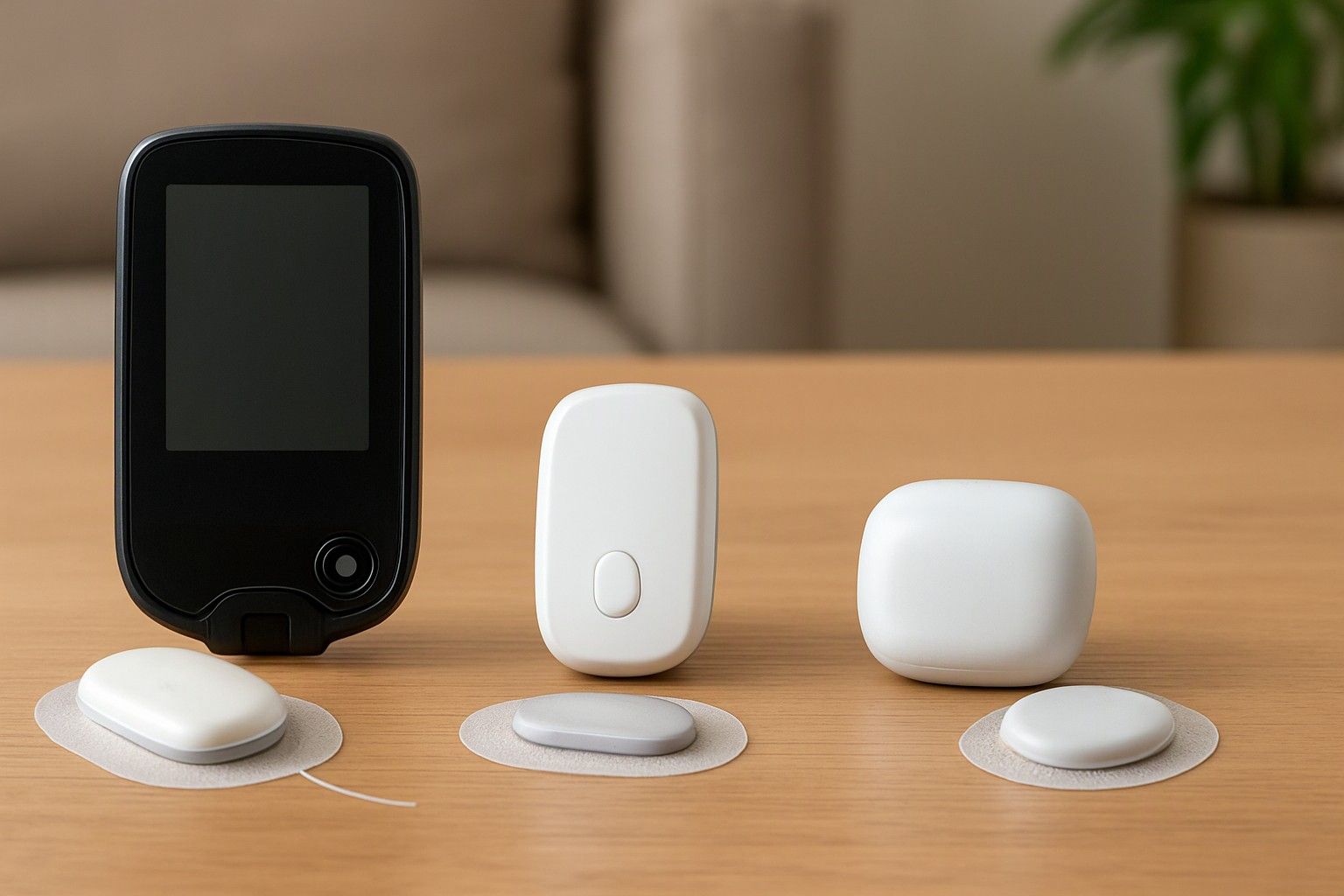
A CGM sold in India can mean three quite different things: a sensor that alarms your phone, a sensor you have to scan, or a sensor a clinic fits for a one-time report. This article is for anyone who has seen all three under the same label and needs to know which one matches how they actually want to use glucose data. By the end you should know which type to shortlist, and which to rule out.
Real-Time CGMs: Readings Pushed to Your Phone With High and Low Alarms
A real-time CGM sends glucose readings to your phone or a dedicated receiver automatically, every few minutes, without you doing anything. The sensor sits on your arm or abdomen, a small transmitter handles the wireless link, and the app draws a continuous curve with a trend arrow showing whether you are rising or falling.
The defining feature is alarms. You can set a high threshold and a low threshold, and the phone alerts you when you cross them. Many systems also warn before a predicted low, and some can alert a family member through a sharing feature. That matters most at night, when a low can happen while you are asleep and a scan-based sensor would simply sit unread.
The trade-offs are practical. Your phone must stay within Bluetooth range, the app needs permissions to run in the background, and alerts depend on battery and phone settings that some Indian budget handsets restrict aggressively. Real-time systems also tend to cost more to run than scan-only ones, because the transmitter or its electronics add to the cost of each wear period. If missing a low is the risk you are buying protection against, this is the type that addresses it directly.
Flash CGMs: Scanning the Sensor to Pull a Reading
A flash CGM measures glucose continuously but only shows you the value when you bring a reader or phone close to the sensor and scan it. Each scan gives the current reading, a trend arrow and a graph of the recent past, which the sensor has been storing in the background. Nothing is pushed to you.
This design keeps the hardware simple and usually cheaper to run. For many people with stable routines, checking a few times a day before meals, after meals and at bedtime is enough, and it replaces repeated finger-pricks with a quick scan.
The limits are important. The sensor holds only a limited window of data, so if you go too long without scanning you lose the gap in your graph; check the stated window for any sensor you consider. Most flash systems do not alarm for highs and lows unless a specific model adds that feature, so a low overnight can go unnoticed. If you plan to scan with a phone, confirm which phones can scan a flash sensor over NFC, because not every handset has a reliable NFC reader in the right position.
Flash suits someone who wants glucose visibility on demand and is comfortable being the one who initiates every reading.
Professional CGMs: Doctor-Applied, Blinded Data for a One-Time Report
A professional CGM is applied by a doctor, diabetes educator or clinic, and it is worn for a fixed period, commonly one to two weeks. It is usually blinded: you cannot see your own readings while wearing it. The device records quietly, you return it, and the clinic downloads the data into a report.
The point is diagnostic. Your doctor sees patterns that occasional lab tests miss, such as overnight lows, long post-meal highs, early-morning rises and how your glucose behaves across a normal week of your own food and routine. The report then guides medicine adjustments, diet changes or further tests.
Because the data is hidden, a professional sensor does not help you manage day-to-day glucose, and it has no alarms for you. It is also not something you buy to keep. Its cost is typically part of a clinic service or test package rather than a product you shop for.
This is where buyers go wrong. If you search online for a CGM to monitor yourself and end up with a clinic-only type, you will not get what you expected. If your doctor has asked for a short, supervised glucose study, a professional sensor is exactly the right tool, and you should ask the clinic what the fee includes: sensor, fitting, report and consultation.
Wellness-Branded CGMs and How They Relate to Medical Sensors
Some sensors are marketed less as medical devices and more as tools for understanding food and lifestyle. They promise to show how a meal, a walk or a poor night's sleep moves your glucose. Underneath, many use the same kind of sensing technology as medical CGMs, but the app experience is built around meal logging, spike scores and habit feedback rather than treatment decisions.
The difference to watch is intended use. A medical CGM is positioned for people managing diabetes and may be used in treatment conversations with a doctor. A wellness-branded product may state that it is not intended to diagnose or treat any condition, and its alerts and accuracy claims may be framed accordingly. Read the product's own intended-use statement rather than relying on marketing copy.
In practice, these sensors usually behave like either flash or real-time types, so you should still ask the same first questions: does it alarm, or do I scan, and how long does one sensor last? If you are exploring wellness sensors marketed for diet and spike tracking, treat them as a way to learn your patterns, not as a substitute for a diagnosis or for your doctor's advice on medication.
Matching Sensor Type to Type 1, Type 2 and Prediabetes Needs
Type 1 diabetes. Glucose can drop or rise quickly, and insulin timing matters. A real-time CGM with high and low alarms is usually the safer fit, since it watches you while you sleep or are busy. Flash can work if your doctor agrees and you scan often, but it leaves gaps that alarms would cover.
Type 2 diabetes. The right answer depends on treatment. If you take insulin or medicines that can cause lows, alarms are worth paying for, so lean real-time. If you manage with diet and oral medicines that rarely cause lows, a flash sensor often gives enough visibility at lower running cost. A professional CGM is a sensible first step if your doctor wants a snapshot before changing treatment.
Prediabetes. You rarely need alarms. A professional sensor can give a clear, supervised picture over a week or two. If you want to keep learning from food choices afterwards, a flash or wellness-oriented sensor is the usual option, ideally with your doctor aware of what you are tracking.
In every case, your doctor's advice on your treatment should outrank any feature list. Use these as starting points for that conversation, not substitutes for it.
Narrowing the Shortlist Once You Know Your Sensor Type
Once you have picked between alarm, scan and clinic sensors, the rest is narrowing within that type. Compare how many days one sensor lasts, what a full month of wear costs rather than the price of one pack, whether your phone is supported, and how the app handles data export for your doctor.
On cost, the category in India spans from ₹2,000 to ₹18,000, with an average of ₹4,500. Listings often fall into three bands: ₹3,000, ₹5,000 and ₹10,000. Treat these as a guide to what a sensor typically costs to support, and check what each price covers: a single sensor, a multi-pack, or a sensor plus transmitter. A price that looks low can cover fewer wear days.
Set your sensor type first, then use price to choose within it, never the other way round. A cheaper flash sensor will not give you the overnight alarms you wanted from a real-time one. For the remaining checks after picking between alarm, scan and clinic sensors, the buying guide covers accuracy, compatibility, wear time and support in one place, so you can decide with confidence today.
The three types answer three different needs: real-time sensors watch for you and alarm, flash sensors show a reading when you scan, and professional sensors build a doctor's report you never see live. Pick the one that matches the risk you are managing, check it with your doctor, and the rest of the shortlist becomes a matter of wear days, phone support and running cost.
Comments
Be the first to comment.