Dash Cam Buying Mistakes and Red Flags to Avoid
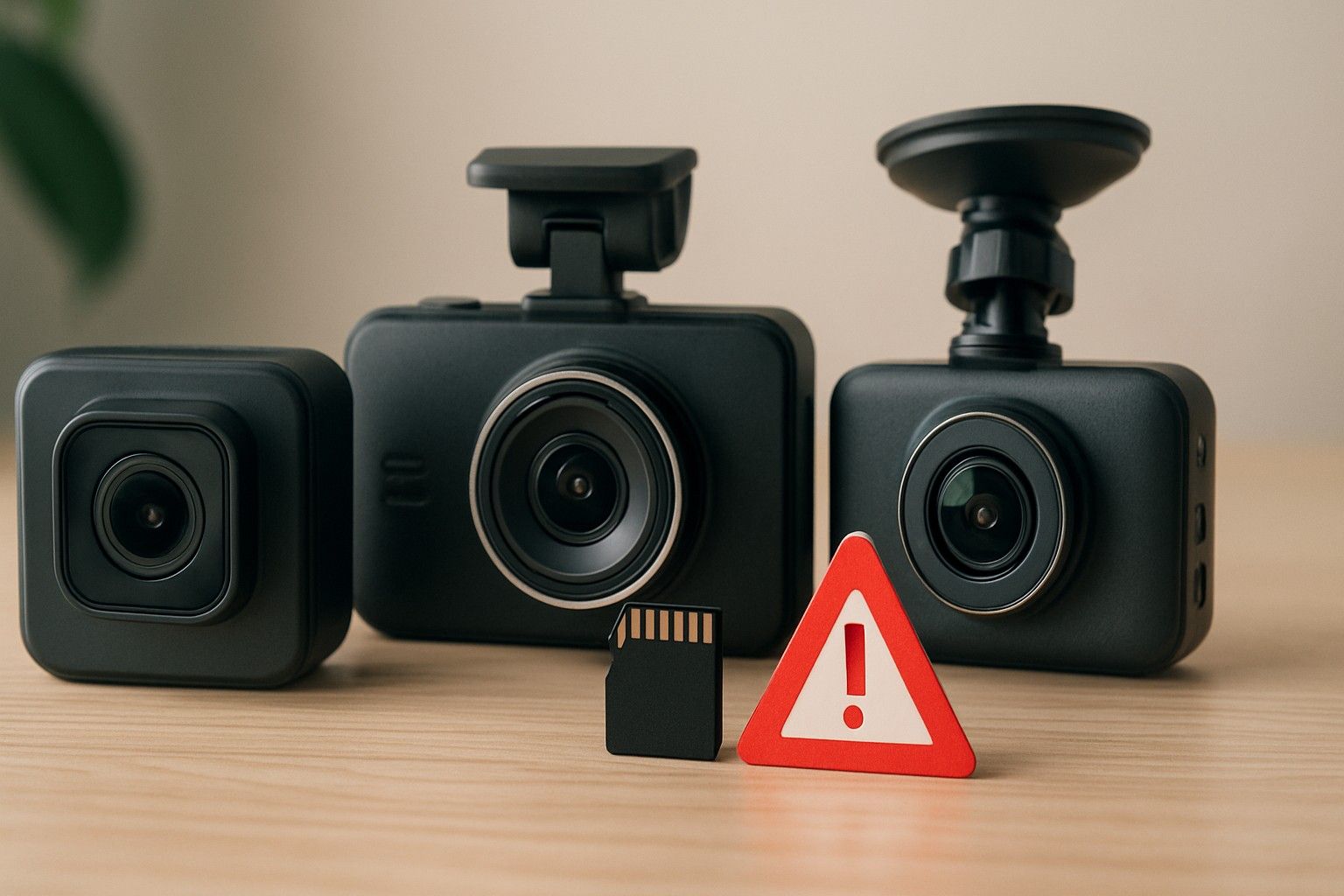
You've narrowed down a dash cam and you're close to paying — but a few sneaky mistakes trip up buyers right at this stage, from specs that sound better than they perform to units with no real service backup. This article walks through exactly what to double-check before your money leaves your hand, so the camera you buy actually holds up on Indian roads, in Indian heat, for longer than a few months.
Fake Resolution Claims and Interpolated Video
A listing that screams "4K" or "2K" next to a price near ₹999 should make you pause, not celebrate. Many budget dash cams use a lower-resolution sensor and then upscale or interpolate the footage in software to display a higher number on the box. The result looks fine in a thumbnail but falls apart the moment you try to zoom into a number plate during an actual incident — which is the entire point of owning a dash cam in the first place. Genuine higher-resolution sensors cost more to manufacture, and that cost shows up in the price, so an implausibly cheap unit claiming flagship-level resolution is almost always cutting corners somewhere in the pipeline.
The same trick applies to night vision claims. A camera advertised as having strong low-light performance but built around a small, older sensor will produce grainy, washed-out footage after dark, exactly when you're most likely to need clear evidence. Since resolution and night performance are the two specs most commonly inflated or misrepresented in this category, it's worth taking the time to learn how to read genuine resolution and night-vision specs before you trust any number on a box or listing page. Once you know what a real spec looks like, marketing language stops being confusing and starts being a filter you can use quickly.
Using the Wrong or Cheap SD Card
This mistake doesn't happen at the dash cam counter — it happens a week later, when the owner reaches for footage that was never actually saved. Dash cams write and overwrite video constantly in a loop, which is a much harder job than a phone or camera storing occasional photos. A generic SD card, especially one without a high endurance or continuous-recording rating, tends to develop write errors within a few months of this workload. Footage either fails to save, corrupts, or the camera quietly stops recording new loops while showing no obvious error on screen.
Buyers who skip this detail usually find out the hard way, right after an accident or a scrape, that the one clip they needed simply isn't there. A dash cam priced anywhere from ₹999 to ₹29,999 is only as reliable as the card inside it, so it's worth spending a little extra on a card explicitly rated for continuous or dash-cam-grade recording rather than reusing a spare card lying around the house. Check the manufacturer's recommended card speed and capacity too — an underpowered card can bottleneck even a well-built camera, causing dropped frames exactly when the footage matters most.
Ignoring Heat Rating and Buying a Battery-Based Cam
An Indian car's dashboard is a genuinely hostile environment for electronics for a good part of the year, and this is where a lot of buyers get caught out. A dash cam that isn't rated to handle sustained cabin heat can shut down, restart randomly, or in the worst cases develop swollen or damaged batteries after being parked in direct sun for a few hours. This isn't a rare edge case in Indian conditions — it's closer to a daily reality for anyone who parks outdoors.
This is precisely why battery-based dash cams are a red flag rather than a convenience feature for this market. Batteries degrade faster under heat and carry a small but real risk of swelling or failure over time, while capacitor-based units are built specifically to tolerate high-temperature environments without that risk. A camera in the ₹5,499 range with a proper heat rating and capacitor backup will consistently outlast a cheaper battery-based unit that looks similar on paper. It's genuinely why heat handling matters more than buyers expect when the same purchase decision would be far less risky in a milder climate — and it's a detail that rarely gets mentioned in a listing's headline features.
No Warranty or Service Support for Grey-Market Units
A dash cam priced noticeably below the ₹999–₹29,999 range you'd expect for its claimed features is often an import brought in without any authorized India service network behind it. These grey-market units can look identical to properly distributed ones in photos, and the initial purchase experience is usually smooth. The problem surfaces only when something goes wrong — a firmware issue, a port failure, a card slot that stops reading — and there's no local service center, no replacement parts, and no one who honors the warranty printed on the box.
Before paying, check specifically for an Indian warranty card or registration process, not just a generic manufacturer claim on the listing page. Search for whether the brand has any authorized service presence in India at all, and be wary of sellers who are vague about this when asked directly. A dash cam is a set-and-forget device you expect to work reliably for years, not something you want to troubleshoot alone if it fails in month eight. Paying a little more for a unit with genuine local support is rarely the wrong call, especially since the failure often shows up well after the return window on the marketplace has closed.
Overpaying for Features You Won't Use
Dash cam listings pile on feature names — GPS logging, cloud connectivity, voice control, parking mode variants, ADAS-style alerts — and it's easy to assume more features automatically means better value. In practice, most everyday drivers use two or three of these regularly at most, and paying a premium for the rest is money spent on capability that sits idle. With the category averaging around ₹4,999 and genuinely capable options available across the ₹1,499 and ₹5,499 tiers, it's worth being honest about which features you'll actually open the app for.
A driver who mostly wants proof in case of a dispute needs solid resolution, reliable loop recording, and a heat-tolerant build far more than GPS speed logging or voice commands. Someone who travels frequently and wants trip playback with location data has a real reason to pay more for GPS. The mistake isn't buying a feature-rich camera — it's buying one for features you're unlikely to touch after the first week, when that same budget could have gone toward a better sensor, sturdier mount, or the heat and card reliability covered earlier. Match the feature list to your actual driving pattern before comparing prices, not after.
A Final Pre-Purchase Checklist
Before you complete the purchase, run through this shortlist: confirm the resolution claim isn't interpolated, check that the recommended SD card is rated for continuous recording and buy one separately if needed, verify the unit has a genuine heat rating with capacitor rather than battery backup, look for an authorized Indian warranty and service presence, and make sure the feature set actually matches how you drive rather than how the listing is written. Each of these has already tripped up buyers who skipped it, and each is checkable in a few minutes before you pay.
If you want the fuller picture on how all these factors fit together — budget tiers, mounting choices, and what separates a genuinely reliable camera from one that just photographs well — it's worth taking the time to run through the complete buying guide before you pay. Treat that as the final cross-check once this list is clear, not a replacement for it.
None of these mistakes are exotic — they're the same five or six issues that show up repeatedly in dash cam complaints and returns across India, and every one of them is checkable before you pay rather than after. Go back through the listing with resolution, SD card rating, heat handling, warranty support, and your actual feature needs in mind, and you'll be buying with the same confidence as someone who's already been through a bad experience once and knows what to look for.
Comments
Be the first to comment.