What a Dash Cam Does and Whether It's Worth It in India
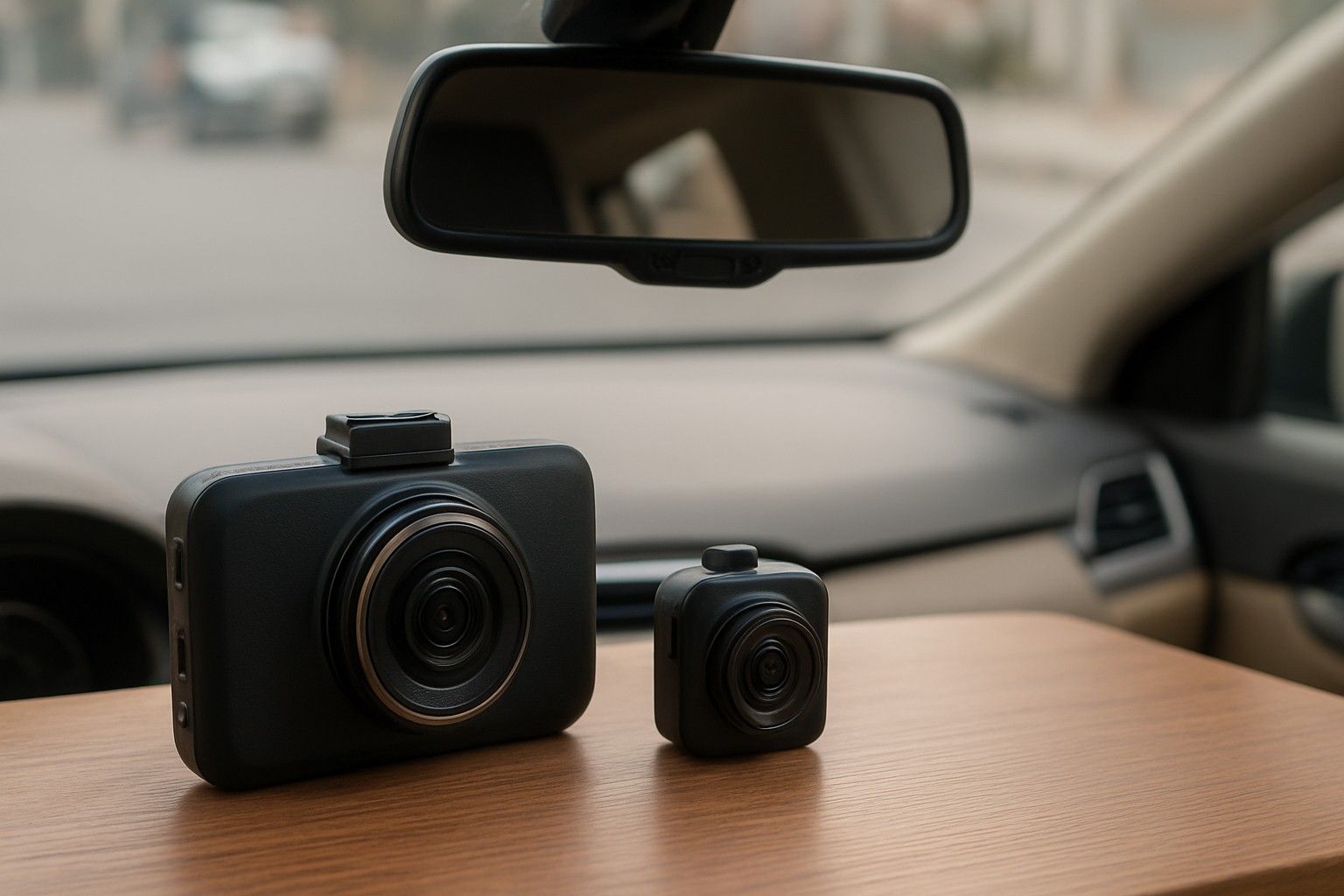
A dash cam is a small camera mounted near your windshield that continuously records the road ahead (and sometimes behind and inside the cabin) so you have video proof if something goes wrong. If you're wondering whether that's actually useful for your driving in India, or just another gadget, this article walks through what it does, what it costs, and when it genuinely earns its place on your dashboard.
How a Dash Cam Records and Loops Footage
A dash cam doesn't record one long file and keep going until your memory card is full. Instead, it records in short segments, usually one to three minutes long, and saves each segment as a separate video file. Once the storage card fills up, the camera doesn't stop recording; it automatically deletes the oldest, unlocked file to make room for the new one. This is called loop recording, and it's the single most important thing to understand about how these devices actually work day to day. It means the camera is always capturing the most recent stretch of driving without you having to manage files, delete old footage, or worry about running out of space on a long trip. For most Indian drivers dealing with daily commutes, city traffic and unpredictable road users, this hands-off behaviour is exactly the point: the camera should just run in the background and only matter on the rare day something actually happens. The trade-off is that ordinary footage doesn't stick around forever unless you manually save it or the camera locks it for you, which is where G-sensors come in, covered next. Some cameras also record in two directions at once, front and rear, or front and cabin, which changes how much storage gets consumed and how often the loop cycles back to overwrite itself. The same loop recording works against you on a multi-day road trip, though. A week through Ladakh, Spiti or Rajasthan's desert stretches generates far more footage than any daily commute ever would. The same overwriting that quietly protects you on ordinary days will just as quietly erase day one's footage by day four — unless you plan for it. Before a long trip, it's worth working out how much dash cam storage is needed for a road trip like this, how much your rig records per day, whether your card size and hotel uploads can keep pace, and what to carry as backup
Where the Footage Is Stored and How G-Sensors Lock Clips
Nearly every dash cam sold in India stores footage locally on a microSD card that sits inside the unit itself, not on a cloud server, so the card's size and speed rating directly determine how many hours of driving get saved before older clips are overwritten. This is a practical detail worth understanding before you buy, because a cheap or slow card can cause recording glitches or corrupted files right when you need footage most. Alongside storage, almost all dash cams include a G-sensor, an accelerometer that detects sudden changes in motion, like hard braking, a sharp swerve, or the jolt of an actual collision. When the G-sensor trips, the camera automatically locks the clip covering that moment, moving it into a protected folder so the loop-recording process can't overwrite or delete it later. This is what stops crucial footage from vanishing a few hours after an incident simply because the card kept looping. Most cameras also let you manually lock a clip by pressing a button the moment you witness something worth keeping, useful for rash driving or a near-miss that doesn't trigger the G-sensor's threshold. Higher-end models add Wi-Fi to pull locked clips onto your phone without removing the card, a convenience feature rather than a core requirement.
Why Indian Drivers Are Buying Them: Fraud Claims, Hit-and-Run and Rash Driving
The reason dash cams have moved from a niche accessory to a genuine consideration for Indian drivers comes down to a handful of recurring, real situations on Indian roads. Staged accident fraud, where someone deliberately brakes or steps in front of a vehicle to extract a cash settlement or inflate an insurance claim, is common enough on Indian highways and city roads that footage showing exactly what happened can shut the argument down immediately. Hit-and-run cases are another major driver: a rear or front camera that captures a number plate before another vehicle speeds off gives you something concrete to hand to the police instead of a description that's hard to act on. Rash driving and near-misses from other vehicles, whether it's a bus cutting lanes without warning or a two-wheeler weaving through traffic, are also frequently cited reasons buyers give, since footage removes the ambiguity of a verbal dispute at the roadside. There's also a quieter reason: many buyers simply want an unbiased record of their own driving in case they're wrongly blamed, since Indian traffic involves a mix of vehicle types and driving standards that make blame genuinely hard to assign without evidence. None of this requires an expensive setup; even devices in the ₹1,499 range capture usable footage for these everyday scenarios.
Does Dash Cam Footage Hold Up for Police and Insurance in India?
Dash cam footage is generally accepted as supporting evidence by Indian police and insurers, but it's worth being realistic about what "accepted" means in practice. There's no dedicated law in India that specifically governs dash cam footage as a category, so it's treated the same way any other video evidence would be: useful to establish facts, support an FIR, or back up a claim, but not a legal guarantee that a case will go your way. In insurance claims, footage showing the moment of impact, the other vehicle's number plate, or clearly reckless behaviour by another driver can meaningfully speed up claim processing and reduce disputes over fault, especially in cases where the other party tries to shift blame. For police complaints, footage that captures a number plate, a hit-and-run, or a clear act of rash driving gives officers something concrete to act on rather than a verbal account alone. Where it holds up less well is in ambiguous footage, low-light clips with unreadable plates, or recordings without a timestamp, which weaken its value as standalone proof. Practically, this means the footage works best as one part of your response, alongside filing a police complaint promptly and informing your insurer early, rather than something you assume will settle the matter on its own.
When a Dash Cam Is Not Worth It for You
A dash cam isn't automatically worth buying just because it's affordable; it depends on how and where you actually drive. If your driving is mostly short trips in a gated society or low-traffic area with a car that's parked securely overnight, the odds of ever needing footage are genuinely low, and the money might be better spent elsewhere. It's also not worth it if you're not going to check or maintain the setup at all, since a dash cam that's misaligned, has a dead card, or isn't triggering its G-sensor correctly gives you false confidence rather than real protection. On the other hand, if you drive daily in mixed city traffic, take long highway trips, park on the street, or have had a prior dispute over an accident, the case for owning one is much stronger. How much value you get also depends heavily on which channel setup you choose, since a basic single-channel unit only protects you from what happens ahead of the car, while dual or three-channel systems cover the rear or cabin too; the different channel setups change who benefits most, and it's worth understanding that before deciding a dash cam isn't for you based on a single-channel model alone.
How to Choose the Right Dash Cam Once You've Decided to Buy
Once you've decided the case for owning a dash cam applies to you, the actual buying decision comes down to a small set of factors rather than a long spec sheet. Video resolution and low-light performance matter more than most other specs, since a number plate that's unreadable at night defeats the purpose regardless of how many other features the camera has. Storage card compatibility and recommended card speed matter almost as much, since loop recording depends entirely on the card keeping up. Mounting quality, cable routing, and whether the unit runs off a hardwired kit or a cigarette lighter charger affect how discreet and reliable the setup feels day to day. Prices for dash cams in India span a wide range, from ₹999 at the entry level up to ₹29,999 for feature-heavy models with extras like Wi-Fi transfer and multi-channel recording, with the market averaging around ₹4,999. Buyers who just want reliable evidence for the situations described earlier tend to find what they need in the ₹5,499 band, while those wanting sharper night footage, dual-channel coverage, or added convenience features usually look toward the ₹14,999 range. Rather than repeating those trade-offs here, it's worth reading through and comparing options as you move on to the full decision checklist for Indian roads, which breaks down how to match a specific model to your driving pattern and budget.
A dash cam's job is simple: keep a running record of your drive so the rare bad day doesn't come down to your word against someone else's. Whether that's worth it for you now comes down to how you drive, where you park, and how much peace of mind you want from footage that's already running before you'd ever need it.

Comments
Be the first to comment.