Will Your Dash Cam Survive Indian Summers? Heat, Parking Mode and Power
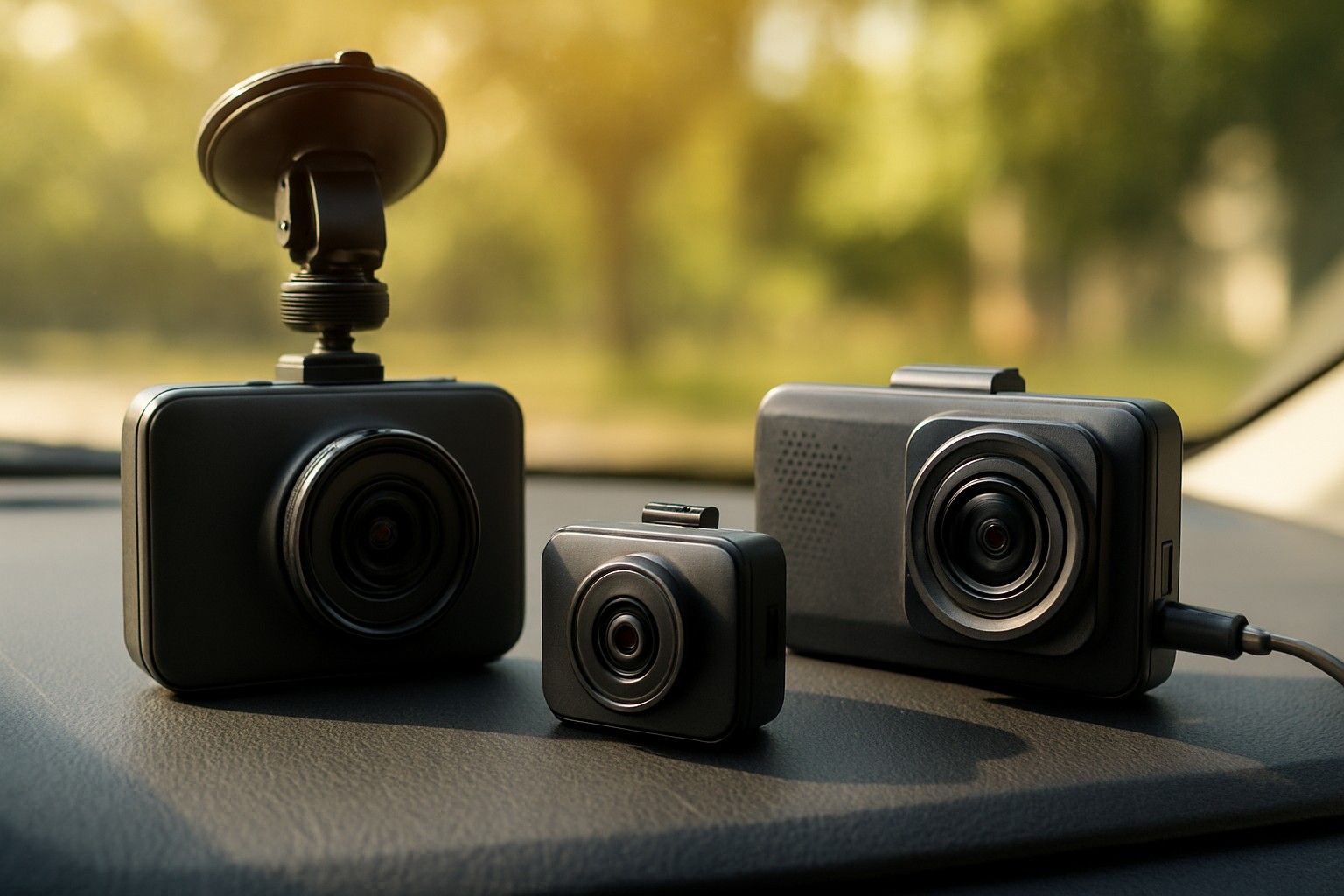
A dash cam that dies after one Delhi summer or drains your car battery overnight isn't saving you money, whatever it cost. If you're comparing units and wondering whether the one you like will actually survive a parked car in direct sun and still catch footage while the engine's off, this is the part of the decision that matters more than resolution or app features.
Why Dashboard Heat Kills Cheap Dash Cams
A closed car parked in Indian sun can push dashboard temperatures well past 70°C, and the dash cam sitting right against the windshield takes the worst of it. Most of the internal components in a dash cam, especially the image sensor and the processor, are rated for a working range that assumes some airflow and shade, not hours of direct glare in a Chennai or Nagpur summer. When the internal temperature climbs past what the electronics are designed for, you see the symptoms before you see a full failure: the unit reboots randomly, the screen blacks out, footage gets corrupted mid-recording, or the camera simply refuses to power on until the car cools down. This isn't a rare edge case in India, it's the single biggest reason budget dash cams stop working within a year of purchase. The cheapest units in the ₹1,499 band often use lower-grade components with no real thermal margin, so they're the first to show heat stress. Spending more doesn't automatically fix this, but units built with better internal shielding and a sensor rated for a wider temperature range tend to survive parked-car heat far longer. If you live somewhere that regularly crosses 40°C in summer, this is worth weighing more heavily than any feature list.
Battery vs Supercapacitor: Which Survives Indian Climate
Every dash cam needs some internal power source to save the current clip safely and, in many models, to keep parking mode alive briefly when the car's power cuts out. Two technologies do this job, and they behave very differently in Indian heat. Lithium-ion batteries, the more common option in lower-priced units, degrade faster at high temperatures. A battery that would last several years in a mild climate can swell, lose capacity, or fail outright within a year or two of constant dashboard heat exposure, and a swollen battery pressed against hot plastic is also a safety concern, not just a performance one. Supercapacitors, used in many higher-end and heat-conscious models, don't rely on a chemical reaction the way batteries do, so they tolerate high temperatures far better and don't degrade in the same way over repeated heat cycles. The trade-off is that supercapacitors typically hold less charge, so they'll keep the camera running for a shorter window after power loss compared to a healthy battery, usually just long enough to save the file safely rather than to record for extended periods unpowered. For Indian buying decisions, this is a genuine trade-off worth understanding rather than a clear winner: a battery-based unit is fine if it stays in the ₹5,499 range and you accept it may need replacing sooner, while a supercapacitor unit is the safer long-term bet if you park in direct sun often and want the internal power source to outlast the rest of the camera.
Parking Mode and How It Draws Power From Your Car
Parking mode keeps the dash cam recording or on standby after you've switched off the engine and walked away, which is exactly when hit-and-runs, scratches, and theft attempts happen. To do this, the camera needs a power source that stays live even with the ignition off, which almost always means it's drawing from your car's battery rather than its own internal cell. Depending on how the mode is configured, this can mean continuous recording, motion-triggered recording, or a low-power standby that only wakes on impact or movement. Continuous recording drains the most, standby modes the least, and most dash cams let you choose based on how much risk you're willing to accept versus how much battery drain you can tolerate. The catch is that your car's battery has a finite capacity too, and pulling from it for hours while parked, especially overnight or over a weekend, can leave you with a car that won't start the next morning. This is the single most common complaint from Indian buyers who enable parking mode without understanding the power path behind it. Getting this right isn't about the dash cam being faulty, it's about how it's wired into the car's electrical system, which is the next thing to sort out before you rely on the feature daily.
Hardwiring Kits and Battery Drain Concerns
Most dash cams ship with a cigarette-lighter power cable, which is fine for regular driving but useless for parking mode since it cuts power the moment the ignition turns off. To actually get parking mode working reliably, parking mode usually needs proper hardwiring done, which connects the camera directly to the car's fuse box instead of the accessory socket. A proper hardwiring kit includes a low-voltage cutoff, a small circuit that monitors the car battery's voltage and automatically stops drawing power once the battery drops to a level that could stop the car from starting. Without this cutoff, a dash cam left in parking mode overnight can quietly drain a car battery down to nothing, and this is a real and common failure mode in India, particularly for cars that already sit unused for a few days at a time, like a second car in a household or an office parking spot vehicle. The hardwiring kit itself is a modest add-on cost over the camera's price, but skipping it defeats the purpose of parking mode entirely. If you're set on using parking mode as a daily feature rather than an occasional one, budget for the hardwiring install as part of the total cost, not as an optional extra, since an uninstalled or poorly wired parking mode is worse than not having the feature at all.
Dust, Windshield Tint and Mounting Longevity
Heat isn't the only environmental stress a dash cam faces on an Indian dashboard. Dust settles on the lens faster in most Indian cities than manufacturers design for, especially if you're driving on unpaved stretches or through construction zones regularly, and a dusty lens quietly degrades footage clarity long before you notice the camera has a problem. Windshield tint and sun film, common on Indian cars for heat and glare reduction, can also interfere with a dash cam's image quality, particularly at night or in low light, since darker films cut down the light reaching the sensor. This is worth checking before mounting, since a dash cam that looked sharp in a shop demo can perform noticeably worse behind a heavily tinted windshield. The adhesive mount itself is another weak point: cheap suction cups and adhesive pads soften in sustained heat and can let the camera droop or fall off entirely after a few months, which is a bigger problem in India than in cooler climates simply because dashboard temperatures stay high for so much of the year. A mount rated for high-temperature adhesion, or a bracket-style mount rather than a basic suction cup, tends to hold up better through repeated heat cycles.
How Heat Resistance Should Shape Your Purchase
Once you've weighed sensor and battery heat tolerance, parking mode power draw, hardwiring needs, and mount durability, the picture that emerges is that durability in Indian conditions isn't a single spec you can read off a box, it's a combination of choices. A camera priced near ₹999 may record fine in a showroom test but struggle after a few months of dashboard heat, while something closer to the ₹4,999 mark, particularly in the ₹14,999 tier, more often includes the supercapacitor, better thermal design, and sturdier mounting that Indian summers actually demand. The price data doesn't suggest waiting for a better deal, it suggests being honest about how you'll use the camera: if parking mode and direct sun exposure are daily realities for your car, that should weigh more in your decision than an extra megapixel or a slightly wider viewing angle. This is the point to factor durability into your overall choice, alongside resolution, mounting position, and storage, rather than treating heat resistance as an afterthought you deal with only after the camera starts failing.
Whether a dash cam survives an Indian summer comes down to what's inside it and how it's powered, not how it performs in a cool showroom. Get the sensor and internal power source right for heat, wire parking mode properly instead of relying on a cigarette-lighter plug, and choose a mount that won't soften by May, and you've answered the question this article set out to solve.
Comments
Be the first to comment.