Gas Lift Class, Base Material and Foam: How to Judge Gaming Chair Build Quality
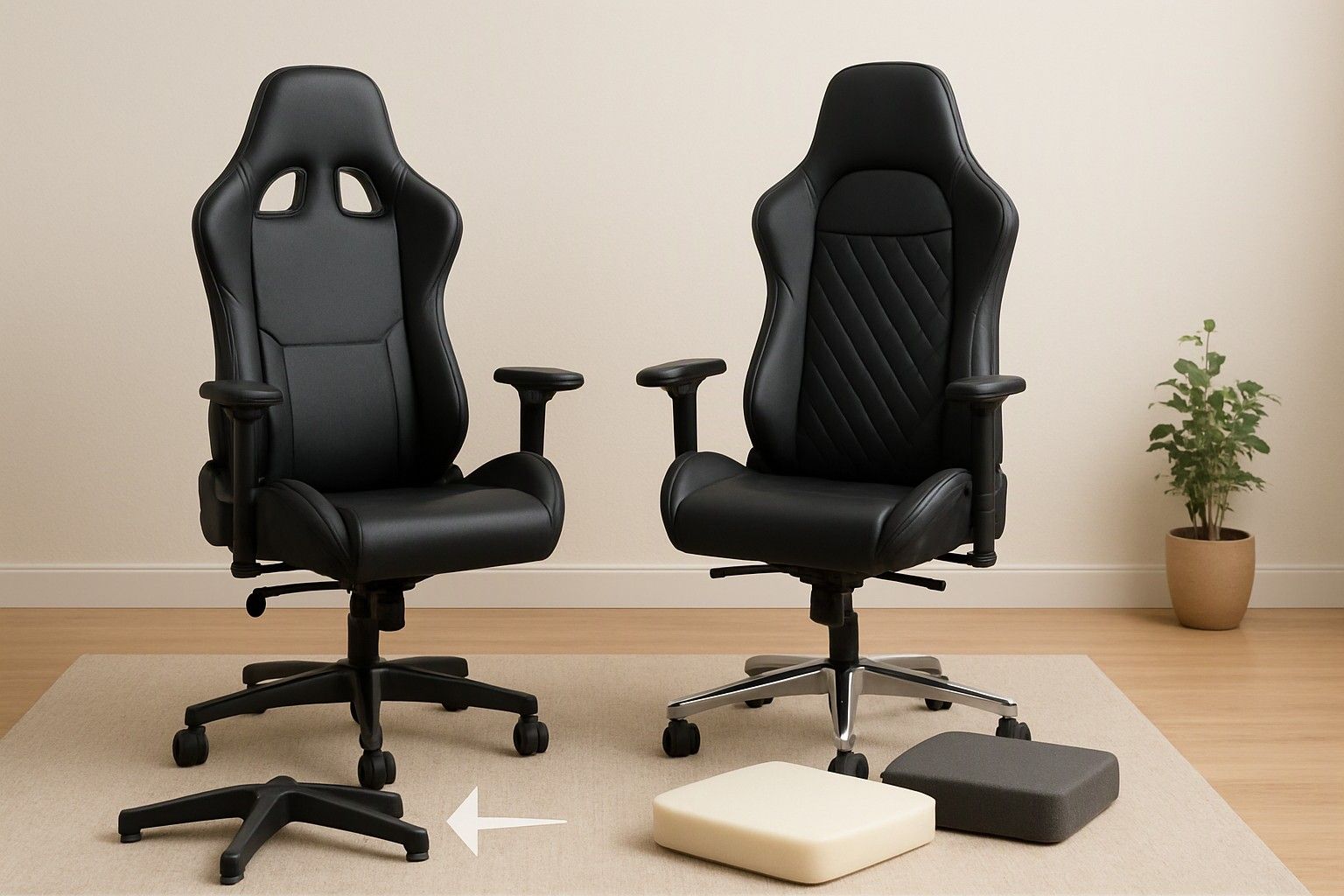
If you want to know whether a gaming chair will still sit level and feel firm after a couple of years of daily use, this article is for you. Sinking seats, cracked bases and flattened foam cause most early failures, and all three come from components you can't see in a product photo. Here is how to judge the gas lift, base, frame and foam before you buy.
Gas Lift Classes Explained: Class 3 vs Class 4
The gas lift is the cylinder under the seat that sets your height and takes your weight every time you sit down. It is the part most responsible for the 'my chair slowly sinks' complaint. When the seal inside wears out, the seat drops and can't be raised again.
Class 3 is the common baseline on budget chairs. Class 4 is the heavier-duty grade, normally described as having a thicker cylinder wall and a sturdier seal. For a lighter user sitting a few hours a day, a sound Class 3 lift can last years. If you weigh more, sit for long stretches, or tilt and rock a lot, Class 4 is the safer choice.
The catch is that the class is rarely printed where you can verify it. Ask the seller for a photo of the stamp or label on the cylinder itself. A reputable listing will show one, while a vague 'heavy-duty gas lift' line tells you nothing. Also check the warranty wording: if the gas lift is excluded or limited to a few months, the seller probably doesn't trust it either.
Nylon vs Aluminium vs Steel Five-Star Bases
The five-star base carries your weight and takes the stress every time you lean back or push off. Cracked legs usually show up first on cheap nylon bases, often at the point where the leg meets the centre hub.
Nylon: Fine for light to moderate use, provided it is thick, reinforced and not hollow-feeling. Thin, glossy nylon legs are the ones that flex and snap. Good nylon is cheaper and quieter, and it won't dent your floor.
Aluminium: Stiffer and more resistant to cracking than nylon at a similar thickness, and it looks cleaner. Its weakness is that cheap castings can be brittle, so thickness and finish still matter.
Steel: Usually the strongest and the heaviest, and the safest pick for heavier users. Look for solid welds and a powder-coat or chrome finish that doesn't flake.
A quick test is the chair's shipped weight. A very light chair with a 'metal' label deserves suspicion. Ask for the leg thickness and whether the base is solid metal or only metal-finished plastic. Your weight and how hard you swivel matter more than the looks.
Metal Frame vs Plywood Inside the Backrest
Under the upholstery sits a skeleton, and what it is made of decides whether the backrest stays rigid or starts creaking and leaning. A full metal frame, usually steel tubing, resists twisting and holds the recline mechanism firmly. Plywood or moulded board is cheaper and common in budget chairs. Decent plywood can be perfectly adequate, but thin or poorly glued board can split near the mounting points.
Be careful with 'steel frame' on a listing. It sometimes means only a small steel bracket or the seat plate, while the backrest remains board. Ask specifically about the backrest and the seat base separately.
You can check a few things yourself. Push the backrest sideways while seated; visible wobble means loose fixings or a weak frame. Listen for creaks during recline. Look at where the armrests and tilt mechanism bolt on, since those are the high-stress points. Metal-reinforced mounting plates there are a good sign even when the rest is board. If the seller can't describe the frame, assume the cheapest option.
Cold-Cure Moulded Foam vs Shredded Foam
Foam decides whether the chair still feels supportive in month eighteen. Cold-cure moulded foam is poured into a shaped mould and set, giving an even density that springs back after pressure. It tends to hold its contour for years and feels firm rather than mushy.
Shredded foam, made of loose or reconstituted scraps, and thin cut-slab padding behave differently. They feel soft in a showroom, which is why they sell well, but they compress unevenly and develop a permanent dip where you sit. Many 'my chair went flat' complaints trace back here.
Since the label rarely helps, test the foam. Press your thumb in firmly and release: it should recover quickly and evenly. A chair that feels pillowy and sinks easily is often the weaker one. A slightly firm seat usually ages better. Also check whether the seat foam is thick enough that you can't feel the board beneath when you press hard. Be careful with upholstery too: soft-feeling covers can hide thin foam, so judge what is underneath rather than the surface.
Casters for Tile, Marble and Granite Floors
Most Indian homes have tile, marble or granite floors, which are hard, smooth and unforgiving. Stock hard-plastic casters tend to scratch these surfaces, rattle loudly and slide when you don't want them to. Softer wheels roll quietly and grip better, so they protect the floor and take strain off the base and gas lift.
Look for casters described as rubberised or polyurethane-coated rather than plain hard plastic. Smooth rolling with a bit of resistance is ideal, since a chair that glides away when you stand can put a jolt through the base. Spin each wheel by hand if you can; they should turn freely without grinding.
If the chair you like ships with ordinary wheels, that is not a deal-breaker. Swapping stock wheels for rubberised casters is a simple, low-cost upgrade that protects your floor and makes the chair quieter. Still, it is a good sign when a seller already includes soft casters, because it suggests attention to the whole build rather than just the cover.
Build Specs That Sellers Commonly Exaggerate
Build claims are cheap to type and hard to check, so know where listings stretch the truth.
- Gas lift class: 'Class 4' is often stated without a visible stamp or test document. Treat it as unproven until you see one.
- Weight capacity: Large numbers appear on chairs with thin bases. If the capacity looks high for the price and the chair is light, doubt it.
- 'Steel frame': Frequently covers only part of the structure, as noted above.
- 'Aluminium' base: Sometimes a plated or painted plastic base.
- 'High-density foam': Almost every listing says it, but without 'cold-cure' or 'moulded' detail it means very little.
- Certifications: BIFMA and similar tags are often used loosely, with no report or certificate to back them.
- Leather: 'PU leather' wording that avoids naming the material is a quiet warning about peeling later.
A practical filter: trust specific details like thickness, photos of stamps and clear warranty terms over adjectives. For a closer look at spotting unverified Class 4 and BIFMA claims on listings, that guide walks through what a credible claim looks like. When a seller answers your questions about the base and gas lift directly, that is itself a good signal.
Balancing Build Quality Against Price and Fit
Gaming chairs on our platform run from ₹5,000 to ₹35,000, with an average around ₹8,000. Each tier buys different build realities, and you can decide today based on what you actually need.
In the ₹6,500 range, expect nylon bases, board frames and softer or shredded foam. These suit light, occasional use, and checking the foam and base carefully matters most here. In the ₹8,500 range, you can reasonably look for a Class 3 or better gas lift, a sturdier base and firmer moulded foam. In the ₹20,000 range, metal bases, fuller metal frames and Class 4 lifts become realistic expectations, which is where heavier users and long daily sessions are better served.
Fit still matters as much as build. A very durable chair that is the wrong size for your height or weight will still hurt your back and wear unevenly. Match the seat width, backrest height and capacity to your body first, then spend for the build upgrades that matter to your usage. For the wider picture, see how durability trades off against the rest of a gaming chair purchase.
A gaming chair built to last has a verifiable gas lift, a thick base in suitable material, a properly framed backrest and firm moulded foam, with casters that suit your floor. You can check most of this with a few pointed questions to the seller and a hands-on press of the foam. Choose the tier that matches your weight and daily hours, and you can buy with confidence today.

Comments
Be the first to comment.