PU Leather vs Fabric vs Mesh Gaming Chairs in Indian Heat and Humidity
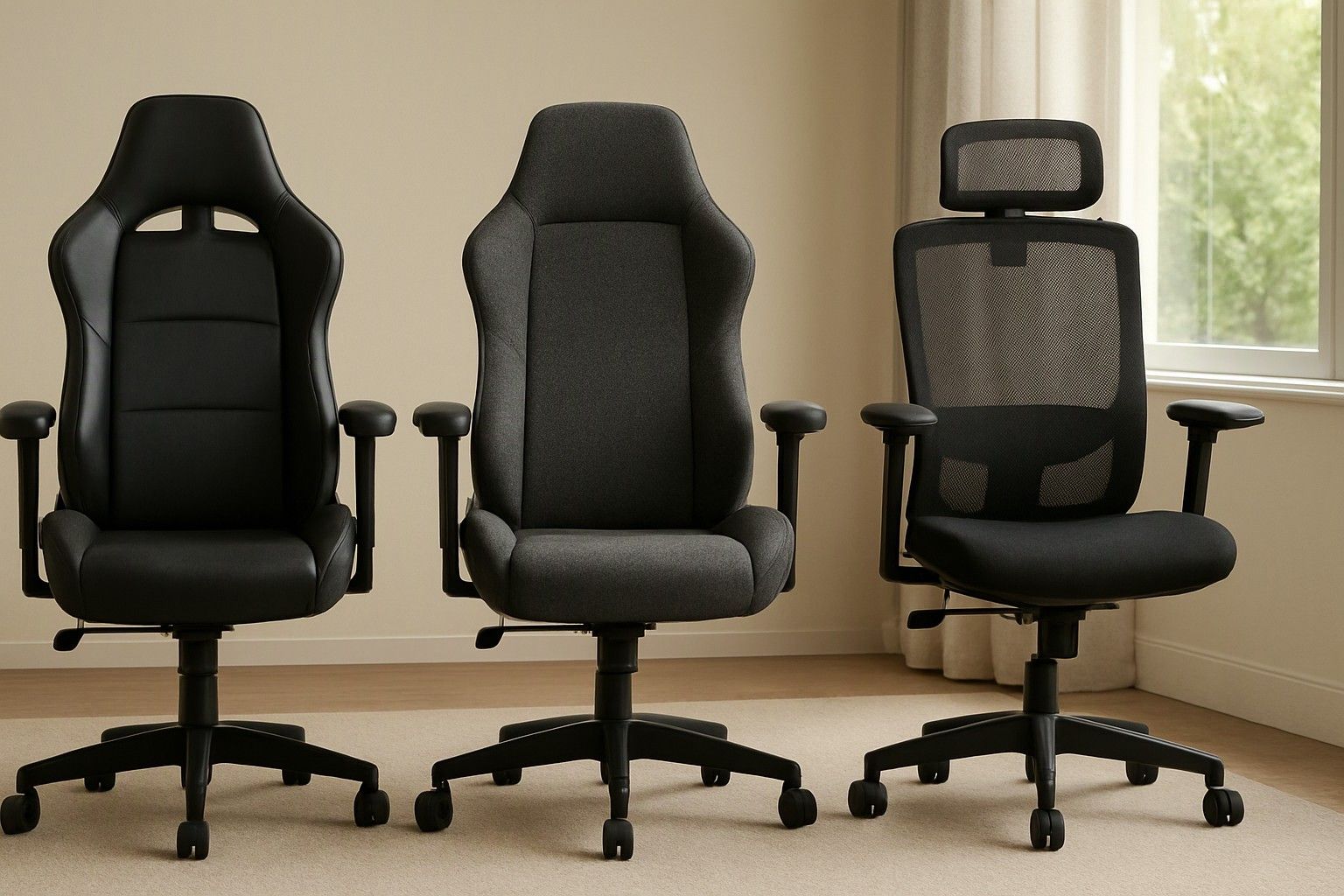
Yes, a PU leather gaming chair can peel and feel sticky in much of India, especially in coastal cities and through summer and monsoon. If your room is warm or you sit for long hours, a fabric or mesh-back chair is usually the safer pick. This guide explains why PU fails the way it does, what fabric and mesh give up in return, and how to match the material to your city. If you play or work in a reliably air-conditioned room, PU can still make sense.
Why PU Leather Peels Faster in Coastal and Humid Cities
PU leather is a thin polyurethane coating bonded to a fabric backing. Polyurethane breaks down when it stays in contact with moisture, and warmth speeds that up. In a humid coastal city like Mumbai, Chennai, Kochi or Kolkata, the air is damp for most of the year, so the coating is under attack even when nobody is sitting on it.
Sweat adds to the problem. Body salts and oils sit on the surface, and the coating gets rubbed against clothing every day. That is why peeling usually starts where friction and contact are highest: the armrest tops, the seat edges and the side bolsters. It first shows up as small flakes, then the surface layer lifts off in sheets and the backing shows through.
The coating is often thinnest in the ₹6,500 tier, so those chairs tend to show wear earliest. Harsh cleaners, alcohol wipes and a spot in direct afternoon sun by a window all make it worse. Wiping the chair dry after long sessions and keeping it out of direct sun slows the damage, but it does not stop it. Over several years in a humid climate, peeling is a likely outcome rather than a rare defect. Read the warranty terms on upholstery wear closely, since cover peeling is often treated differently from frame or gas-lift faults.
Sweat and Stickiness Through Summer and Monsoon
PU does not breathe. Whatever moisture your back and thighs produce stays between you and the chair, which is why a PU seat feels fine for the first twenty minutes and clammy after two hours. In an Indian summer, with a fan pushing warm air or no cooling at all, this becomes the main reason people stop liking the chair.
The monsoon brings a different version of the problem. The room may not be hot, but the humidity stops sweat from evaporating, and the chair surface stays damp and tacky. Shorts and thin cotton tees stick to the seat, and peeling usually starts around the same time.
Air conditioning changes the picture. In a cooled room, PU surfaces feel cool at first and sweat much less, which is why the material suits some buyers well. The catch is that many Indian homes cool a room only for a few hours, so the chair spends the rest of the day in warm, humid air.
Perforated PU on the seat centre helps a little but does not match a woven surface. If you already own a PU chair, a thin cotton seat cover is a cheap stopgap that absorbs sweat and protects the coating.
Fabric Upholstery: Breathability vs Dust and Stains
Fabric lets air and moisture pass through, so it stays noticeably cooler and less sticky through a long session. It does not peel, because there is no coating to break down, and it is gentler on bare skin in summer. For most buyers in warm cities, this is the biggest point in its favour.
The trade-off is maintenance. A woven surface traps dust, and Indian dust from roads, construction and dry seasons settles into the weave fast. It also absorbs spills: chai, cold drink and oily snack residue soak in and leave marks, where PU would simply wipe clean. Pet hair clings to it as well.
Humidity brings its own risk. A fabric seat that stays damp through the monsoon can develop a musty smell if it never dries out, so a fan or some direct airflow around the chair helps. Dark, tightly woven fabrics hide marks better than light, loose ones.
Fabric chairs reward routine care, and keeping fabric covers clean through dusty months is easier when you build a simple weekly habit instead of waiting for visible dirt. If you eat at your desk or have pets, weigh that upkeep honestly before choosing fabric.
Hybrid Mesh-Back Gaming Chairs for Hot Rooms
A hybrid chair pairs a mesh backrest with a padded seat in fabric or PU. The logic is simple: your back produces most of the heat and sweat, and mesh lets air pass straight through it. In a hot room without strong cooling, this is the setup that stays most comfortable over long hours.
The trade-offs are real. Mesh feels firmer and less plush than a thick padded back, and some people miss the wrapped, bucket-style feel of a traditional gaming chair. Cheaper mesh can sag or loosen over time, and it can snag on belt buckles, rivets or pet claws. The seat is still a separate decision, so a mesh back on a PU seat only solves half of the sweating problem.
You will generally see more of these designs in the ₹8,500 and ₹20,000 tiers, though availability varies. When comparing, press on the mesh to check it springs back evenly, look at how the mesh is fixed to the frame, and check that the lumbar support still works properly through the open back.
For anyone gaming or working in a non-AC room through an Indian summer, this format deserves serious consideration before PU.
Foam Density Under the Cover
The cover gets blamed for many problems that actually start in the foam. When low-quality foam compresses, the seat sags, the cover stretches over the dip and PU is more likely to crack along the fold lines. A fabric seat on collapsed foam is just as uncomfortable, only without the peeling.
The filling matters more than most listings admit. Understanding cold-cure versus shredded foam inside the seat tells you which chair will keep its shape after a year or two of daily use. In short, moulded foam holds its form and recovers after you stand up, while loose or shredded filling flattens into hollows.
Heat adds a wrinkle. Dense foam can hold warmth against your body, so a firm seat under a non-breathable PU cover feels hotter than the same foam under fabric. That is another reason breathable upholstery matters more in Indian summers.
A quick shop-floor or unboxing check helps. Press your palm firmly into the seat and release it: it should rebound steadily without leaving a lasting dent. Ask the seller what the seat foam is, and be cautious if the answer is vague.
Matching Material to Your City and Room Conditions
Start with your room, then your city. The category runs from ₹5,000 to ₹35,000, with an average of ₹8,000, and a chair whose cover suits your climate will serve you better at any price than a more expensive one that fights it.
- Humid coastal cities (Mumbai, Chennai, Kochi, Kolkata): Choose fabric or a mesh-back hybrid. PU is the material most exposed to moisture damage here, and sweat lingers for most of the year.
- Hot, dry cities (Delhi, Jaipur, Ahmedabad, Hyderabad): Summers are brutal for PU stickiness, and dust is the fabric problem. A mesh back with a fabric seat balances both, provided you clean regularly.
- Milder cities (Bengaluru, Pune): PU is workable, especially with a fan or AC, though it will still age faster than fabric.
- Fully air-conditioned room: PU is a reasonable, easy-to-wipe choice, and the sweat complaint largely disappears.
- Non-AC room, long sessions: A mesh-back hybrid is the safest option.
If you eat at your desk or share the chair, easy-wipe surfaces gain value, so weigh that against breathability. For how upholstery fits into a full chair shortlist, set material alongside frame, gas lift, foam and your budget tier rather than treating it as a standalone call.
So, will PU leather peel or feel sweaty in Indian weather? In humid cities and non-AC rooms, it likely will, and fabric or a mesh-back hybrid is the more dependable choice. In a cooled room, PU can still work if you keep it dry and out of the sun. Match the cover to your room and city, check the foam underneath, and you can make the call confidently today.

Comments
Be the first to comment.