Gaming Chair Size by Height and Weight: Getting the Fit Right
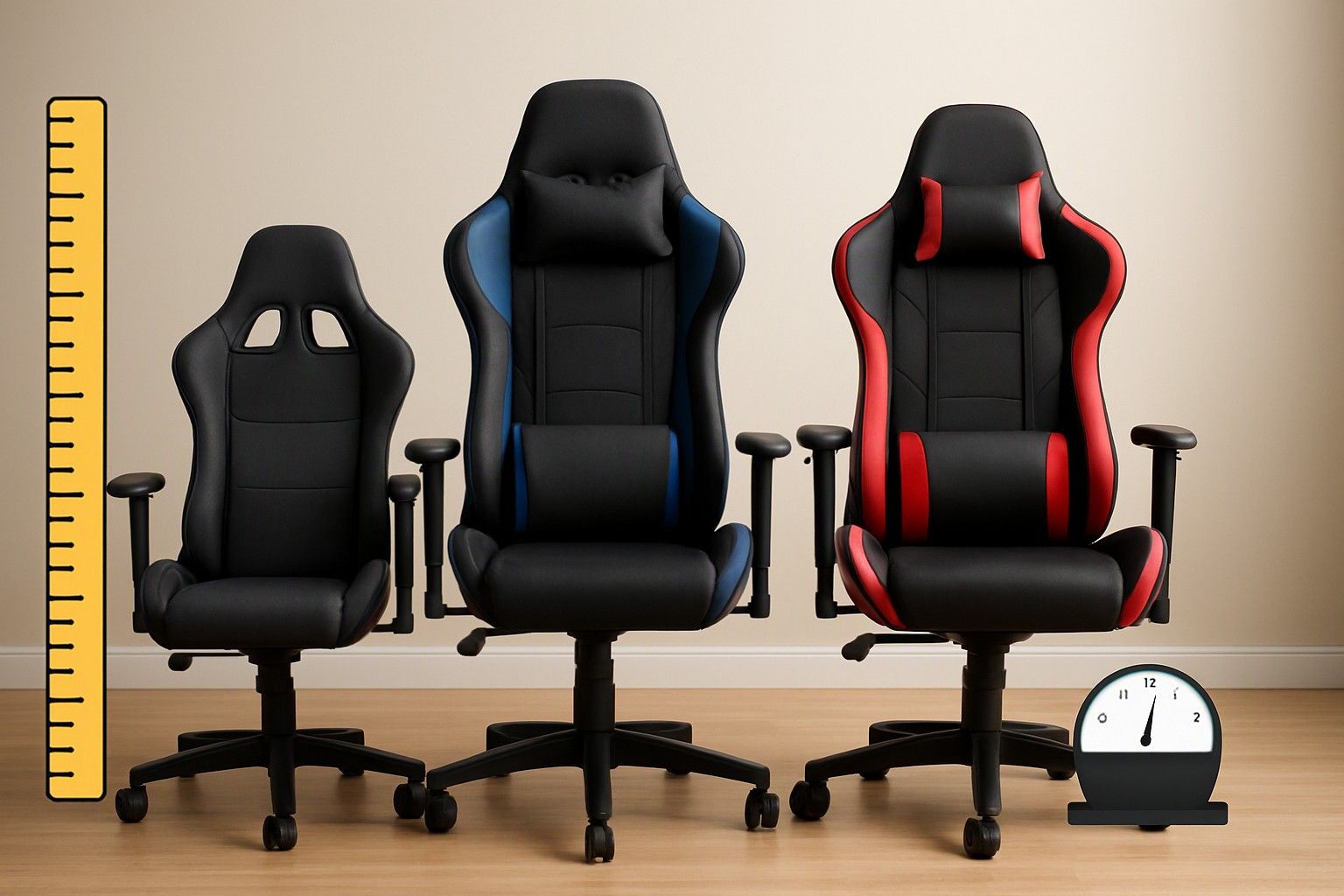
If you are under 5 ft 5 in, taller than 6 feet, or above 100 kg, a gaming chair listed as "one size" may not fit you, and this article shows how to tell before you order. It covers the measurements that decide fit: seat height and depth, backrest and headrest length, weight rating, seat width and your desk height. You will leave with a short list of numbers to check against any listing.
Why One-Size Listings Fail Shorter and Taller Buyers
Most gaming chairs are built around an average frame, then sold with a single listing and a few adjustment levers. The gas lift changes seat height, but seat depth, backrest length and headrest position are usually fixed or only partly adjustable. That is where the fit breaks down at the edges.
On a shorter user, the seat is too deep. The front edge presses behind the knees, so they slide forward and lose lumbar contact, or they sit upright with the backrest unused. The headrest pillow lands behind the shoulders instead of the head. On a taller user, the opposite happens. The backrest ends around mid-back, the headrest sits at neck or shoulder level, and the thighs overhang an unsupported seat edge. For heavier users the issue is structural: the rated load, base material and seat width all decide whether the chair stays comfortable and stable over time.
Indian listings make this harder, because they often show a single height and weight line and skip seat depth, backrest height and minimum seat height. Treat any missing dimension as a question to ask the seller before ordering, not something to find out after the chair arrives.
Seat Height and Depth for Users Under 5'5"
Start with the lowest seat height the chair offers, not the highest. Sitting with your feet flat on the floor and your knees at roughly a right angle is the goal, and on a short frame that needs a low minimum. If the listing only quotes a maximum or an overall height, ask for the lowest seat height measured from the floor.
Then look at seat depth. A comfortable fit leaves a gap of two to three finger widths between the front edge of the seat and the back of your knee. On a deep seat you cannot reach the backrest without the edge cutting into your legs. Models with an adjustable seat depth or a sliding seat solve this properly. If the chair has neither, a firm lumbar cushion can move you forward, but it only works when the seat is deep by a modest margin, not a large one.
Check the armrests too. On short users, armrests that cannot go low enough push the shoulders up and tire the neck. And a headrest pillow on a loose strap that you can lower, or remove entirely, is more useful than a fixed one that pushes your head forward. If your feet still dangle at your desk height after all this, a footrest is a sensible fix.
Backrest and Headrest Height for Users Over 6 Feet
For taller users, the backrest is the first number to verify. It should reach at least the upper shoulder blades, and the headrest should meet the back of your head rather than your neck. Listings that give only overall chair height can mislead here, so look for the backrest length measured from the seat surface, or ask for it.
Lumbar support is the next catch. A fixed lumbar bulge is placed for an average torso, and on a tall person it can sit too low and push into the hips instead of the lower back. A lumbar pillow on an adjustable strap lets you move it up to where you need it.
Seat depth matters as much as it does for shorter buyers, only in reverse. A seat that is too shallow leaves the thighs unsupported and loads the lower back. Look for a longer seat, and check that the maximum seat height lets your knees sit at or just below hip level. Taller users also lean back more, so the recline mechanism and the base should feel stable at the end of the tilt range. A wide, firm base resists tipping better than a narrow one.
Weight Capacity Ratings and What Heavier Users Should Insist On
A weight rating is only as good as the weakest part it depends on: the gas lift, the base, the frame, the tilt mechanism and the seat foam. Pick a chair whose stated rating sits comfortably above your own weight, not right at it, because daily use, leaning back and sitting down hard all add load beyond your static weight. If the listing gives no rating at all, treat that as a warning, not a neutral detail.
For anyone over 100 kg, the practical checklist is simple. Look for a Class 4 gas lift and metal base for higher load ratings, a steel frame, and castors that are firmly fitted to the base. Ask the seller whether the rating is for the whole chair and not just the seat. Dense, firm foam holds its shape longer than soft foam, which flattens and bottoms out.
Be most careful in the ₹6,500 tier, where cost-cutting tends to show up in the base and lift first. The ₹8,500 tier is where more listings begin to state a metal base and a clear rating. With the typical price in this category around ₹8,000, paying a little more for structure usually matters more than paying for extra cushions or lighting.
Seat Width, Side Bolsters and Hip Room
Seat width is where racing-style designs often fail broader users. The raised side bolsters that look sporty also narrow the usable seating area, and on a larger frame they press into the hips and outer thighs. Over a long session that pressure is more tiring than any lack of padding.
Measure your seated hip width, then compare it with the seat width in the listing, allowing a few centimetres of clearance on each side. If the listing quotes only overall chair width, that includes armrests and bolsters, so it will overstate the room you actually get. Ask for the seat width at the widest point between the bolsters. Flatter bolsters and a wider seat pan are easier on heavier or broader users, and armrests that sit wider apart avoid pinching the elbows and hips.
The same check helps narrower or shorter users in the other direction. A very wide seat leaves them unsupported at the sides, and armrests set too far out force the shoulders to reach. So use the listing dimensions as a range to compare against your body, not as a number that is better when it is larger.
Measuring Your Desk Height Before Ordering
A chair that fits your body can still fail at your desk, so take three measurements before ordering. First, measure the floor to the underside of your desk, which sets how high the armrests can go while still sliding under. Second, measure the floor to the desk surface. Third, sit on any ordinary chair at a comfortable height and measure the floor to your bent elbow.
Your elbow height is the target for the desk surface. Compare it with the chair's seat height range plus its armrest range. If the desk is fixed and sits high for you, you will need the seat raised, which leaves a shorter user's feet in the air unless there is a footrest. If the desk is low, a tall user may find the knees hitting the underside, so the seat's maximum height and the armrest clearance both matter.
Check the armrests last. Take the underside height of your desk and compare it with the top of the armrest at its lowest setting, plus the seat height. If the armrests cannot slide under, you will sit away from the desk and lean forward. Many study and computer tables in Indian homes are fixed-height, so do this before the order, not after.
Fit Is Only One Part of the Purchase
Once you know your numbers, the price becomes easier to read. Gaming chairs in this category run from ₹5,000 to ₹35,000, and the point of this guide is to put the money into the parts that decide fit and safety: a low-enough seat, a long-enough backrest, a proper weight rating and enough seat width. Those matter more than extras, and they apply whichever price tier you shop in.
Before you order, keep these ready:
- Lowest and highest seat height from the floor
- Seat depth and seat width at the bolsters
- Backrest length from the seat surface
- Stated weight rating and base material
- Your desk height and underside clearance
Fit is the first filter, but comfort, build, warranty and upkeep also play a part. The everything else to weigh once your size range is clear is covered in the main buying guide, so you can move from your measurements to a confident shortlist.
If you are short, very tall or above 100 kg, you now have what you need: check the lowest seat height, backrest length, seat depth, width and weight rating against your own measurements and your desk. A listing that cannot answer those questions is not worth ordering, and one that can is ready to buy today.

Comments
Be the first to comment.