How to Choose the Right Juicer for an Indian Kitchen
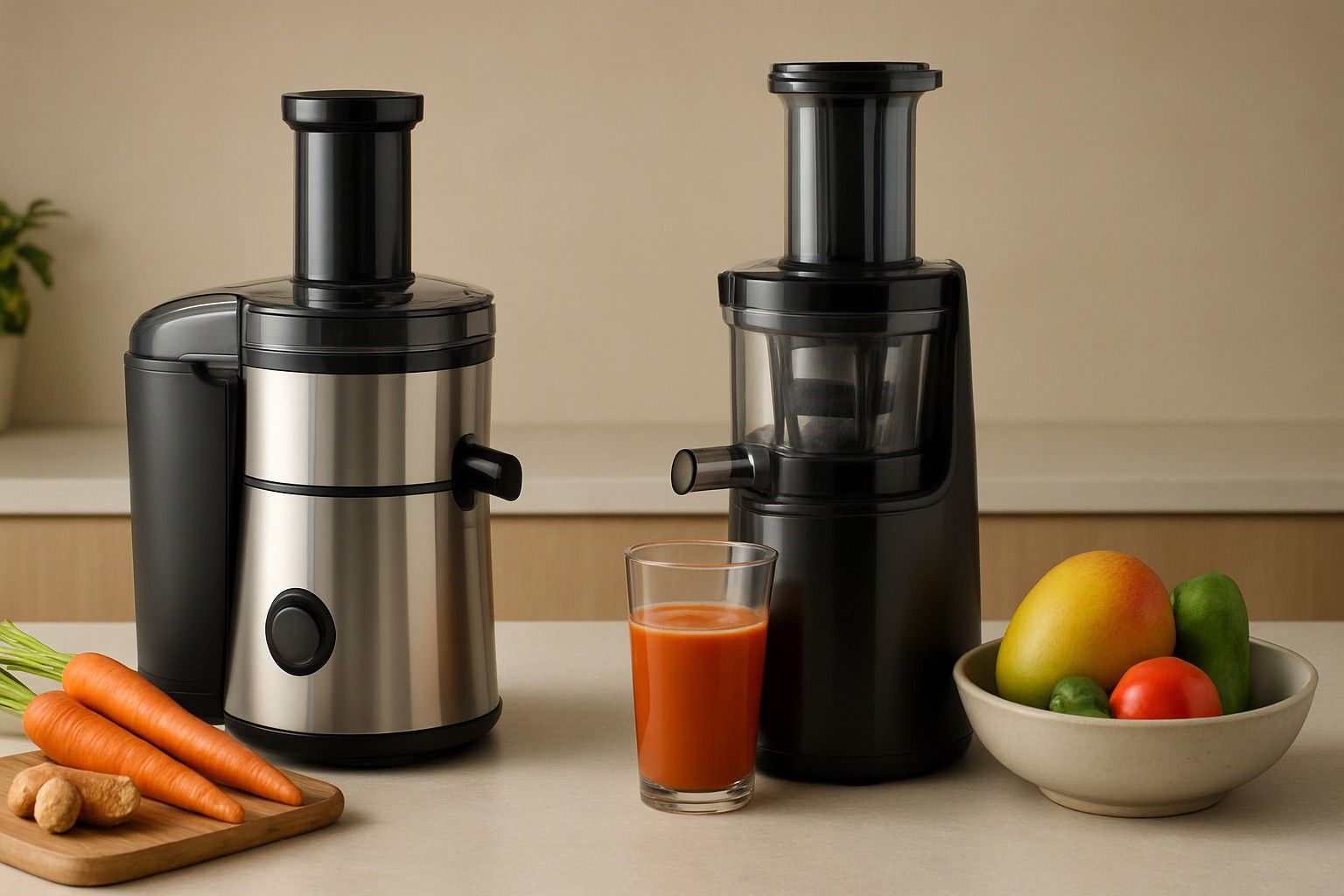
Buying a juicer in India comes down to a handful of connected choices: the type of mechanism, the produce you actually plan to feed it, the motor behind it, how much daily cleaning you will tolerate and what you are willing to spend. Prices span ₹499 to ₹20,000, with an average near ₹4,999, so the gap between a sensible buy and an expensive regret is wide. This guide walks through each of those decisions in the order most buyers face them. Each section gives you the core question and points you to a detailed article that answers it properly.
Cold Press vs Centrifugal: Which Juicer Type Suits You
The first fork in the road is the mechanism itself. Slow, or cold press, machines tend to reward daily use, squeeze more juice out of each kilo and cope well with leafy greens. Fast centrifugal models give up some of that in exchange for speed, less chopping and a smaller bill. To understand how slow and fast juicers actually differ, this comparison shows where each one comes out ahead and where it falls short.
Juicing Hard Indian Produce Like Sugarcane, Amla and Beetroot
Oranges and apples rarely test a juicer; amla, beetroot, ginger, carrot and sugarcane do. Dense, fibrous produce is exactly where underpowered machines jam mid-batch, mesh filters choke and flimsy housings wear out early. If your weekly basket looks more like a sabzi mandi haul than a fruit bowl, see which juicers handle tough Indian fruits and vegetables before you commit.
Motor Power, Wattage and Speed Explained
Is 250 watts too little, or is 800 watts more than you will ever use? Listings push wattage and RPM to the front, yet neither figure tells you much on its own, and both are commonly misread. This guide helps you work out how much motor power you really need based on your own juicing habits, and which spec numbers genuinely matter.
Cleaning Effort, Pulp Handling and Daily Usability
Daily cleanup can be a quick three-minute rinse or a fifteen-minute chore, and that difference often decides whether a juicer gets used or ends up in a cupboard. Rushed mornings, no help at home and a crowded sink make it matter even more. Spending more does not reliably buy an easier wash, so check how much cleaning each type demands every day and which design choices shorten the job.
How Much a Good Juicer Costs and Where the Price Goes
Juicers sold in India run from ₹499 to ₹20,000, with an average close to ₹4,999. The detailed price guide breaks down what the ₹1,500, ₹4,500 and ₹12,000 bands bring, and the point beyond which a higher price tag adds little. It is written for buyers ready to pay now who want to judge whether a quoted price is fair, so see what different budget tiers actually get you and pick a band with confidence.
Mistakes and Red Flags to Avoid Before You Buy
Most juicer regrets trace back to five causes: replacement parts nobody stocks, weak warranty terms, features that gather dust, a mechanism mismatched with your produce and box figures that overstate what the machine does. None of these are obvious at checkout. This checklist explains how to catch each one before paying, so you can avoid the common traps first-time juicer buyers fall into.
Juicer vs Mixer Grinder: Do You Even Need a Separate Machine
Most Indian homes already own a mixer grinder, which makes this a fair question before spending anything. For the occasional glass, the existing jar may be enough; for regular fresh juice, it may be the thing slowing you down. The answer turns on your produce, your frequency and your patience for pulp and sieving, so decide whether your mixer grinder already does the job before adding another appliance.
You now have the full shape of the juicer decision: type, produce, motor, cleaning, budget, pitfalls and whether you need a dedicated machine at all. Start with the question you are least sure about, follow the link to its detailed article, and you will have what you need to buy with confidence at today's prices.

Comments
Be the first to comment.