Can Your Juicer Handle Sugarcane, Amla and Beetroot
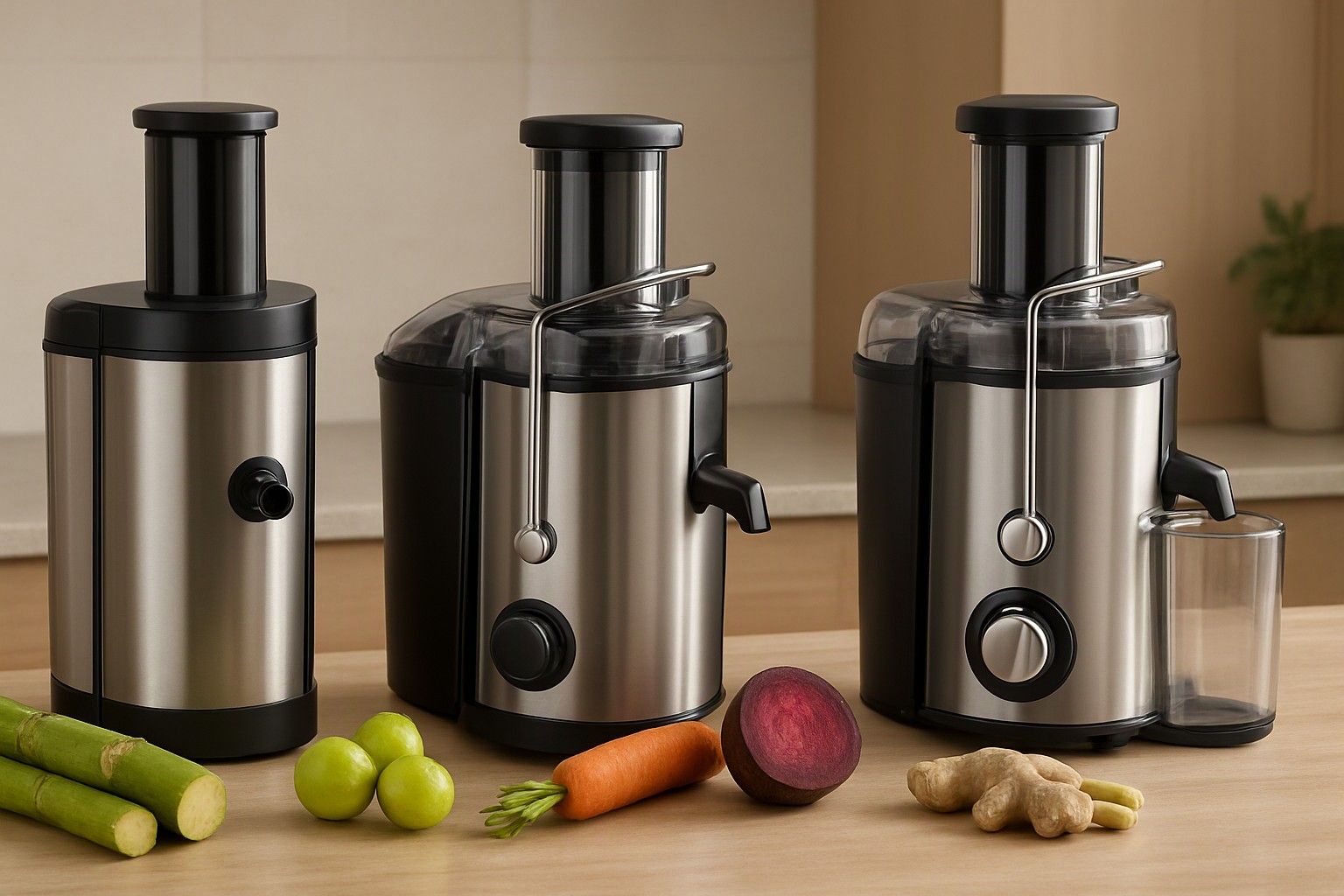
If your weekly juicing list leans on amla, carrot, beetroot, ginger or even sugarcane, this article is for you. Most juicers cope fine with oranges and apples, but dense and fibrous Indian produce is where weak motors stall, strainers clog and cheap builds give up early. Here is what to look for so you can pick a juicer that handles your actual produce, not just the soft fruit in the brochure photo.
Why Hard and Fibrous Produce Strains a Juicer
Hard produce hurts a juicer in two different ways, and it helps to separate them.
Density is the first. Carrots, beetroot and raw amla are packed tightly, so the motor needs steady torque to push them against the blade or through the pressing screw. A motor that is comfortable with watery fruit can slow down or trip its overload cut-off when a dense piece meets resistance.
Fibre is the second. Ginger, sugarcane and the pulp of amla and spinach stems form long strands. These wrap around the cutting disc or auger, jam in the strainer mesh and pack the pulp outlet. The result is a juicer that either stops mid-batch or leaves wet, under-extracted pulp behind.
Both problems get worse when you feed large pieces, push hard on the pusher, or run back-to-back batches without a break. Over months, that strain shows up as motor heat, a burning smell, cracked plastic parts or a strainer that no longer fits snugly. So the real question is not whether a juicer can juice a carrot once, but whether it can do it every morning for years without complaint. The sections below look at each type of produce and then at the features that tell you the answer before you buy.
Juicing Amla, Ginger and Beetroot at Home
Amla is small, hard and sour, with a stone inside. For most home juicers, the sensible way is to cut it into pieces and remove the seed first, then feed it gradually. Pushing whole amla through a feed chute is how blades get chipped and motors get stressed. Because amla has little water, yield depends heavily on how well the machine presses the pulp, and slower pressing machines usually leave drier waste than fast ones.
Ginger is less about density and more about stringy fibre. Use it in small quantities, ideally alongside a watery ingredient like apple or carrot, so the strands are carried through rather than wrapping around the blade or auger. Skipping this is the usual reason for a clogged strainer.
Beetroot is dense and juicy, so it tests torque more than anything. Chop it into smaller chunks than you would for a carrot, and expect the pulp to stain plastic jugs and strainers. Rinse parts straight after use.
A practical routine for any of these three: cut small, alternate hard pieces with soft ones, let the machine clear before adding more, and give it a rest between batches. A well-built juicer handles this easily. A weak one will show its limits within the first few uses.
The Truth About Sugarcane and Home Juicers
Sugarcane is where expectations most often outrun reality. The sugarcane machines you see at roadside stalls use heavy rollers built to crush whole canes all day. A regular popular brand's kitchen juicer, whether centrifugal or cold press, works on a completely different principle and is not built for that load.
Some strong home juicers can process short, peeled pieces of cane, and some manufacturers say so in their manuals. Treat that as something to verify, not assume. If sugarcane juice is the main reason you are buying, check the product's own documentation for explicit mention of sugarcane, and ask about the maximum piece thickness and continuous run time. If it is not mentioned, assume the machine is not designed for it.
Even where it works, expect more effort than with carrots. Cane is very fibrous, so you need to cut it into short, thin lengths, remove the tough outer skin and clean the strainer more often. Overloading is the fastest way to damage the gears or motor.
The honest answer: if you want sugarcane juice a few times a season, a capable juicer that lists it may do. If you want it daily and in volume, a home juicer is the wrong tool, and no amount of motor claims changes that.
Motor and Build Features That Signal Durability
Start with the motor, because it is the part that decides whether hard produce is routine or risky. It helps to understand how much wattage tough produce demands, but wattage alone does not tell the whole story. Look also for overload or thermal protection, which switches the machine off before the motor burns, and for a stated continuous run time so you know how long a batch can go.
Next, check what the moving parts are made of. For hard produce, a sturdy auger or cutting disc and strong gearing matter more than a good-looking body. Thin plastic parts under constant load can crack or wear down, so ask what the auger, screw and gears are made from and whether replacement parts are sold in India.
Feed chute size is a trade-off. A wide chute saves chopping time, but dense produce still needs to be cut small, so a narrow chute is not a flaw if the motor is strong.
Finally, look at the strainer and cleaning design. Fibrous produce clogs fine mesh quickly, so parts should come apart easily, the brush should reach every corner, and the base should sit stable on the counter without walking while running. A machine that is annoying to clean tends to get used less, which defeats the purpose.
Cold Press or Centrifugal for Hard Produce
For hard produce, the two designs behave quite differently. A centrifugal juicer spins a blade at high speed and throws juice through a mesh. It is quick and forgiving about chunk size, but dense items like beetroot and raw amla push a weaker motor hard, and dry, fibrous items tend to leave wetter pulp. It also introduces more foam and heat, which some people notice in the taste.
A cold press, or slow juicer, uses a slowly turning auger to crush and squeeze. It usually extracts more from fibrous and leafy items such as ginger, amla and greens, produces drier pulp and runs at lower speed, which is gentler on the motor under load. The costs are slower processing, smaller feed chutes that need more cutting, and generally a higher price.
If most of your juicing is carrot, beetroot and apple in a hurry, a strong centrifugal model is a practical choice. If amla, ginger and greens feature regularly and you care about yield, a cold press usually earns its extra cost. For the wider cold press versus centrifugal trade-off, including speed, noise and cleaning, that article goes into the full comparison. Either type can struggle with sugarcane, so that caveat applies regardless of design.
Matching a Juicer to What You Juice Most
Prices across this category run from ₹499 to ₹20,000, with an average of ₹4,999. Hard-produce capability tends to follow the tier you shop in, so it is worth being clear about your list first.
Mostly soft fruit, occasional carrot: the ₹1,500 range can work if you cut produce small and keep batches short. Expect limits with amla, ginger and beetroot, and do not expect sugarcane.
Regular carrot, beetroot and ginger: the ₹4,500 range is where you can start to look for stronger motors, overload protection and sturdier parts. Check the run time and the material of the auger or blade.
Amla, greens and daily juicing, or a focus on yield: the ₹12,000 range is where slow juicers with robust augers and better build quality are more commonly found. The extra spend usually buys durability and drier pulp.
Sugarcane as a priority: only consider machines whose own documentation mentions it, and keep expectations modest.
Once you have matched your produce list to a tier, put this alongside the other buying factors such as capacity, cleaning effort and warranty. Buying at the tier that fits your habits now will serve you better than stretching a cheaper machine past what it was built to do.
So, can your juicer handle sugarcane, amla and beetroot? Beetroot, carrot, ginger and cut, deseeded amla are realistic for a juicer with a strong motor, sturdy parts and sensible feeding habits. Sugarcane is the exception, and only a machine that explicitly lists it should be trusted with it. Match the machine to your most frequent produce, check the build details above, and you can decide with confidence today.

Comments
Be the first to comment.