Juicer Motor Power and Wattage: How Much Do You Need
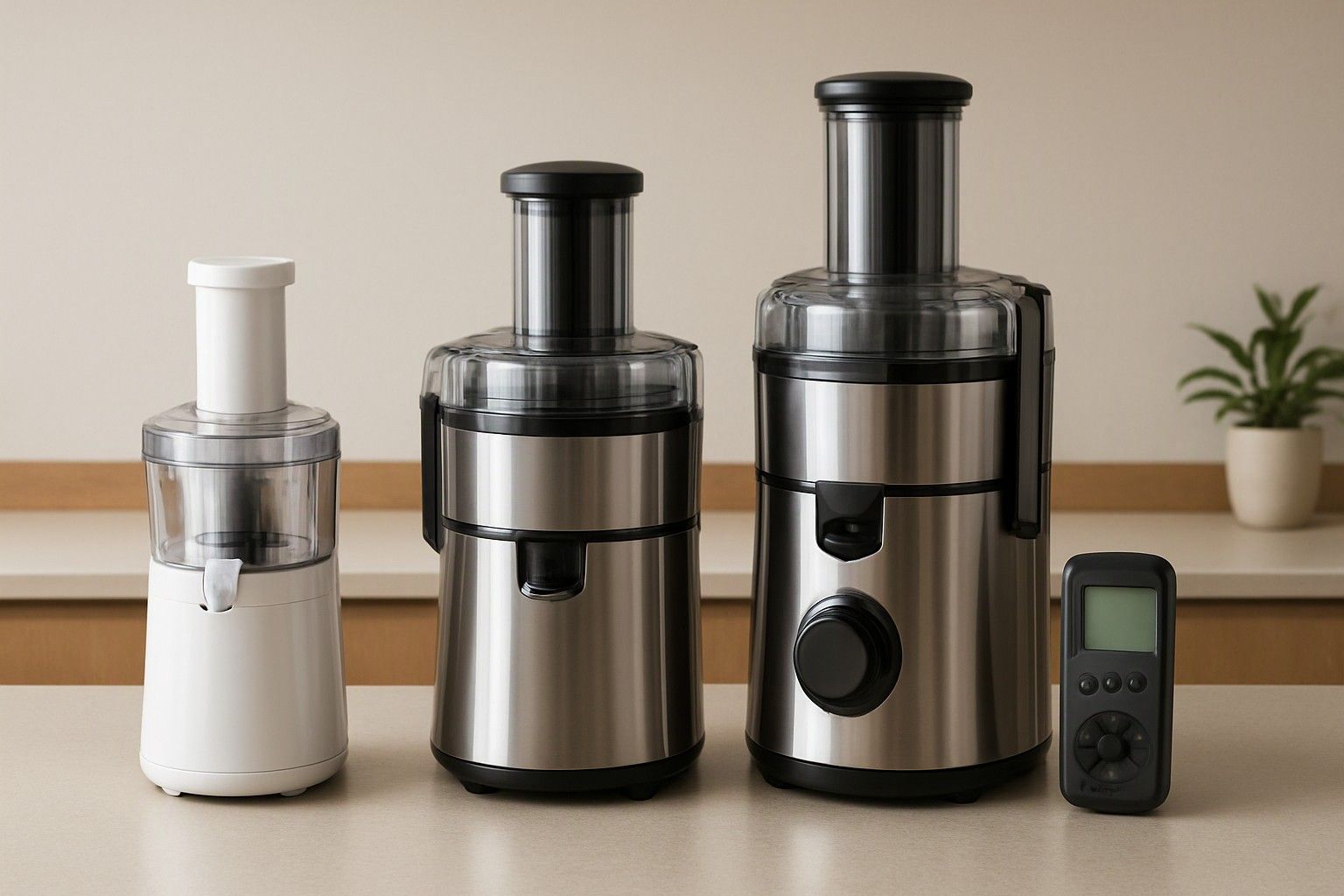
If you are staring at a spec sheet wondering whether 250 watts is enough or 800 watts is overkill, this article is for you. Wattage and RPM are the two numbers every juicer listing leads with, and they are easy to misread. By the end you will know how much motor power suits the way you actually juice, and which numbers deserve your attention.
What Wattage Really Tells You About a Juicer
Wattage is the electrical power the motor draws when it runs. In practical terms it tells you how much load the motor can handle before it strains, slows down or overheats. It does not tell you how much juice you will get, how fresh it will taste or how easy the machine is to clean. Those depend on the juicing mechanism, the screen or strainer and the pulp-ejection design.
The most useful distinction is between rated (continuous) power and peak or maximum power. Some listings quote the higher peak figure in large type, which can make a modest motor look stronger than it is. If the sheet gives both, trust the rated figure for comparison. If it gives only one number, treat it with some caution.
As a loose pattern, compact and slow juicers often sit at the lower end of the wattage range, while fast centrifugal models usually draw more. That is why you cannot compare wattage across different juicer types as if it were a simple score. A 200-watt slow juicer and a 200-watt centrifugal juicer will behave very differently, which is where RPM comes in.
RPM and Why Higher Isn't Always Better
RPM is how many times the cutting or crushing part turns each minute. Centrifugal juicers spin a blade at high speed against a mesh, so their RPM figures run into the thousands. Slow (masticating or cold-press) juicers turn an auger at a small fraction of that speed and squeeze produce rather than shredding it.
Higher RPM means faster juice, which suits a busy morning. The trade-offs are more heat and air exposure, which tends to mean more foam and juice that separates and loses freshness sooner. Yield from leafy greens, wheatgrass and soft fruit is usually lower on fast machines, because the blade throws them around instead of pressing them.
Lower RPM gives slower juicing, but the juice is often denser, with less foam and a better yield from greens. A slow juicer can do this on a modest wattage because gearing delivers strong torque at low speed. So a low wattage paired with a low RPM is not a weakness; it is the design working as intended.
The sensible way to read the two numbers is together. Decide first which style of juicing you want, fast and convenient or slow and thorough, and only then compare wattage within that type.
Power Needs for Occasional vs Daily Juicing
For occasional juicing, say a weekend glass or two of orange, apple, pomegranate or carrot juice, you do not need a powerhouse. A mid-range centrifugal motor or a standard slow juicer handles soft and moderately firm produce comfortably, and the motor never runs long enough to be stressed. Paying for extra wattage here buys headroom you will rarely use.
Daily juicing changes the picture. If you juice every morning, make several glasses for a family, or regularly push through beetroot, ginger, amla, raw turmeric or fibrous greens, the motor works harder and for longer. In that case you want either a stronger rated motor in a fast juicer or a slow juicer built for repeated use. Also check the manufacturer's guidance on continuous run time. A motor that is only meant to run for a couple of minutes at a stretch will frustrate you when you are juicing for four people.
A simple rule of thumb: match the motor to your hardest regular ingredient and your largest regular batch, not to the occasional exception. If you juice sugarcane or very hard produce only rarely, cut it into smaller pieces and work in short batches rather than paying for a bigger motor all year.
Overload Protection and Motor Longevity
A motor rarely fails because of its wattage number alone. It fails because it is pushed beyond its limits, run too long, or fed produce it was not built for. Overload protection is what stands between a hard session and a burnt-out motor. Look for a thermal cutoff or overload switch that stops the motor when it overheats, ideally with a reset you can use once it has cooled.
Indian household conditions make this more relevant. Voltage fluctuation is common in many areas, and a motor running on an unstable supply works harder to deliver the same output. A motor with built-in protection tolerates this far better than one without. Also check whether the manufacturer states a safe continuous run time and a rest period, because those figures tell you how the motor is meant to be used.
A few habits extend motor life regardless of wattage: cut hard produce into smaller pieces, feed it gradually instead of forcing it down the chute, and let the motor rest between large batches. For a closer look at the features that survive hard produce over years, including build quality and parts that wear out first, that article goes deeper than a spec sheet can.
How Power Affects Price and Value
Motor power and juicer type are among the main reasons prices vary so widely. Juicers in this category run from ₹499 to ₹20,000, with an average around ₹4,999. Entry-level models in the ₹1,500 tier usually pair a smaller motor with simpler build, which is reasonable for light, occasional use. The ₹4,500 tier is where most buyers find a stronger rated motor along with better overload protection and sturdier parts. The ₹12,000 tier of premium branded juicer tends to add either a more powerful motor or a slow-juicing mechanism with better yield and build.
The key point is that wattage is only part of what you pay for. A higher figure can reflect a bigger motor, but the price also covers the strainer, the gearing, the housing and the safety features. It helps to see what higher wattage adds to the price alongside everything else that changes between tiers, so you are not paying for power you will not use.
Good value means matching the motor to your actual routine. If you juice a few times a week, a mid-tier model with solid protection will serve you well today. If you juice daily or process hard produce, spending toward the upper end of the range for a motor built for repeated use is the more economical choice over time.
Reading the Spec Sheet With Confidence
With the background above, a spec sheet becomes much easier to read. Work through it in this order:
- Identify the juicer type first. Fast centrifugal or slow juicer? Only compare wattage between models of the same type.
- Look for the rated wattage. If both rated and peak figures are given, use the rated one. Be wary of a listing that shows only a large, unqualified number.
- Read the RPM alongside it. High RPM means speed and some foam. Low RPM means slower juicing and often better yield from greens.
- Check for overload protection. A thermal cutoff or overload switch matters more than a few extra watts.
- Look for run-time guidance. If you juice in batches, a stated continuous run time tells you whether the motor suits your routine.
- Match the numbers to your hardest regular ingredient. Not the occasional exception.
If motor power is only one of the questions you are weighing, you can return to the complete buying checklist to see how it fits with capacity, cleaning, build and the other factors that decide how a juicer feels to use every week.
You now have a clear answer to how much motor power a juicer needs: enough rated wattage for your hardest regular ingredient, in the right juicer type, with overload protection behind it. For occasional use that is a modest motor, and for daily or hard-produce juicing it is a stronger or purpose-built one. Check the rated wattage, RPM and protection on the spec sheet, and you can decide today with confidence.
Comments
Be the first to comment.